

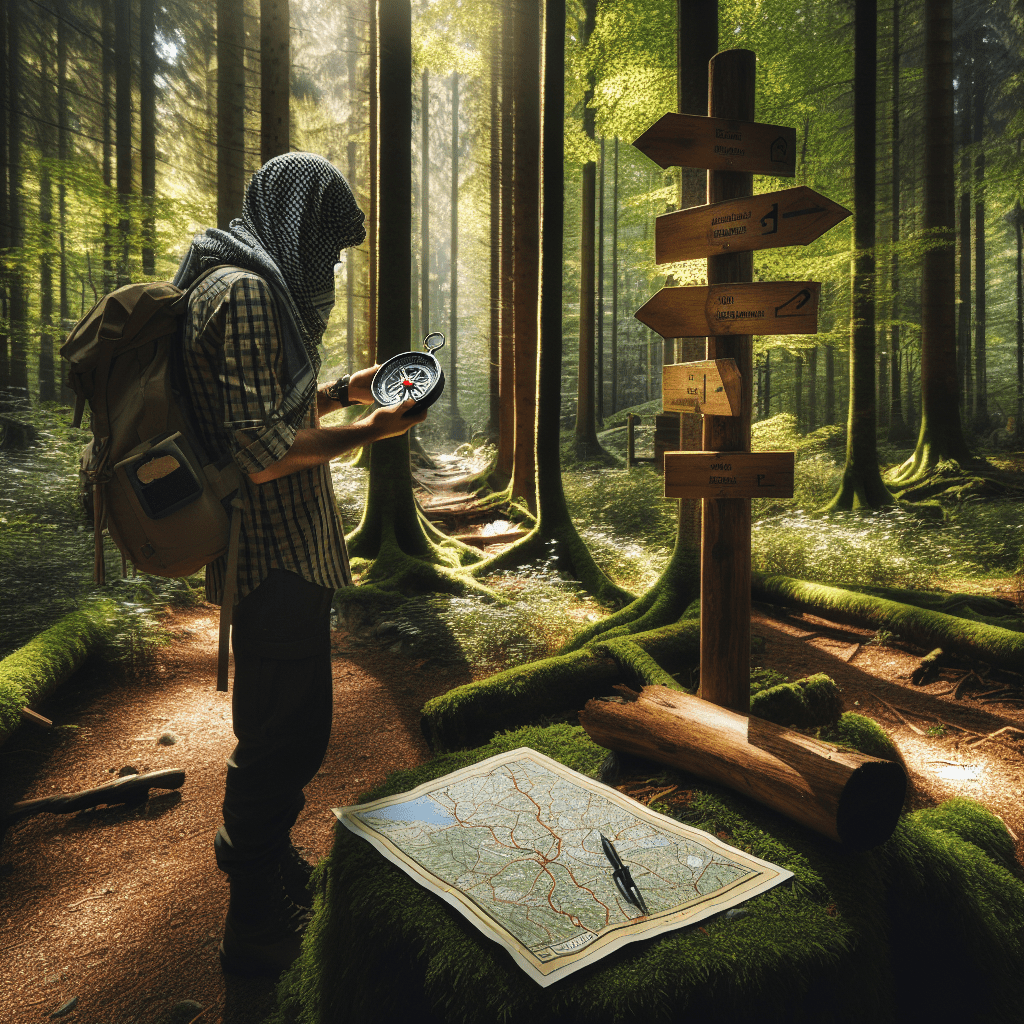

Introduction
Navigating the great outdoors can be both an exhilarating adventure and a daunting challenge. Mastering the wild isn’t just about knowing where you are; it’s about having the skills to remain confident and safe no matter where your journey takes you. For every outdoor enthusiast, understanding the essential techniques for outdoor navigation is crucial—not just for personal success but also for safety. In this blog post, you’ll discover a blend of education and personal insight, including practical techniques that have served me well in the wild, along with some harrowing lessons I’ve learned through experience.
The Importance of Outdoor Navigation
Imagine standing at a fork in the trail, unsure which way to go. The trees loom high around you, and the sun begins to dip below the horizon. Having effective navigation skills transforms a potential crisis into a minor road bump. Whether you’re hiking, camping, or exploring off-the-beaten-path, mastering navigation techniques can enrich your outdoor experience—making it safer, more enjoyable, and infinitely more memorable.
Understanding the Basics of Outdoor Navigation
Why Study Navigation Techniques? (H2)
Before diving into specific techniques, let’s discuss why it’s crucial to understand navigation. Poorly executed outdoor navigation can lead you into dangerous situations, such as becoming lost, running out of supplies, or unwittingly entering hazardous terrain.
The Role of Maps and Compasses (H3)
Maps and compasses are your bread and butter in the wild. Learning to read a topographical map is an invaluable skill. A few years back, during a solo hiking trip in the Rockies, I relied solely on my GPS. As the battery died unexpectedly, I realized the importance of understanding map symbols and scales to reorient myself. Armed with a paper map and a durable compass, I could have quickly recalculated my route.
Essential Tools for Navigation (H2)
- Compass: A reliable compass is your best friend when navigating through dense forests or rocky terrains.
- Topographical Maps: Invest in detailed maps that highlight elevations, terrain types, and water sources.
- GPS Device: While not infallible, it’s still useful. Always carry backup methods.
- Smartphone Apps: Many outdoor apps can assist with navigation, but like your GPS, ensure your battery is protected.
- Notepad and Pencil: For jotting down important information or notes about your journey.
How to Read a Topographical Map (H2)
Understanding how to interpret maps will enhance your outdoor navigation experience.
Key Features to Identify (H3)
- Contour Lines: Indicate elevation change—closely spaced lines mean steep terrain.
- Landmarks: Look for natural features like rivers, lakes, or mountains.
- Scale: Helps you understand distances. Ensure to measure accordingly before trekking out.
A Personal Navigation Challenge (H3)
During a trip to the Appalachian Trail, I found myself on a poorly marked section of the path. Trusting my compass and map, I identified my location based on surrounding landmarks, helping me to safely redirect towards my campsite rather than wandering aimlessly into the wilderness. This experience highlighted the critical need for map skills in real-world situations.
Practical Techniques for Outdoor Navigation
Utilizing Land Navigation (H2)
Land navigation is about using visible cues in your environment.
Observational Techniques (H3)
- Landmarks: Identify and remember key features along your route.
- Landmarks vs. Stereotypes: You may think a mountain is to your east; without a compass, you might be misdirected.
Anecdote: The Day I Discovered Land Navigation (H3)
While hiking in the lush forests of Oregon, I overlooked the natural landmarks around me and relied on my map. Mid-trail, I realized my mistake when I came across a river—a key marker I had neglected. By retracing my steps to the last known landmark, I reinforced the importance of staying aware of my surroundings.
Making Sense of Azimuth (H2)
An azimuth is the angle between your position and a known landmark.
Steps to Practice Azimuth Navigation (H3)
- Determine your current location on your map.
- Find the destination point you wish to reach.
- Use your compass to establish the azimuth to the target.
A Close Call with Azimuth Navigation (H3)
Once, while backpacking across Yellowstone, I needed to navigate toward a specific summit. By accurately establishing my azimuth, I traversed across other trails and finally reached my intended destination. This victory was immensely satisfying and reminded me that paying attention to details in navigation can lead to rewarding outcomes.
Understanding Terrain Features and Elevation (H2)
Knowledge of terrain is essential for effective navigation.
Significant Terrain Features to Consider (H3)
- Valleys and Ridges: Influence your route, often guiding you toward safe passage areas.
- Elevation Gain: Understand how altitude affects your navigation—steeper climbs require more preparation.
Balancing Technology and Nature (H2)
In an increasingly digital world, it can be easy to lean exclusively on technology. However, the outdoor environment is unpredictable.
When Technology Fails (H3)
On a winter hike in Utah, my GPS was rendered useless due to heavy snowfall disrupting my routes. I had to rely on the skills I had cultivated: using my map and compass to navigate back to safety when I had long since expected to rely solely on my device.
Wrap-Up: Key Takeaways (H2)
Having mastered the essential techniques for outdoor navigation, you’re now equipped with tools and knowledge vital for any outdoor adventure. Always carry a compass and map, practice your navigation skills regularly, and remain vigilant to your environment. Personal stories often resonate stronger than mere theories—trust your instincts, remain persistent, and you will navigate the wild with confidence.
Reader Questions Answered (H2)
Q1: What if I get lost in the woods despite preparing?
A: First, remain calm. Use your map and compass to identify your location. If you’re not sure where you are, consider staying put to avoid getting more lost. Always have a whistle or signal device with you to attract attention if needed.
Q2: How can I improve my navigation skills?
A: Regular practice is key! Join or form hiking groups where you can learn from experienced adventurers. Enroll in navigation courses that include practical field exercises.
Q3: What are the most common navigation mistakes?
A: Common mistakes include neglecting to double-check compass readings, failing to account for terrain elevation when planning routes, and relying too heavily on technology without understanding traditional methods.
Frequently Asked Questions (FAQs) (H2)
Q1: Do I need a GPS if I have a map and compass?
A: It’s always recommended to carry a GPS as a backup system, but knowing how to navigate using a map and compass is essential for when technology lets you down.
Q2: What is the best type of map for outdoor navigation?
A: A topographical map is ideal, as it provides detailed altitude information and terrain features essential for navigation.
Q3: How can I make navigation more fun during hikes?
A: Consider incorporating scavenger hunts, navigation games, or challenges with friends to make learning more interactive and enjoyable!
Mastering the wild through essential navigation techniques not only enhances your outdoor skills but connects you more deeply to the environment around you. Embrace your adventures!