


Unleashing Conservation: $389,018 Allocated for Wild Turkey Projects in Alabama
In a significant boost for wildlife conservation in Alabama, the Alabama Chapter of the National Wild Turkey Federation (NWTF) has earmarked $389,018 in Hunting Heritage Super Funds and Tag Funds specifically for the enhancement of wild turkey populations and habitats throughout the state. This multifaceted investment doesn’t just preserve a cherished species; it invigorates the natural landscape and local hunting culture.
A Strong Foundation for Turkey Conservation
Among the allocated funds, a notable $80,214 will directly support the Wildlife and Freshwater Fisheries Division (WFF) of the Alabama Department of Conservation and Natural Resources (ADCNR). This funding will facilitate crucial wildlife habitat management initiatives aimed at improving the ecological conditions for wild turkeys—a vital species for Alabama’s biodiversity.
“We are proud to partner with NWTF on the conservation of wild turkey in Alabama,” remarked Chris Blankenship, ADCNR Commissioner. “This generous donation ensures the preservation of this important natural resource for future generations of Alabamians.”
The remaining $308,804 from NWTF will finance various turkey-related projects across Alabama, unlocking $1,462,361 in matching funds from other conservation partners. Together, these investments will positively impact 206,317 acres of habitat, aligning seamlessly with NWTF’s Habitat for the Hatch Initiative, bringing the total program value to an impressive $1,851,380.
This funding will not only enhance wild turkey habitats but will also bolster efforts to improve access to hunting opportunities and address the ongoing decline in turkey populations.
Strengthening Collaborative Conservation Efforts
In his remarks, Scott Brandon, President of the Alabama NWTF Chapter, underscored the importance of this collaboration, stating, “The Alabama State Chapter continues to serve as a national model for sustained partnerships with our state agencies. The decisions we make annually have a direct impact on wild turkeys and other species.”
He emphasized the need for ground-level projects and strategic investments in equipment to drive improvements in turkey habitat across Alabama. Brandon’s vision includes further strengthening partnerships and crafting new initiatives to fortify and establish habitats statewide.
Funding will primarily benefit the Wildlife Management Areas (WMA) and Special Opportunity Areas (SOA) throughout Alabama, focusing on habitat management that is crucial for maintaining healthy wild turkey populations.
“Federal matching dollars are essential to how our division operates,” said Fred Harders, Acting WFF Director. “More than $62,000 of this generous donation allows us to access federal matching funds, significantly amplifying the efficacy of this investment.”
Why It Matters
These funds carry far-reaching implications not only for wildlife management and hunting but also for local economies and conservationists. Here’s why this investment matters:
- For Hunters: Better habitats lead to healthier turkey populations, ensuring more successful hunting seasons.
- For Conservationists: This investment exemplifies effective partnerships and strategic management practices, setting a benchmark for future conservation efforts.
- For Local Economies: Increased wild turkey populations can drive eco-tourism and recreational hunting, benefiting local businesses and communities.
- For Future Generations: Establishing robust habitats today secures the presence of wild turkeys for hunting and enjoyment tomorrow, nurturing Alabama’s rich outdoor heritage.
Field Insights: Tips for Engaging with Wild Turkey Habitat
As the state progresses in its conservation efforts, here are some pro-tips for outdoor enthusiasts to engage meaningfully with Alabama’s wild turkey habitats:
- Participate in Local Events: Engage with organizations like NWTF for workshops and educational events focused on turkey conservation and habitat management.
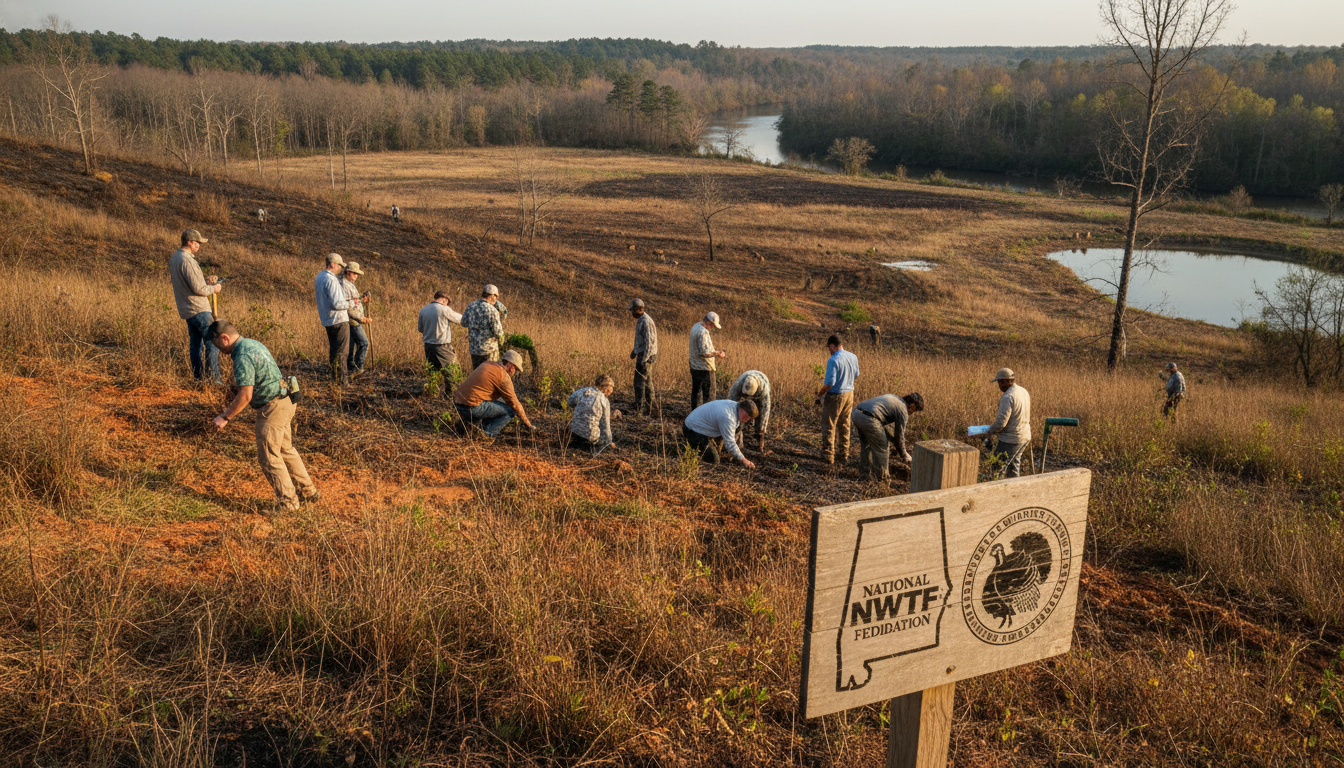
- Get Involved in Habitat Projects: Volunteer for prescribed burning or habitat restoration projects—these hands-on experiences enrich your understanding of ecological practices.
- Follow Responsible Hunting Guidelines: Familiarize yourself with local rules and regulations to ensure sustainable hunting practices that help preserve turkey populations.
ADCNR stands committed to the responsible stewardship and enjoyment of Alabama’s natural resources through its four divisions: Marine Resources, State Lands, State Parks, and Wildlife and Freshwater Fisheries. For more information, visit www.outdooralabama.com.
The future of wild turkeys and their habitats in Alabama looks promising, thanks to this strategic funding and collaborative spirit. By working together, stakeholders can make a lasting impact on the conservation landscape, benefiting both wildlife and the communities that cherish them.
(Photo L-R: Steven Mitchell, WFF Supervising Wildlife Biologist; Fred Harders, Acting WFF Director; Scott Brandon, NWTF Chapter President; Caleb Blake, WFF Upland Game Bird Coordinator)