


Enhancing Aquatic Habitats: How Anglers Can Contribute to Ecosystem Health
Creating Underwater Habitat: A Call to Action for Anglers
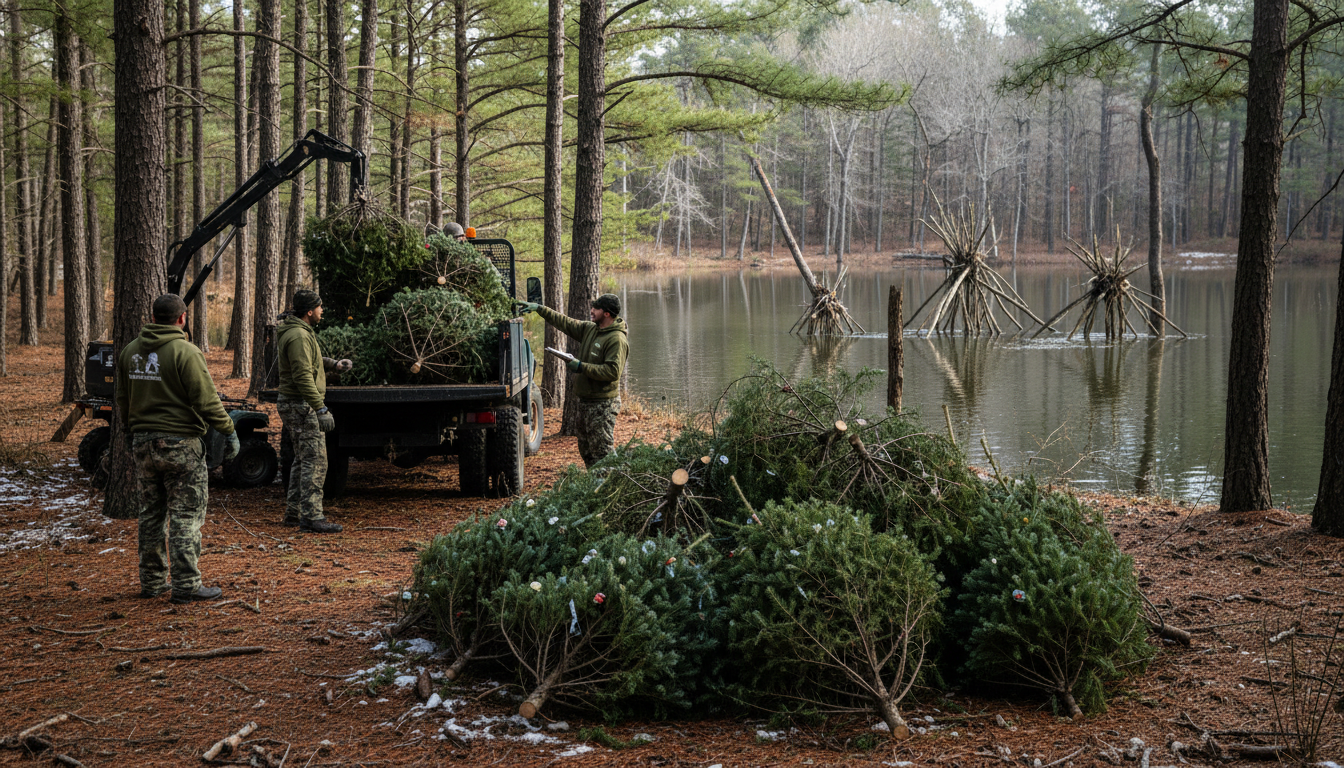
As winter settles in across the region, anglers can play a vital role in fostering aquatic biodiversity and enhancing fishing experiences by repurposing trees as underwater habitat. The Arkansas Game and Fish Commission (AGFC) encourages anglers to utilize trees from their own yards or local sources, significantly benefiting fish populations and overall ecosystem health.
The Science Behind Sinking Trees
AGFC biologists recommend that conscientious anglers weigh down these trees using cinder blocks or sandbags secured with paracord. This method ensures that the trees remain submerged as they saturate and become waterlogged, eventually settling into the substrate and providing critical shelter for fish. When introducing natural materials into lakes and rivers, it is imperative for anglers to first contact the lake’s ownership—some water-supply reservoirs and various lakes enforce regulations against unauthorized placement of habitat materials.
Multiple placements at each location are advisable. While Christmas trees may offer limited cover due to their sparse branches and rapid decay, clusters of main trunks can provide one to two years of essential woody structure for various fish species.
Where to Drop Off Your Trees
Anglers interested in contributing to this habitat enhancement initiative can drop off trees until the end of January at designated locations across Arkansas:
-
Northwest Arkansas:
- Beaver Lake: Highway 12 Access, AGFC Don Roufa Highway 412 Access, Monte Ne Boat Ramp Access
- Lake Elmdale: Boat Ramp Access
- Bob Kidd Lake: Boat Ramp Access
- Crystal Lake: Boat Ramp Access
- Lake Fayetteville: Boat Ramp Access
-
North Arkansas:
- Bull Shoals Lake: Any U.S. Army Corps of Engineers boat ramp
- Norfork Lake: Any U.S. Army Corps of Engineers boat ramp
-
Northeast Arkansas:
- Jonesboro: Craighead Forest Park Lake Boat Ramp
- Lake Bono: Boat Ramp Access
- Lake Walcott: Crowley’s Ridge State Park Boat Ramp Access
- Others include Lake Charles, Lake Poinsett, and Batesville.
-
Central Arkansas:
- Arkansas River: Riverview Park Access in North Little Rock
- Lakes Barnett, Harris Brake, Pickthorne, Overcup, Cox Creek, and Hamilton each have specific drop-off zones.
-
Additional locations spanning West Central, East, Southeast, South, and Southwest Arkansas provide ample opportunities for anglers looking to get involved.
Why It Matters
The Long-Term Implications of Enhanced Aquatic Habitats
This initiative goes beyond mere angler participation; it addresses critical ecological concerns. Establishing submerged habitats improves the carrying capacity of aquatic ecosystems, supports diverse fish populations, and enhances recreational fishing opportunities. Healthy fish habitats can also contribute positively to local economies that rely on tourism and fishing-related activities.
Moreover, as climate patterns shift and habitats change, such enhancements become increasingly important. They not only provide temporary refuge but also foster long-term resilience for aquatic species adapting to environmental pressures.
Field Insights: Pro Tips for Successful Habitat Placement
-
Choose Quality Trees: Opt for providing hardwood species over softwoods. Hardwoods generally last longer in aquatic environments.
-
Know Your Regulations: Always check local regulations to avoid hefty fines or project disruption. Some areas may impose restrictions on what materials are permissible for habitat enhancement.
-
Consider Depths: When placing habitats, consider varying depths to attract diverse species. Shallow areas can be ideal for spawning, while deeper sections may attract larger predatory fish.
-
Monitor Your Habitats: Regular visits can help gauge the effectiveness of your placements and allow you to observe fish interactions with the new habitat.
By participating in this initiative, anglers can significantly impact Arkansas’s aquatic environments, ensuring sustainable fisheries for generations to come while enhancing their own outdoor experiences.