

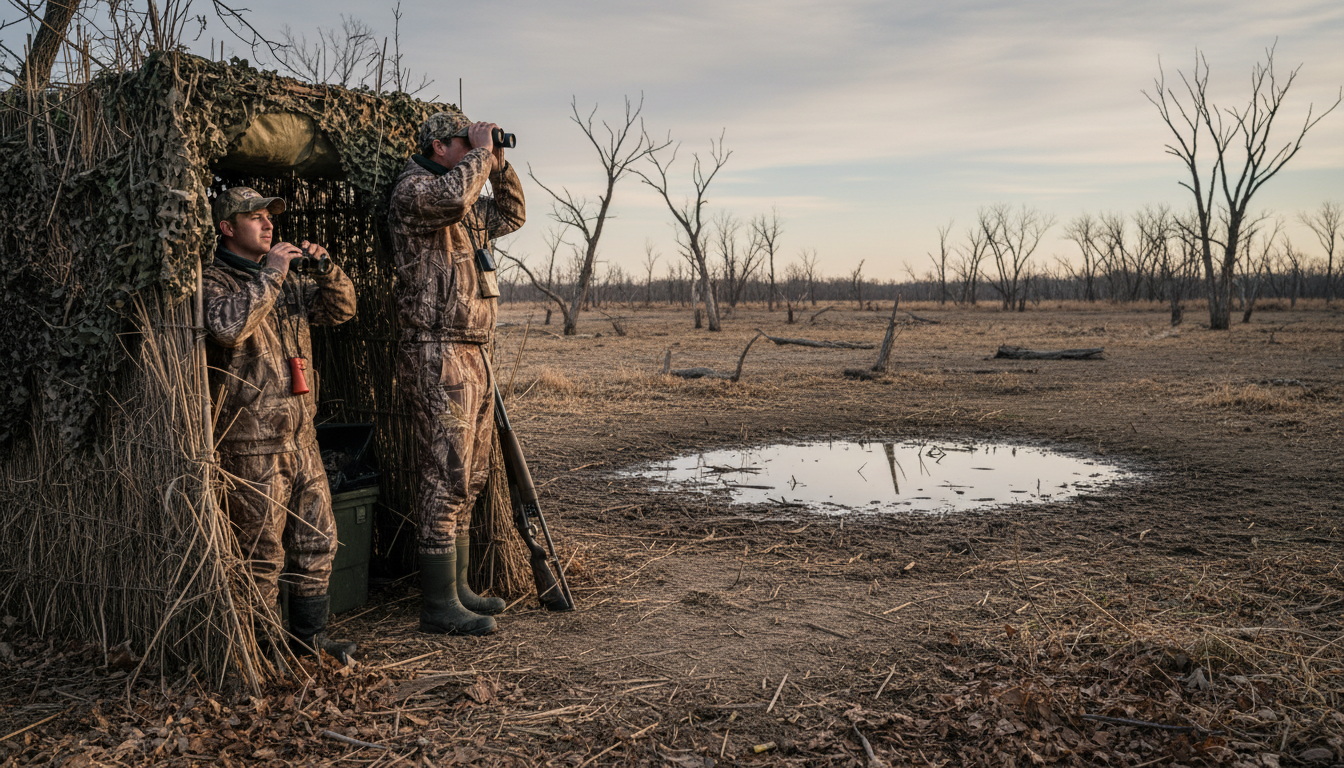

Drought Conditions Challenge Arkansas Delta Waterfowl Hunting in 2025-26 Season
As a senior investigative reporter with two decades of experience in conservation and backcountry policy, it’s clear that the current conditions in the Arkansas Delta present both challenges and opportunities for waterfowl hunters this season. While the weather forecast hints at light rainfall on Thursday and Friday, the predicted amounts fall drastically short of the critical 6- to 8-inch deluge typically seen in late winter. This lack of significant rainfall has left the Delta landscape short of the water essential for optimal habitat conditions and waterfowl dispersion.
Current Landscape and Bird Count Insights
Trey Reid, the dynamic spokesperson for the Arkansas Game and Fish Commission (AGFC) and host of “Arkansas Wildlife TV,” highlighted on KABZ-FM, 103.7 “The Buzz” this Wednesday the ongoing challenges. Although there are ducks being harvested, water levels simply aren’t sufficient to distribute these waterfowl widely across the habitat, resulting in concentrated populations. AGFC’s recent aerial surveys, which were delayed until December 23 due to inclement weather and technical issues, reveal this concentration vividly.
Rainfall Predictions and Impact
According to the National Weather Service, Central Arkansas may see less than half an inch of rain over the next two days, with amounts likely varying significantly from the northern to southern Delta. Notably, anecdotal evidence culled from social media platforms indicates a more positive hunting experience compared to last year, with fewer complaints reflecting some level of success among hunters.
Migration data corroborates this finding, showing substantial numbers of ducks concentrated in eastern Arkansas near the Mississippi River. This aligns well with the AGFC’s latest aerial survey results shared by Brett Leach, the agency’s waterfowl program coordinator.
Aerial Survey Highlights
The December aerial count revealed nearly 500,000 mallards in the Delta—a marked increase from estimates in December 2024. Typically, Arkansas experiences a peak in mallard populations during January’s midwinter survey. Leach’s report underscored that clumping around limited water sources may lead to higher variability in estimates. The Bayou Meto-Lower Arkansas River, Big Creek, Cache River, and L’Anguille River areas are hotspots, jointly accounting for 79% of the mallard estimates in the Delta.
In total, duck populations in the Delta hover around 1.4 million, while the population of Arctic geese tops 2 million—all against the backdrop of a region grappling with moderate to severe drought. Rainfall levels in November and December have plummeted approximately 62% below normal, and conditions remain dry into January.
Why It Matters
The ongoing drought not only affects waterfowl populations and habitats but also threatens the livelihoods of local economies that rely on hunting tourism. The AGFC’s provision of 44 out of 50 private, leased Waterfowl Rice Incentive Conservation Enhancement (WRICE) fields this season bolsters access for hunters eager to make the most of the limited resources. As hunters increasingly flock to these areas, the potential for conservation-focused initiatives grows, showcasing the delicate balance between recreational and environmental needs.
Field Insights: Pro Tips for Hunters
- Timing is Key: Apply early for WRICE fields; the demand peaks at popular locations like Georgetown, which is near recreational hotspots.
- Adaptive Strategies: With water levels unpredictable, adapt your hunting strategies to target areas where water is still available and where ducks are likely to congregate.
- Stay Updated: Regularly check AGFC’s website for the most current habitat conditions. Information on greenspace reservoirs and moist-soil units is updated as new insights are collected from field biologists.
The AGFC’s application process for permits at wildlife management areas requiring a permit also remains open, offering hunters crucial opportunities to enjoy the season. As standard hunting permits are available for a single day, youth and mobility-impaired blinds also add a layer of inclusivity.
In conclusion, the 2025-26 waterfowl season in the Arkansas Delta is a compelling narrative of resilience amid challenges. Hunters must adapt to fluctuating conditions while supporting broader conservation efforts within their communities. For the latest water levels and habitat conditions, visit the AGFC’s website, and see how you can engage responsibly and sustainably in this critical ecosystem.
For Complete Waterfowl Dates and Limits, Click Here.