

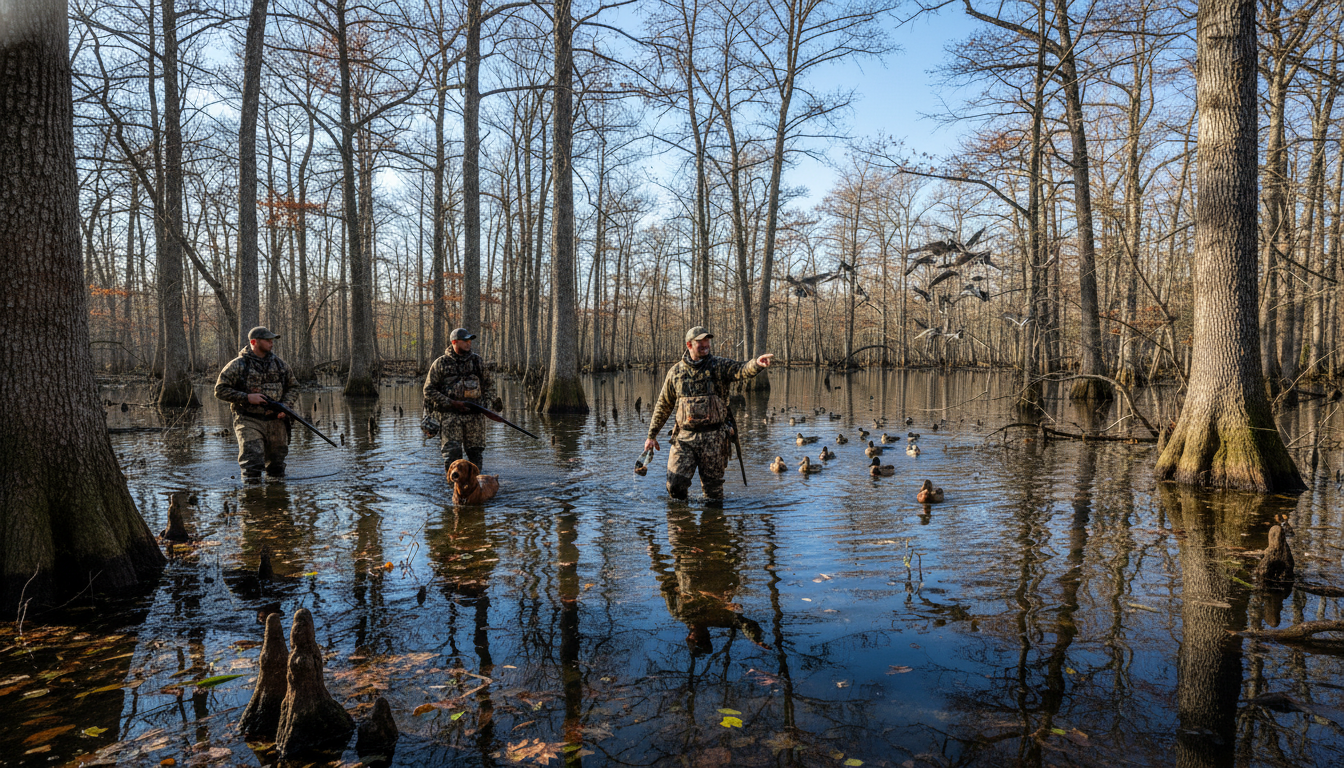

Celebrating Conservation: The Duck Season Social Unites Waterfowl Enthusiasts
As the chilled air settles over the wetlands, the annual Duck Season Social has emerged as a vital gathering for conservationists and hunters alike, uniting passionate outdoor enthusiasts in celebration of waterfowl. “The Duck Season Social is simply a great night to gather during the split of the duck season, swapping stories and celebrating our shared passion for conservation,” stated Deke Whitbeck, President of the Arkansas Game & Fish Foundation (AGFF). This event, conceptualized by AGFF board member Brent Birch, thrives year after year due to his unwavering dedication and meticulous organization. Proceeds from the social directly fuel the Arkansas Game and Fish Commission’s (AGFC) initiatives aimed at enhancing waterfowl habitats and ensuring equitable access for all outdoor lovers.
Pioneering Research: The Dyke-Snowden Endowed Chair of Waterfowl and Wetlands
The evening also shed light on groundbreaking advancements in wetland research led by the Dyke-Snowden Endowed Chair of Waterfowl and Wetlands, held by Dr. Osborne, inaugural director of the Snowden Waterfowl Center of Excellence at the University of Arkansas at Monticello (UAM). This $7 million facility, bolstered by $2 million in endowment funding—half derived from legislative appropriations and the other half from private donations spearheaded by Snowden and Merritt Dyke—positions UAM as a frontrunner in the realm of waterfowl and wetland research, education, and outreach, particularly within the crucial Mississippi Flyway.
Hail Calls: NOAA’s Climate Update
In a broader ecological context, the National Oceanic and Atmospheric Administration (NOAA) has released its November recap, confirming what many suspected: this fall has ranked as the third-warmest meteorological period in 131 years across the United States. That unseasonably warm weather has been felt regionally, particularly in a corridor of western states from Washington to Texas, which experienced the hottest fall on record.
Arkansas itself has been classified as “much above average” for fall temperatures, echoing a similar pattern in much of the Midwest and revealing that even temperate states east of the Mississippi River have felt warmer conditions, with the Carolinas hovering around average. Notably, the unseasonably warm falls of 2016 and 2024 stand as the warmest since record-keeping began in 1895. As the temperature dips into the 30s and 40s in recent days, it serves as a refreshing reminder of the seasonal rhythm we often take for granted in our outdoor pursuits.
Why It Matters: The Broader Implications of Migration Patterns
As we edge closer to the peak of the year’s waterfowl migration in January, the situation in neighboring Missouri plays a critical role in forecasting our own opportunities down south. Recent reports from Ducks Unlimited indicate that the Missouri Department of Conservation conducted waterfowl surveys revealing a remarkable surge in duck populations, approximately doubling to over 700,000 from November 17 to December 1. While still slightly below the five-year average, the influx of new birds has ignited excitement among hunters poised for additional opportunities.
With colder temperatures arriving post-Thanksgiving, wildlife observers noted a significant movement of waterfowl across much of Missouri, particularly in the northwest region. Reid Viegut of the Missouri Department of Conservation reported that as of December 1, there were 746,829 ducks counted, alongside 74,831 snow geese, 44,150 white-fronted geese, and 1,440 Canada geese. While the duck estimate is down 4.4% from the five-year average, it surpasses the 20-year average by 6%. Notably, the counts show an estimated 542,769 mallards, marking a 1.4% uptick from the previous five-year estimate.
Field Insights: Pro Tips for Outdoor Enthusiasts
- Stay Informed: Regularly check biologists’ reports from both local and regional wildlife agencies to gauge migration patterns and population trends.
- Adapt Your Gear: Be prepared for fluctuating temperatures. Dress in layers to ensure comfort in varying weather conditions experienced during migration.
- Timing is Key: The timing of cold fronts can significantly influence waterfowl movements. Monitor weather forecasts closely to maximize your chances of success in the field.
- Consider Conservation: Engage in local conservation efforts to help maintain and improve waterfowl habitats, fostering sustainable practices that will benefit future generations.
In conclusion, the interplay between excitement at the Duck Season Social and the promising data emerging from Missouri sets an optimistic tone for the upcoming hunting season. By fostering connections through events like this, and by combining research initiatives with on-the-ground conservation efforts, we can collectively safeguard vital ecosystems for years to come.
For further information on waterfowl dates and limits, click HERE.