

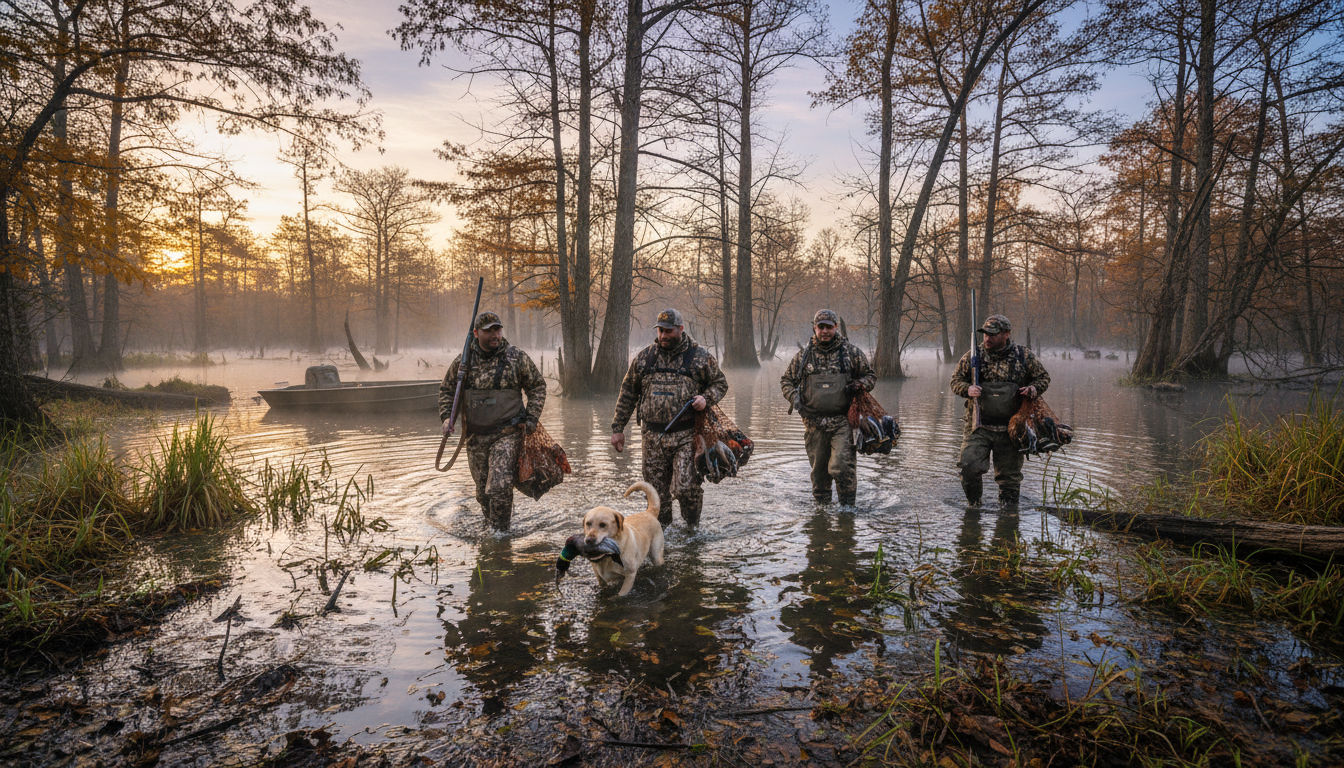

Ducks on the Move: Arkansas Waterfowl Season Opens with Promise and Challenges
Arkansas Opens Waterfowl Season Amidst Promising Changes in Habitats
LITTLE ROCK — As the sun rose over the natural treasure that is Arkansas, the excitement among waterfowl hunters was palpable this past Saturday, when the state’s waterfowl season officially kicked off for the 2025-26 “split.” Expanding hunting days through the Thanksgiving weekend, enthusiasts can pursue ducks and other migratory birds before the season takes its first pause at sunset on December 1.
“It rained,” stated Trey Reid, the Arkansas Game and Fish Commission’s assistant chief for Communications, during his regular Tuesday segment on KABZ-FM’s “Morning Mayhem.” Reflecting on his opening day hunt in south-central Arkansas, Reid noted, “We had a successful shoot and, judging by social media, opinions varied—some hunters enjoyed fruitful hunts, while others faced challenges. This variance is typically expected during opener weekends.”
Reid elaborated on the dynamics that characterize the first days of duck season: “In areas with well-managed water or recent pumping, hunters often enjoy a good day or two. But this excitement may settle quickly.” He expressed optimism regarding the recent rainfall and upcoming cooler temperatures: “The additional moisture will bolster public areas, enhancing habitat conditions. The best days are yet to come, though it was a mixed bag for many hunters.”
A Glimpse at the State’s Waterfowl Trends
Contributors to this weekend’s waterfowl report noted some compelling shifts.
-
Snow Geese Sightings: Observers recorded an uptick in snow goose presence, a welcome surprise given that last year’s initial sightings in the Delta occurred closer to December 1. Areas around Geridge along U.S. Highway 165, Stuttgart, and near Interstate 40 by Hazen reported abundant flocks.
-
Specklebelly Geese: Similarly, specklebelly geese (white-fronted) demonstrated healthy numbers in Arkansas County. On Sunday evening, long formations of these birds were observed migrating toward the river, coinciding with a substantial front of rain rolling in. Reid recounted feedback from a fellow hunter who noted an increase in specklebellies following the weekend: “This recent rain has created more sheet water, and with runoff filling the woods, it’s likely to alter the distribution of ducks, especially since they’ve had some pressure already.”
Why It Matters
As waterfowl season unfolds, the immediate implications resonate beyond mere hunting enjoyment.
-
Boosting Local Economies: The influx of hunters promises a boost to local businesses reliant on tourism, from lodging to gas stations.
-
Habitat Restoration: The rainfall not only enhances hunting conditions but plays a vital role in habitat restoration, encouraging healthier wetlands that are critical for sustaining wildlife populations over the long term.
-
Conservation Efforts: Tracking migratory patterns and monitoring bird populations contribute vital data for conservationists and wildlife management, ensuring balanced ecosystems for generations to come.
Field Insights: Pro-Tips for Waterfowl Hunters
As hunters gear up for the season, consider these practical insights:
-
Scout Early: Get familiar with public hunting areas and observe water levels and bird behavior to optimize your hunting strategy.
-
Stay Updated: Keep an eye on weekly updates from biologists regarding flooding schedules and habitat conditions; real-time data is critical for success.
-
Utilize Technology: Leverage applications and mobile tools that provide real-time updates on water conditions and migration patterns to enhance your hunting effectiveness.
For those looking to stay current with habitat conditions, the AGFC has streamlined access to vital resources:
-
Wetland Management: Detailed information can be found HERE. This includes links for real-time monitoring of moist-soil units and greentree reservoirs, in addition to educational resources.
-
Conditions Dashboard: For updates across Arkansas’s moist-soil units, including operational plans, visit HERE. Field biologists will provide timely weekly updates concerning flooding statuses.
-
Infrastructure Insights: A direct link to the AGFC’s greentree reservoir infrastructure is available HERE, featuring weekly updates and flood status.
We invite your feedback on the enhanced setup for real-time waterfowl information. Feel free to share your thoughts by emailing jim.harris@agfc.ar.gov.
This season offers fresh opportunities for both hunters and wildlife observers. As we monitor water levels and bird behavior, remember that every outing contributes to the broader conversation about conservation and community in the great outdoors.