

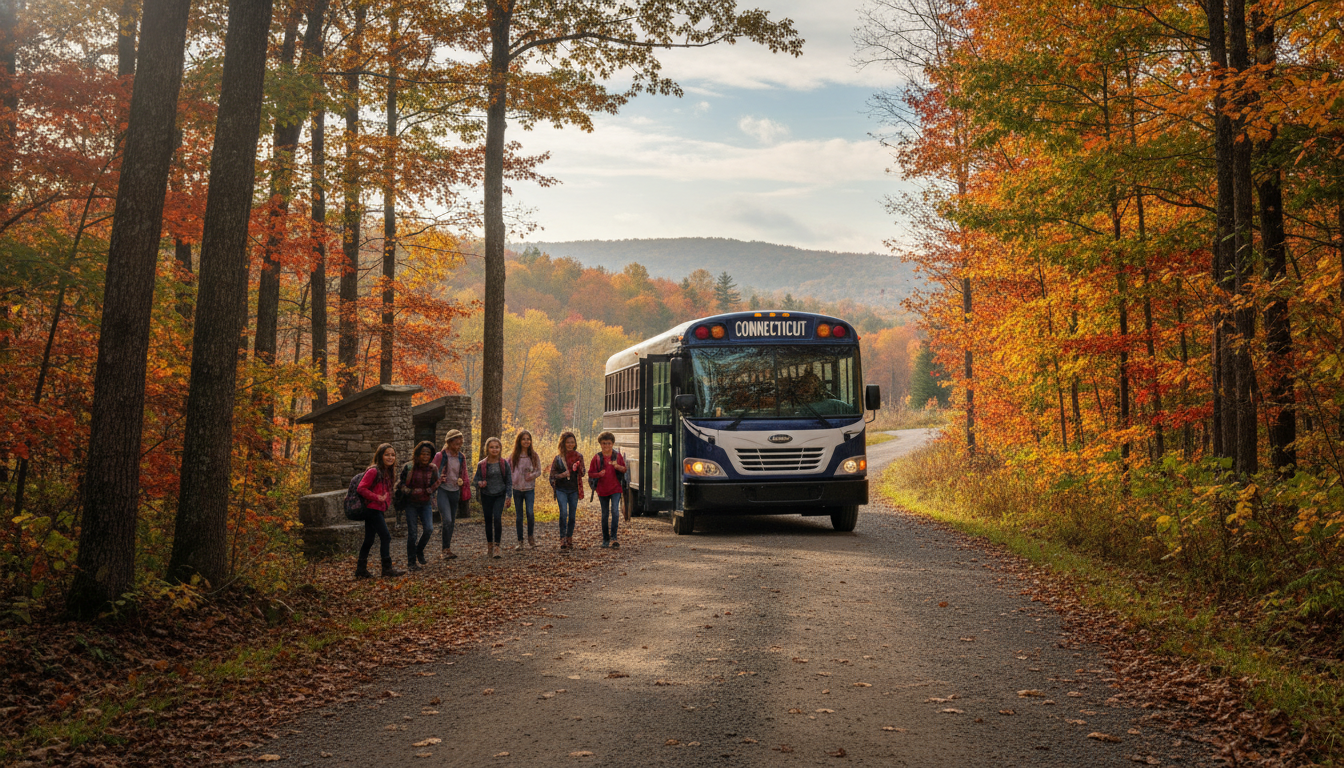

$46 Million Initiative to Electrify Connecticut’s School Buses: A Leap Toward Clean Air
In a significant step toward healthier air and sustainable transport, the Connecticut Department of Energy and Environmental Protection (DEEP) and the Connecticut Green Bank have unveiled a robust funding initiative aimed at deploying electric school buses (ESBs) across the state. This groundbreaking project harnesses a combination of $46 million in state and federal resources, affirming the state’s commitment to cleaner air for future generations.
The Hook: A Cleaner Ride for Future Generations
Imagine children riding to school in buses emitting zero exhaust fumes, inhaling nothing but clean air. This vision is becoming a reality as Connecticut takes bold action to replace diesel school buses with electric alternatives. The concerted effort will not only modernize school transportation but also significantly mitigate harmful air pollution, a concern particularly pressing for numerous communities in the state.
Funding Details and Applications
Municipalities, school districts, and bus transportation companies looking to participate in this initiative are encouraged to submit applications by January 7, 2025. The program includes supplemental funding from DEEP as well as long-term, low-interest financing opportunities via the Connecticut Green Bank. This ensures a multi-faceted approach to funding that invites participation from various stakeholders.
The Green Bank recently issued a Request for Proposals (RFP) to facilitate additional financial support, enhancing the electric school bus infrastructure of the state. To get involved, interested parties must comply with the Green Bank RFP requirements, complete the Clean School Bus Application, and fill out the School Bus Inventory Form.
DEEP Commissioner Katie Dykes remarked, “Our partnership with the Connecticut Green Bank will tap into over $52 million in federal funding from the EPA’s Clean School Bus Program, delivering vital health benefits to the children traveling on these environmentally friendly buses.”
Encouragingly, Bryan Garcia, President & CEO of the Connecticut Green Bank, stated, “The Green Bank is committed to realizing Connecticut’s zero-emission school bus goals. This collaborative RFP will ensure that essential federal investment remains in our state and enables us to build the private capital necessary for scaling the electric school bus market.”
Why It Matters: The Air Quality Crisis and Public Health
The transition to electric school buses is more than just a transportation update; it is a vital public health initiative. Diesel exhaust pollution poses serious health risks, particularly to vulnerable populations including children and the elderly. Key concerns include:
- Health Impacts: Diesel engines release high quantities of nitrogen oxides (NOx) and fine particulate matter (PM2.5), both of which are linked to severe respiratory conditions like asthma and COPD.
- Air Quality Statistics: 2024 saw Connecticut exceed federal health standards for ozone on 23 separate days, indicating a troubling trend in air quality. This deterioration can lead to increased hospital visits and missed school days.
- Costly Health Burden: In 2023, Connecticut’s Department of Public Health reported an astounding $120 million in acute care costs related to asthma. Furthermore, the state’s five largest cities, which house just 18% of its overall population, accounted for nearly half of these healthcare expenditures.
According to the Asthma and Allergy Foundation of America’s 2024 “Asthma Capitals” list, Hartford, Bridgeport, and New Haven ranked among the top 100 most challenging cities to live with asthma, reflecting the urgency to address air quality issues.
Field Insights: Pro-Tips for Local Communities
- Stay Informed: Keep an eye on upcoming community meetings regarding funding applications and electric bus trials. Your voice can shape local decisions.
- Engage with Stakeholders: Parents and community members can advocate for electric buses, emphasizing health benefits and environmental sustainability.
- Explore Collaboration: Districts can partner with hybrid companies for shared charging infrastructure, easing costs and logistics.
Conclusion
Connecticut’s initiative to implement electric school buses is a significant stride toward a sustainable future, presenting both environmental and public health benefits. As stakeholders join this electrifying journey, the hope is that children will not only enjoy cleaner commutes but also breathe cleaner air along the way.
Relevant Links:
- Application and School Bus Inventory Form
- Request for Applications
- Connecticut Green Bank Request for Proposals
For updates, follow DEEP on Twitter and Facebook or contact DEEP Communications at DEEP.communications@ct.gov or 860-424-3110.