

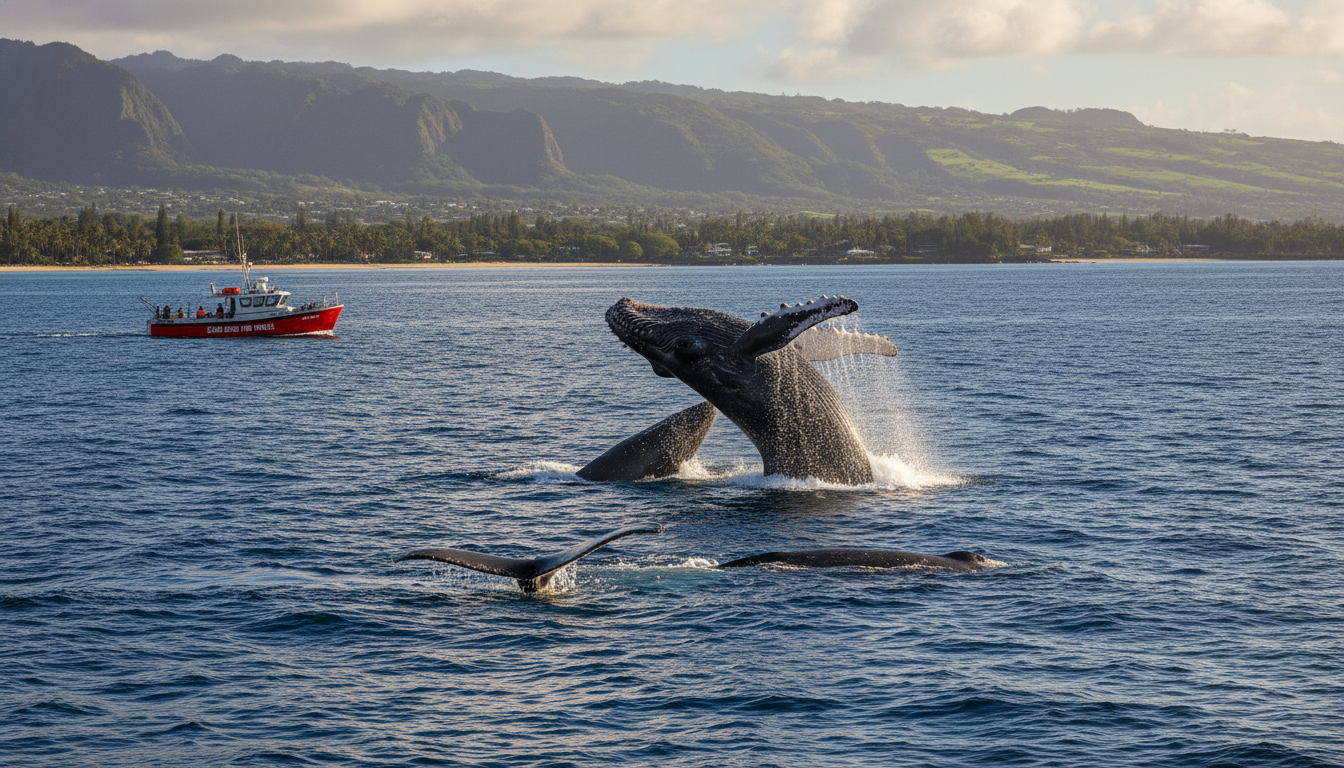

Peak Humpback Whale Season: Prioritize Safety for Whales and Mariners
HONOLULU – As the winter sun glimmers over the waters of Hawaiʻi, over 10,000 humpback whales embark on their seasonal pilgrimage to the islands, seeking safe havens to breed, nurse their young, and forge lasting familial bonds. As the numbers swell in what is known as koholā season, the Go Slow – Whales Below initiative takes center stage, urging all mariners to exercise vigilance and slow down for the sake of these majestic creatures.
A Call to Action: Protect Our Marine Mammals
Recent incidents have heightened concerns for the vulnerable humpback population. A calf off Oʻahu’s western coastline was spotted bearing a deep gash across its back, likely the consequence of a vessel collision. Such injuries underline the urgent need for heightened awareness among boaters.
This collaborative campaign involves the Department of Land and Natural Resources (DLNR), specifically its Divisions of Aquatic Resources (DAR) and Boating and Ocean Recreation (DOBOR), along with partners such as the National Oceanic and Atmospheric Administration (NOAA) Hawaiian Islands Humpback Whale National Marine Sanctuary and the Pacific Whale Foundation. Together, they implore vessel operators to:
- Maintain a speed limit of 15 knots or less in waters 100 fathoms (600 ft) deep or shallower.
- Reduce speed to 6 knots or less when approaching or departing from whales within 400 yards.
- Keep a minimum distance of 100 yards from all humpback whales, regardless of your craft—from stand-up paddleboards to larger vessels—due to legal regulations.
Why It Matters
The well-being of humpback whales is not just an environmental concern; it resonates deeply with Hawaiʻi’s cultural heritage and local economies reliant on ecotourism. Protecting these majestic marine mammals ensures sustainable tourism, maintaining vibrant whale-watching experiences that benefit local businesses. Their migration patterns also offer unique opportunities to explore oceanic ecosystems, rich in biodiversity, further underscoring the need for each boater’s responsibility in safeguarding these waters.
Field Insights: Pro Tips for Boaters
As we navigate the waters during this peak season, consider these essential tips to enhance your safety and that of the whales:
- Remain Vigilant: Calves, especially, are oftentimes curious and may surface unexpectedly, prolonging their presence at the surface while inexperienced in avoiding vessels.
- Watch for Behavioral Signs: Look for spouts or flukes as indicators of whale presence. In addition, observe for any unique markings or behaviors that could signal distress.
- Delay the Rush: Even if time is of the essence, giving whales the right of way fosters a sustainable marine environment.
In the unfortunate event of encountering an injured or entangled whale, priorities shift to safety and proper reporting:
- Maintain a safe distance of 100 yards.
- Immediately call the NOAA Fisheries 24/7 Marine Wildlife Response Hotline at 888-256-9840.
- If unable to reach them, contact the U.S. Coast Guard on VHF Channel 16, which will relay your report.
Attempting to interact with or disentangle a whale is illegal and can be perilous. With a weight exceeding 40 tons, even well-intentioned interventions often result in accidents for both humans and whales.
Conclusion: Mahalo for Your Collaboration
This initiative acknowledges the invaluable cooperation of the community in observing and documenting whale activities, reinforcing our shared commitment to safeguarding marine wildlife. As a malama (to care for) our oceanic treasures, we invite you to explore and responsibly enjoy these breathtaking encounters during whale season.
For further resources on whale sightings, protection efforts, and guidelines for boating with whales, please visit the DOBOR website at Boating with Whales.
Media Contact:
Ryan Aguilar, Communications Specialist
State of Hawaiʻi Department of Land and Natural Resources
Email: [email protected]
By fostering an ethos of empathy and respect for our aquatic allies, we can ensure that future generations will also get to experience the awe of humpback whales navigating the vibrant waters of Hawaiʻi.