

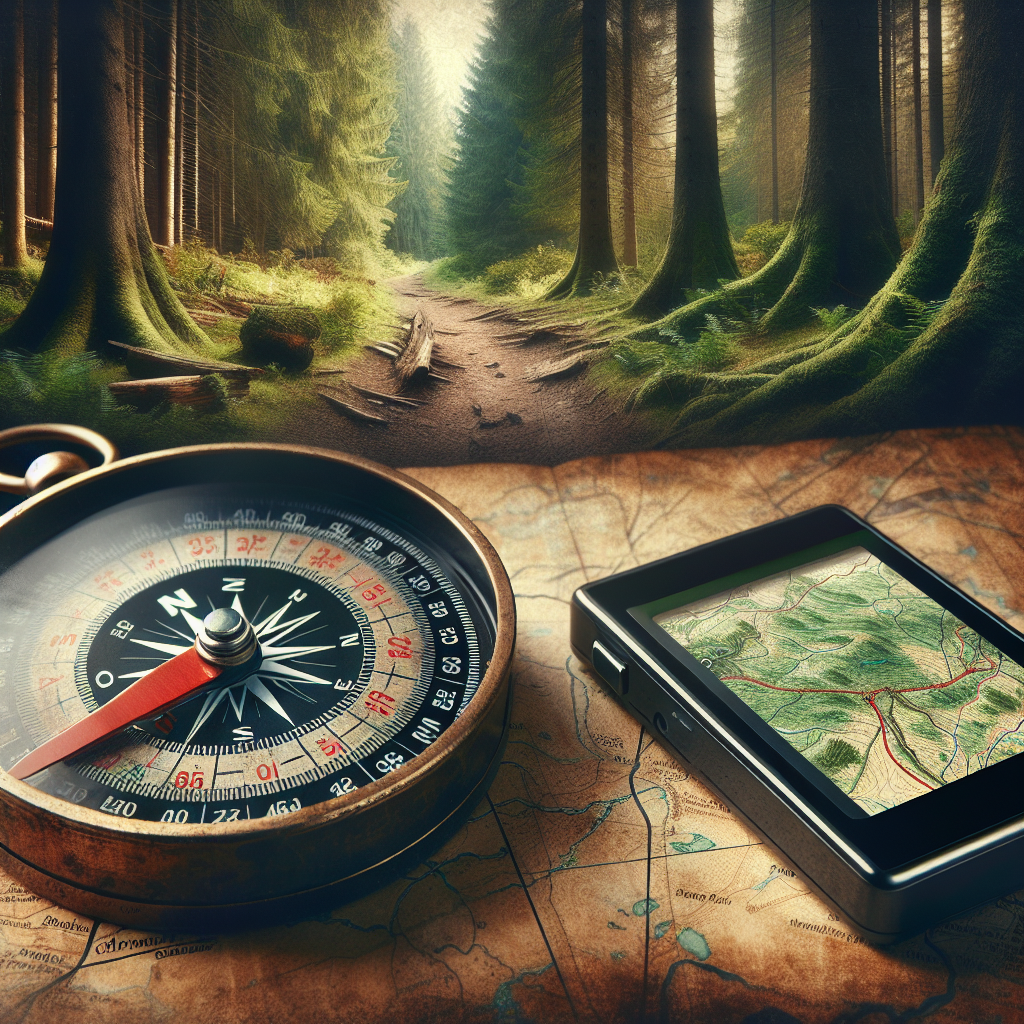

As outdoor enthusiasts, we often find ourselves exploring the ins and outs of nature’s vast landscapes, and the ability to navigate through them is a crucial skill. Whether you find yourself hiking a rugged trail, exploring a dense forest, or camping under a starry sky, you’ll eventually face the age-old question: GPS vs. Compass: What’s the Best Way to Navigate in the Wilderness? With technology advancing at lightning speed, many are tempted to rely solely on GPS devices. However, a solid understanding of traditional navigation tools such as a compass can be just as vital, if not more so. Let’s dive deep into both methods of navigation in the wilderness, exploring the pros and cons of each, while intertwining personal anecdotes and useful tips to ensure your next adventure remains safe and exhilarating.
Why Navigation Skills Matter in the Wilderness
Navigating through the great outdoors isn’t merely about finding your way; it’s about understanding your surroundings, reading the land, and being prepared for whatever nature throws your way. I still remember my first solo hike in the Smokey Mountains. I confidently set off with a shiny new GPS device, thinking technology would guide me flawlessly. Just a few hours in, the battery drained unexpectedly! Suddenly, I was left in the heart of the mountains without a plan. It was a humbling experience, and I learned the hard way how important navigation skills are.
The wilderness can be unpredictable, and mastering both GPS and compass navigation can be vital in cases of technology failure, adverse weather, or when facing unfamiliar terrains. Now, let’s explore the specifics of each navigation method.
Understanding GPS Navigation
How GPS Works
Global Positioning System (GPS) is a satellite-based navigation system that allows you to pinpoint your location anywhere on Earth. By receiving signals from multiple satellites, your GPS device calculates your exact coordinates and displays them on a map. This technology often includes built-in compasses, route planning, and mapping features that can significantly enhance your outdoor experience.
Pros and Cons of GPS Navigation
Pros:
- User-Friendly: Most GPS devices are straightforward, providing clear visual maps and voice-guided directions.
- Comprehensive Features: They often come equipped with topographic maps and points of interest, enhancing your adventure.
- Real-Time Updates: GPS can provide real-time updates on your location, distance to destinations, and estimated arrival times.
Cons:
- Battery Dependence: The biggest drawback is dependency on battery power. I once learned this lesson during a weekend backpacking trip when my GPS died halfway through the trail.
- Signal Loss: GPS signals can be weak or even unavailable in dense forests or canyons.
- Over-Reliance on Technology: It’s easy to forget the fundamentals of navigation when relying too heavily on devices.
When to Use GPS Navigation
GPS is an excellent choice for structured environments where reliable power sources are available, such as established hiking trails or when you have the means to recharge. Always carry a backup power bank, and know that technology can fail. My personal tip? Learn to mark your route using GPS, but don’t forget to take note of your surroundings to identify landmarks.
Navigating with a Compass
How a Compass Works
A compass uses Earth’s magnetic field to indicate the direction of magnetic north. By taking a bearing, you can orient yourself relative to your destination and the cardinal directions. While compasses might seem old-fashioned in today’s digital age, their simplicity is one of their greatest strengths.
Pros and Cons of Compass Navigation
Pros:
- Reliability: A compass doesn’t need batteries or signals, making it reliable no matter where you are.
- Teaches Navigation Skills: Using a compass alongside a map forces you to learn important skills that can save your life.
- Damage Resilience: It’s far less likely to get broken or malfunction compared to a delicate GPS device.
Cons:
- Learning Curve: A compass requires some practice and understanding of reading maps.
- Lacks Detailed Features: Unlike GPS, a standard compass doesn’t provide additional information like terrain elevation or paths.
When to Use a Compass
A compass is ideal for deep wilderness adventures, remote areas, or in conditions where visibility may be poor. I once led a group through fog-covered highlands; relying on a compass allowed us to navigate a tricky section without panic.
Combining GPS and Compass for Optimal Navigation
Using both navigation tools in tandem is an effective strategy. My advice is to have the GPS for easier route finding and a compass as your safety net. I remember a group hike where a storm rolled in unexpectedly. We used the GPS to track our original path but relied on the compass to ensure we were still heading in the right direction when visibility became limited.
Best Practices for Wilderness Navigation
- Always Have a Backup: Regardless of your primary method of navigation, carry both a GPS and a compass.
- Know How to Read a Map: Read topographic maps alongside your devices to understand elevation changes and terrain features.
- Keep Practicing: Take time to practice using a compass. It’s a skill that may save you when technology fails.
- Battery Management: Keep your GPS charged and carry spare batteries or power banks.
- Plan Your Routes: Before heading out, familiarize yourself with the area using both maps and GPS tools.
Key Takeaways
Navigating in the wilderness is an essential skill for any outdoor enthusiast. The question of GPS vs. Compass: What’s the Best Way to Navigate in the Wilderness? doesn’t have a one-size-fits-all answer. Both tools have their strengths and weaknesses, but when used together, they can provide the ultimate safety net. Ensure that you practice both skills consistently, prepare for the worst, and enjoy the adventure that each journey into nature brings.
Reader Questions Answered
Q1: Can I rely solely on GPS for navigation in the wilderness?
A: While GPS devices are advanced and user-friendly, they depend on battery power and signal reception. It’s wise to carry a compass as a backup for situations where your GPS might fail.
Q2: How can I improve my compass navigation skills?
A: Practice taking bearings from your current location using a map, and try to find multiple landmark points. Regular hiking with a map and compass enhances your skills and boosts confidence.
Q3: What are some common mistakes outdoor navigators make?
A: Over-reliance on technology, neglecting to learn essential map-reading skills, and failing to charge devices are common pitfalls. Always have a backup plan!
Q4: Is a compass still useful in the age of GPS?
A: Definitely! A compass is reliable, requires no power, and can teach you invaluable skills. Learning to use both tools can enhance your outdoor experiences significantly.
Q5: How do I choose the best GPS for wilderness navigation?
A: Look for features such as battery life, ease of use, map variety, and durability. Brands that offer topographic maps and detailed features tend to be the best options for serious hikers.
Frequently Asked Questions
Q1: What’s better for beginners, GPS or compass?
A: Both have their advantages. GPS is more intuitive, while a compass teaches foundational navigation skills that are essential for all adventurers.
Q2: Do I need a compass if my GPS has a built-in compass feature?
A: Yes, having a standalone compass is wise. Built-in features can fail, and having a reliable backup is crucial.
Q3: How often should I practice my navigation skills?
A: Regularly practicing is important—at least a few times each season—especially before long trips where navigation could be critical.
Q4: Can I use my smartphone as a GPS?
A: Yes, but keep in mind that smartphones can run out of battery and might not be as rugged as dedicated GPS devices. Consider downloading offline maps as a precaution.
Q5: What is the best emergency navigation method?
A: In an emergency, have a reliable compass and a map. Use basic navigation skills, such as triangulation, to determine your location and route back to safety.
Navigating the wild can be an exhilarating adventure, especially when you have the right skills and knowledge! Whether you choose GPS, a compass, or a combination of both, understanding how to navigate allows you to immerse yourself in nature while keeping safety at the forefront. Happy adventuring!