


Alabama’s Deer Hunters Face New CWD Testing Regulations: What You Need to Know for the 2025-2026 Season
As the leaves begin to fall and hunters prepare for the onset of Alabama’s white-tailed deer season, a new layer of responsibility weighs heavily on those venturing into the woods. Under the Alabama Chronic Wasting Disease (CWD) Management Zone Regulation (220-2-.167), the rules surrounding deer harvests have changed dramatically, particularly for hunters operating within the state’s High-Risk and Buffer Zones. These measures, aimed at combating the spread of CWD, underscore the delicate balance between tradition and environmental stewardship.
Understanding the CWD Management Zones
The CWD Management Zone (CMZ) in Alabama is segmented into two critical areas: the High-Risk Zone and the Buffer Zone.
- High-Risk Zone: Encompasses all of Lauderdale and Colbert counties, along with portions of Franklin County. This area extends north of State Highway 24 and east to U.S. Highway 43.
- Buffer Zone: Covers the remainder of Franklin County, located south of Highway 24 and east of U.S. Highway 43.
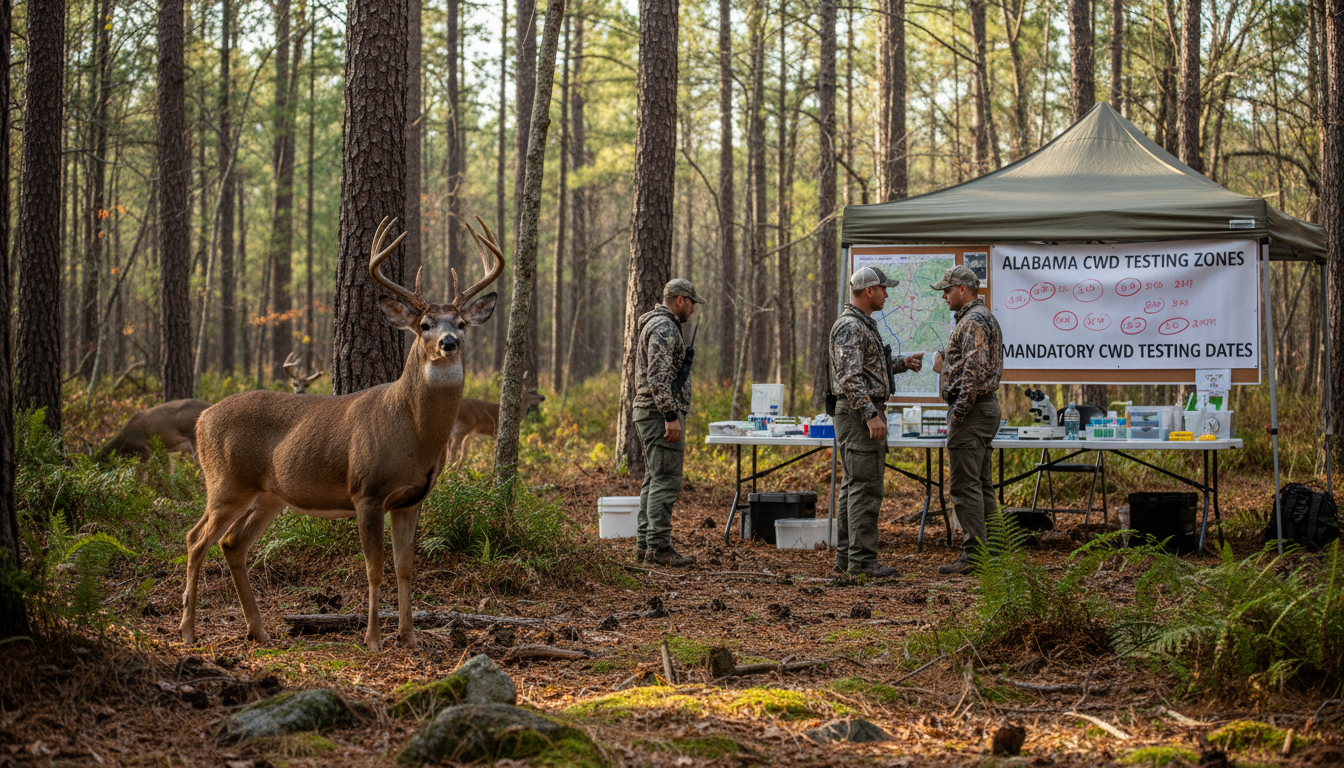
Hunters in these zones will be required to submit all deer harvested during designated sampling weekends for CWD testing. Specifically, the mandatory testing dates for the High-Risk Zone are November 22-23, December 6-7, and January 17-18, 2026, while the Buffer Zone mandates testing on November 22-23 and January 17-18, 2026.
These sampling weekends conveniently align with peak hunting times, including the season’s opening weekend and the rut in Northwest Alabama—a crucial consideration for hunters vying for their best harvests.
Sampling Stations and Voluntary Drop-off Locations
Outside of the mandatory sampling weekends, hunters are strongly encouraged to voluntarily submit samples for CWD testing. Self-service freezers will be available in both the High-Risk and Buffer Zones, as well as across the state for hunters outside the CMZ. Details on sampling locations can be found via the Alabama Department of Conservation and Natural Resources (ADCNR) at www.outdooralabama.com/cwd/cwd-zone-map.
Public lands within the CMZ—such as the Freedom Hills, Lauderdale, and Seven-Mile Island Wildlife Management Areas, along with the Cherokee Physically Disabled Hunting Area and the Riverton Community Hunting Area—will require mandatory testing for all harvested deer throughout the season.
Incentives for Participation and Additional Regulations
In an effort to boost CWD testing participation, ADCNR is offering CWD Sampling Permits for hunters harvest deer during the designated testing weekends. By submitting their harvested deer for CWD testing on the mandated dates, hunters may receive a permit allowing them to harvest one extra antlered deer within the CMZ, with a limit of two additional permits per hunter for both zones combined. It’s important to note that these permits are non-transferable and only available at designated WMA check stations and ADCNR mobile sampling sites.
Restrictions aimed at containing CWD are also in place. Carcasses of harvested deer must remain within the respective zones—High-Risk Zone deer should not be transported outside of it, while those from the Buffer Zone must be confined to the CMZ. Deboned meat, cleaned skull plates, and raw hides lacking visible brain or spinal cord tissue can be transported out of these areas, a pertinent regulation to fathom for hunters.
Why It Matters
The Bigger Picture for Conservation and Local Economies
The implications of CWD spread far beyond individual hunting experiences; they resonate through local communities, wildlife health, and the overall ecology. Understanding and complying with these regulations is pivotal for the long-term viability of Alabama’s deer population and the ecosystems tied to them. Local economies that thrive on hunting tourism and conservation initiatives may face dire consequences if CWD remains unchecked.
By maintaining a robust testing regimen, hunters contribute to research efforts aimed at understanding and controlling this fatal neurological disease, which has already made its presence felt since its first detection in Alabama’s deer herd in January 2022.
Field Insights: Pro Tips for Hunters
- Stay Informed: Regularly check websites like www.outdooralabama.com/cwd-info for updates on CWD regulations and sampling locations.
- Unpack and Share: When discussing your experiences with fellow hunters, share insights about the importance of testing and how it impacts wildlife conservation.
- Take Precautions: Ensure that you dispose of carcasses properly within designated zones to mitigate the spread of CWD.
- Participate Actively: If you’re hunting in the CMZ, participate actively in sampling efforts—this can ultimately lead to better data and a healthier deer population.
The 2025-2026 aluminum white-tailed deer season poses a unique challenge but also an opportunity to contribute to the greater good of Alabama’s natural resources. With awareness and diligence, hunters can ensure that their traditions remain intact while safeguarding the future of wildlife.