

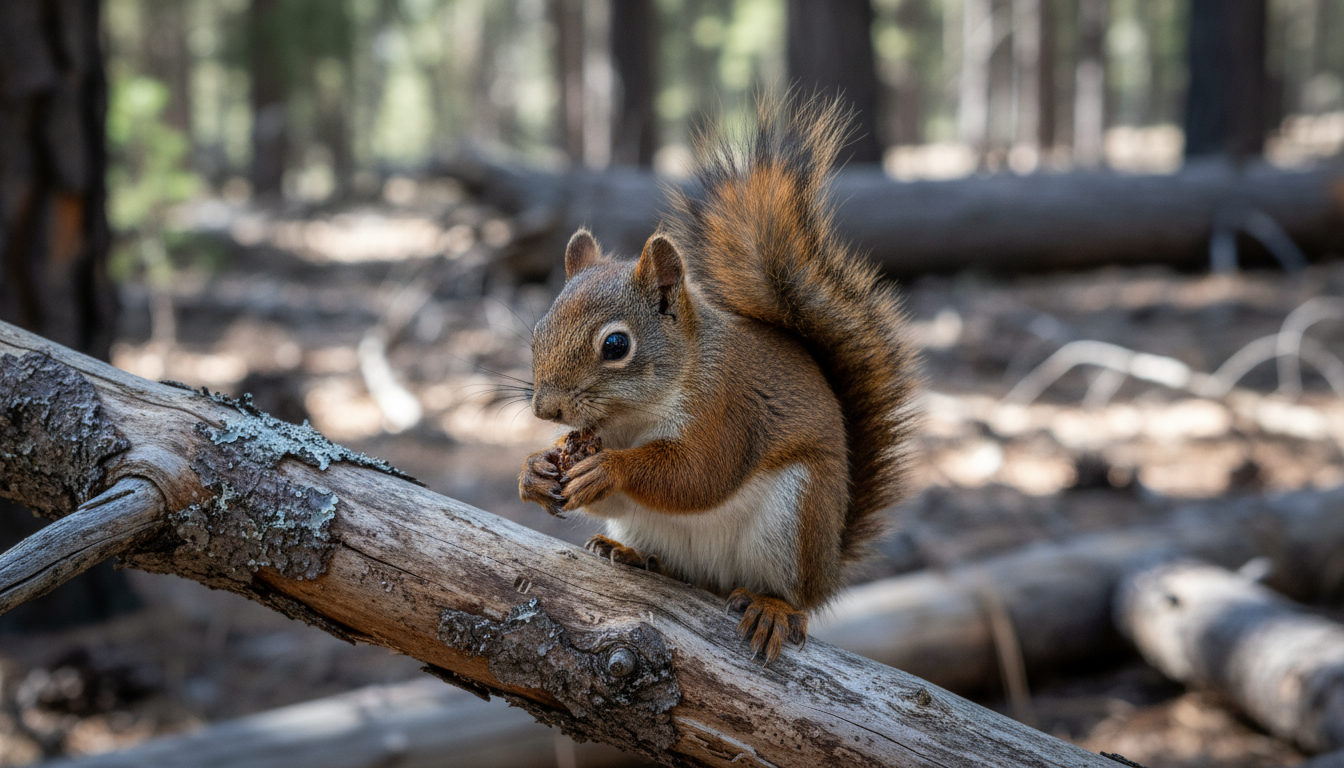

Stability in the Mountains: Good News for the Endangered Mount Graham Red Squirrel
A Promising Population Estimate Amidst Challenging Conditions
Phoenix — The once-thriving Mount Graham red squirrel is holding its ground in the Pinaleño Mountains of southeastern Arizona, according to the latest interagency survey. Conducted by the Arizona Game and Fish Department (AZGFD), the Coronado National Forest, and the U.S. Fish and Wildlife Service, the survey estimates the population at 232 individuals—almost identical to the previous year’s count of 234. This remarkable stability comes after a notably dry 2025, providing a hopeful outlook for this endangered subspecies.
“After enduring a year with minimal winter and spring precipitation, it’s inspiring to see the population persist under such difficult conditions,” said Holly Hicks, AZGFD’s small mammal project coordinator.
A Snapshot of the Study
Annual surveys of the Mount Graham red squirrel primarily focus on locating “middens,” which are the conifer cone storage sites vital for the squirrels’ survival. By examining these middens, biologists can gauge not just the activity levels of the squirrels, but also their movements across their mountainous habitat.
“Survey plots are meticulously designed to encompass the majority of red squirrel territory in the Pinaleño Mountains, allowing for the identification of new middens as they are established,” Hicks explained. “The data collected from these monitoring sites is essential for estimating population sizes.”
Historically, the Mount Graham red squirrel population peaked at around 550 in the late 1990s but faced a dramatic decline post-2017 Frye Fire, dwindling to approximately 35 individuals. After a series of gradual recoveries, including a remarkable count of 90 new squirrels in 2023, the population has returned to its typical fluctuation range of 200 to 300.
“Seeing the population hold steady this year despite the challenging conditions is a very encouraging sign for this endangered subspecies,” remarked Brittany Garza, lead biologist for the Mount Graham red squirrel with the U.S. Fish and Wildlife Service.
Why It Matters
The survival of the Mount Graham red squirrel serves as a crucial touchstone for both biodiversity and ecosystem health in Arizona. Conservation efforts directly impact not just the squirrels but also the intricate networks of flora and fauna that rely on these coniferous ecosystems.
- Hunters and Hikers: Understanding the squirrels’ habitat conditions can enhance experiences in the wild, allowing outdoor enthusiasts to appreciate the delicate balance of life in the mountains.
- Conservationists: Successful population stabilization underscores the effectiveness of interagency collaboration, highlighting models that may be applied to other stressed species.
- Local Economies: Healthy wildlife populations attract eco-tourism, which stimulates local economies reliant on outdoor recreation.
Field Insights: Pro-Tips for Nature Enthusiasts
If you’re planning to explore the Pinaleño Mountains or are simply interested in wildlife, consider these tips:
- Look for Middens: Keep an eye out for piles of discarded conifer cones; these are likely active squirrel middens.
- Be Mindful of Habitat: Respect wildlife by staying on established trails to minimize disturbance to their homes.
- Observe Quietly: Bring binoculars for a safe and unobtrusive way to watch these elusive and territorial squirrels in their natural environment.
Sustained Conservation Efforts
In cooperation with ecological partners, a suite of conservation strategies is underway to further support the Mount Graham red squirrel. These initiatives encompass:
- Habitat assessments to evaluate ecosystem health
- Insect pheromone treatments aimed at tree preservation
- Conifer seed collection, storage, and replanting efforts
- Monitoring and enhancement of forest stand conditions
- Strategies for reducing competition from food and habitat competitors, notably the non-native Abert’s squirrel
- Collaborative captive rearing projects with the Arizona Center for Nature Conservation and Phoenix Zoo
- Translocation and augmentation research conducted by the University of Arizona
- Annual monitoring of population dynamics
The collaborative efforts aimed at preserving the Mount Graham red squirrel not only emphasize its ecological importance but also reflect a broader commitment to maintaining the rich biodiversity of Arizona’s unique habitats. As these agencies continue to monitor and adapt conservation techniques, there is reason to hope that the Mount Graham red squirrel will thrive for future generations to admire in the shadow of its majestic mountain home.