

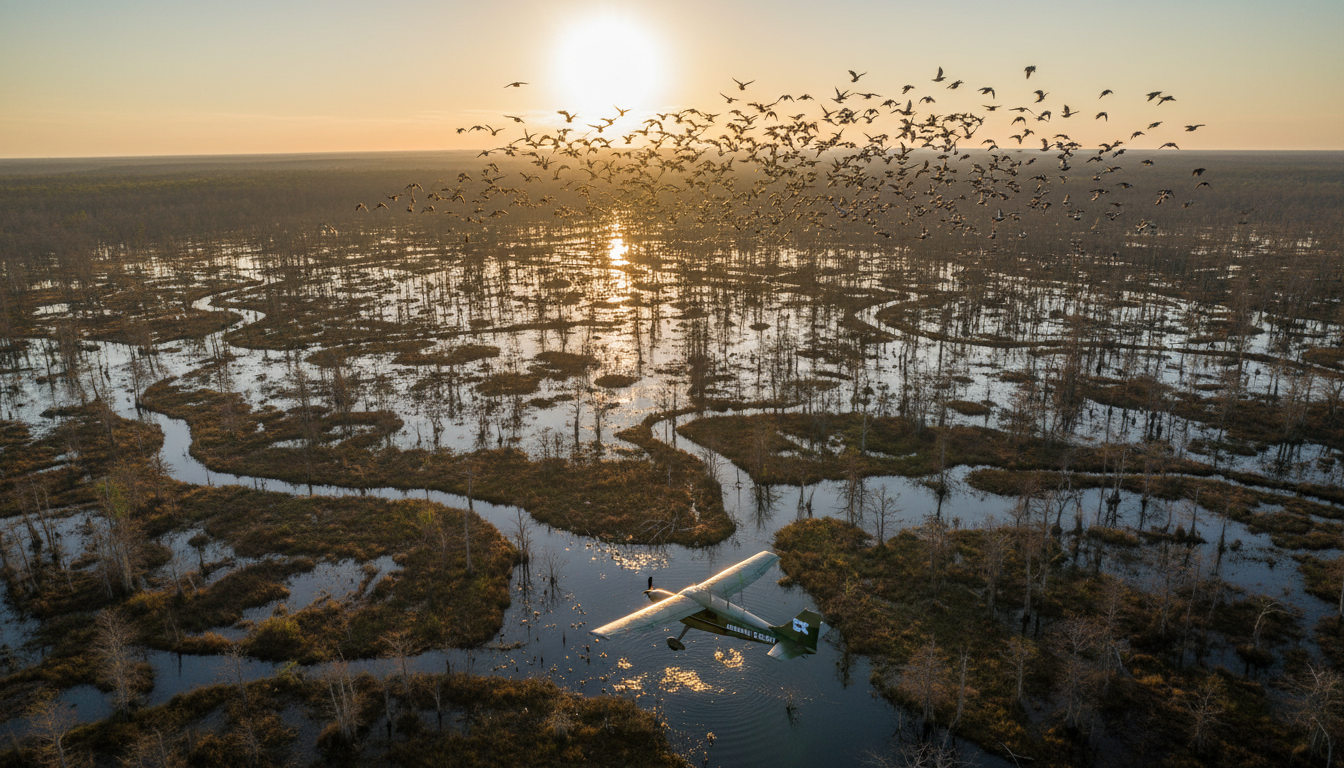

Record Mallard Counts Defy Drought in Arkansas Delta
Strong Mallard Populations Mark December Amidst Drought Conditions
The Arkansas Delta has revealed its latest waterfowl estimates, offering a glimmer of positivity amid challenging environmental conditions. Recent transect-based surveys conducted by the Arkansas Game and Fish Commission (AGFC)—spanning December 15 to 23—show that mallard populations in the area sit at an impressive 498,164, a substantial increase of 344,741 birds over last December’s dismal figures. However, this count remains 35,154 birds shy of the long-term average from 2009 to 2024, according to Brett Leach, the AGFC’s waterfowl program coordinator.
In total, duck estimates for the Delta soared to approximately 1,458,354, marking an increase of 928,377 ducks compared to the previous year. This figure also surpasses the long-term December average by 407,455 ducks, a sign that not all hopes are lost for waterfowl enthusiasts despite the ongoing drought situations affecting the area.
Arctic Goose Populations and Survey Challenges
The Delta’s environment also harbors a robust population of Arctic geese, with estimates revealing 2,992,914 light geese (lesser snow and Ross’s) and 285,292 greater white-fronted geese. However, weather complications, including precipitation and aircraft maintenance issues, delayed the survey period, pushing it close to the Christmas holidays. Although the aerial counts for the Arkansas River Valley were scrapped this year, AGFC plans to conduct those mid-winter assessments next week.
Additionally, a cruise survey conducted on December 10 in southwest Arkansas estimated only 7,960 ducks, with a mere 3,710 being mallards. This is disheartening as duck populations are down 74% when compared to historic averages in that region. The clustering of malards was particularly dense along the Red River between U.S. Highway 82 and the Sulphur River.
An Unconventional Mallard Dynamic
While mallards typically make up around 49% of the total duck population in December, this year’s survey yielded only 34%, echoing similar trends seen in recent dry Decembers. Leach explained, “During periods of drought, estimates may be biased high or low due to birds congregating around limited water sources, leading to increased uncertainties.”
The confidence intervals reflect this uncertainty. The mallard count of 498,164 carries a broad confidence range of 297,292 to 797,901 birds, suggesting a potential variability that could swing widely. The total duck population estimate follows suit, indicating between 817,000 to 2.31 million ducks could be present.
Key Hunting Zones and Dry Conditions
The counts concentrated in four primary survey zones—Bayou Meto-Lower Arkansas, Big Creek, Cache, and the L’Anguille rivers—account for a staggering 79% of the mallard estimate and 76% of the total duck count. Notably, the Big Creek zone led with 429,157 ducks, forming 29% of the total duck population.
Environmental conditions remain problematic, as the Delta has suffered from significant drought, with rainfall totals in November and December plummeting to about 62% below normal. “While light precipitation is forecast after the New Year, we lack the rain volume needed to alleviate our deficits,” Leach cautioned.
Why It Matters
The waterfowl population dynamics in the Arkansas Delta are critical not just for conservationists but also for hunters, local businesses, and the broader economy. As mallard populations provide crucial sustenance for migratory bird populations and local hunters, understanding these dynamics can influence hunting regulations, habitat management strategies, and outreach programs. The significant maldistribution of birds exacerbates the challenges for hunters and nature enthusiasts alike, making clear delineation of water sources even more vital.
Field Insights for Outdoor Enthusiasts
For those eager to engage in Arkansas waterfowl activities, consider the following pro-tips:
- Scout Concentration Zones: Focus your hunting efforts in the primary survey zones identified by the AGFC, as these areas are more likely to yield successful trips.
- Monitor Water Levels: Conditions are rapidly changing. Regularly check the AGFC’s website for updates on water levels and habitat conditions.
- Stay Alert for Weather Patterns: Changes in temperature can affect duck movement and behavior; track the forecasts closely for optimal hunting days.
With these insights in hand, hunters can navigate the complexities of Arkansas’s waterfowl landscape more effectively.
Upcoming Hunting Opportunities
As the New Year approaches, hunters should prepare for the AGFC’s permit application period opening on Thursday at 3 p.m. and concluding Sunday at midnight. This is the last chance to secure permits for public hunts on the AGFC’s 50 WRICE private fields and selected wildlife management areas. Successful applicants will be notified on Monday, so don’t miss out on these vital opportunities.
As we move deeper into the winter months, the Arkansas Delta presents challenges and opportunities alike for wildlife enthusiasts, conservationists, and waterfowl hunters. It’s crucial to remain informed and proactive in these uncertain times for the natural resources we all cherish.