

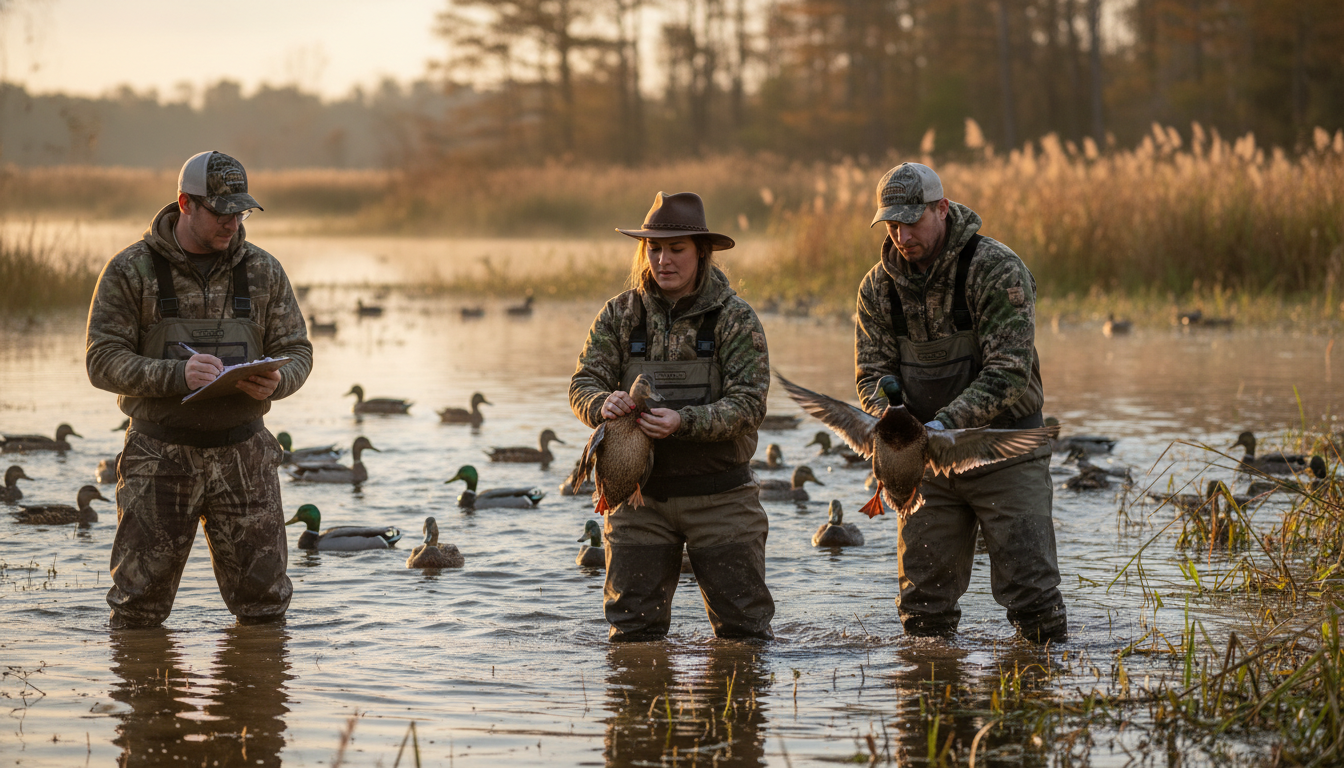

A New Wave of Waterfowl: Biologists Gear Up for Migration Season in Arkansas
ANTICIPATION AT RAFT CREEK BOTTOMS
As the leaves begin to turn and the air fills with the crispness of autumn, waterfowl enthusiasts like Cayce Guy find themselves in eager anticipation. Located at the Steve N. Wilson Raft Creek Bottoms Wildlife Management Area (WMA), Guy stands on the cusp of the peak migration period, heightened this year by personal involvement in critical wildlife research.
In his dual role as both an ardent waterfowler and the wildlife biologist for the Arkansas Game and Fish Commission (AGFC) at the WMA, Guy carries the weight of both observation and action. This year, he was among a select team of biologists who spent a month working in the Prairie Pothole Region—an expansive network of wetlands crucial for breeding waterfowl—capturing and banding thousands of ducks destined for wintering grounds in Arkansas and beyond.
UNRAVELING THE HISTORY OF BIRD BANDING
The practice of marking birds dates back to antiquity, but the systematic use of metal bands originated in the mid-19th century. John James Audubon famously initiated the concept by tying silver thread to eastern phoebes on his Pennsylvania estate, later confirming their return to the same nest a year later. Fast forward to today, millions of birds are monitored through the United States Geological Survey’s Bird Banding Laboratory, which provides vital data used to decipher migration pathways, distribution patterns, harvest rates, and survival statistics.
“[Ducks are often encountered with their bands recovered post-harvest],” explains Guy, but the journey begins long before a hunter gets involved.
HOW BAND INSTALLATION WORKS
Brett Leach, AGFC’s Waterfowl Program Coordinator, elaborates on the sophisticated planning that goes into banding activities. “The choice of banding sites is predominantly determined by species and research objectives. Our long-standing banding locations for wood ducks and Canada geese in Arkansas are instrumental in understanding regional bird populations,” he says.
Leach highlights that the most extensive banding campaigns occur during the late summer months in northern latitudes, where waterfowl nest and molt. These initiatives hinge on collaboration between state and federal agencies, typified by the Mississippi Flyway Council Cooperative Bird Banding Program, which encompasses all states along the flyway.
WHY IT MATTERS
The importance of these banding initiatives extends well beyond simple tracking. Understanding the migratory patterns of waterfowl impacts various sectors:
- Sustainable Hunting: Accurate data allows for informed harvest regulations, ensuring that hunting remains a viable activity while preserving bird populations.
- Conservation Efforts: Monitoring survival rates aids conservationists in making evidence-based decisions about habitat restoration and protection efforts.
- Local Economies: A successful waterfowl migration support local economies that thrive on outdoor recreational activities, including hunting, birdwatching, and tourism.
FIELD INSIGHTS: TIPS FOR WATERFOWL ENTHUSIASTS
If you’re gearing up for the migration season, here are a few pro-tips to enhance your experience:
- Be Aware of Weather Patterns: Changes in temperature can significantly affect waterfowl movement. Cold fronts may trigger earlier migrations.
- Scout Water Sources: Focus on wetlands and grain fields where waterfowl will stop to feed and rest.
- Know Migration Times: Ducks often follow predictable flight schedules; early morning and late afternoon are prime viewing times.
- Advocate for Habitat Conservation: Support local conservation initiatives to ensure sustainable environments for migrating species.
As the migration season unfolds, waterfowl enthusiasts, conservationists, and casual observers alike will soon witness nature’s remarkable display. Experts like Guy and Leach are not just watching history unfold; they are actively working to write its next chapter. Whether you’re in the field or following from your couch, preparation and awareness will enhance your appreciation of this annual phenomenon.
The intertwined fates of birds and biologists highlight the critical role we play in maintaining our ecosystems—a legacy that is worth preserving for future generations.