

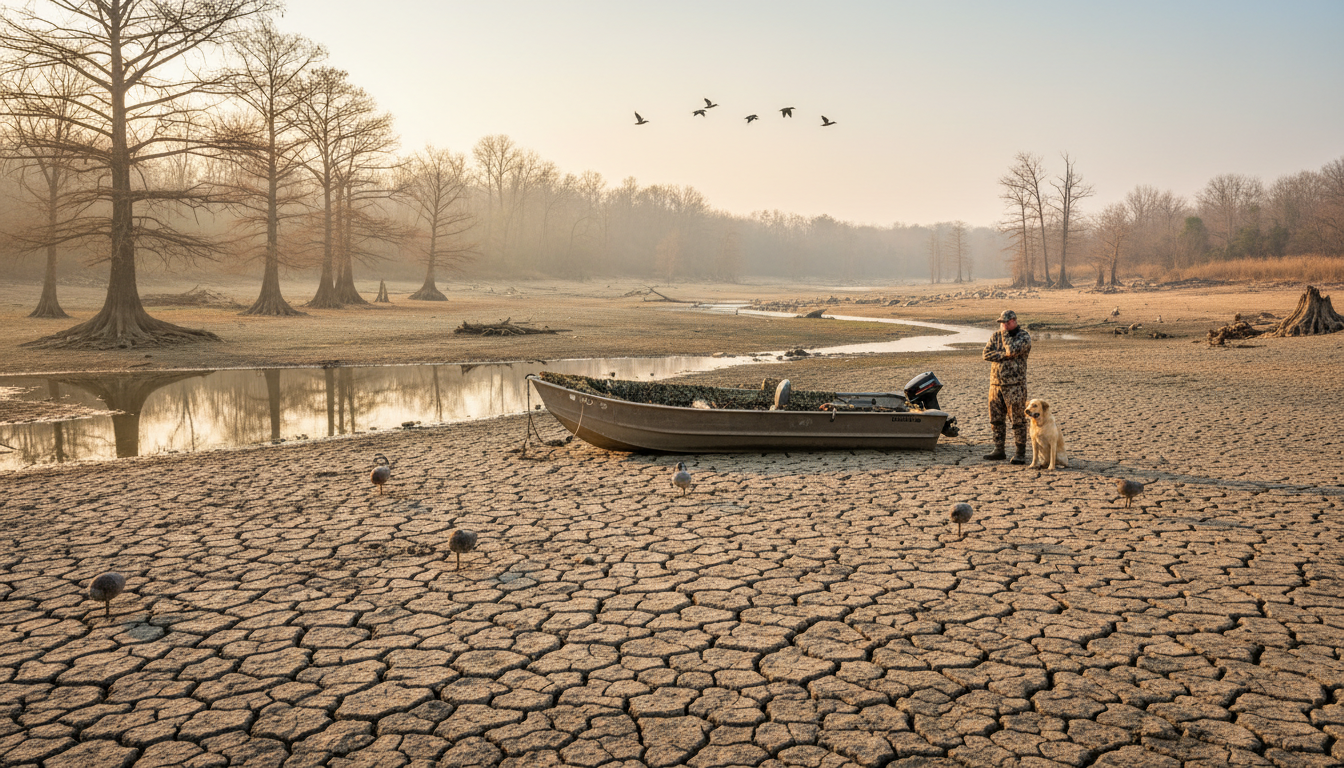

Drought Dilemma: Arkansas Waterfowl Seasons Face Unprecedented Challenges
The Struggle for Surface Water: An In-Depth Look
As the Arkansas Game and Fish Commission (AGFC) strives to flood vital waterfowl hunting areas, reliance on surface water has become increasingly precarious. With limited rainfall and a parched climate dominated by a persistent La Niña phenomenon, this season is shaping up to be one of the most difficult in recent memory for both hunters and wildlife.
“We’re witnessing conditions that are worse than last year,” states waterfowl expert Jackson. “On the White River, water levels are significantly lower than they were in the previous season. This ongoing drought has left us in a seriously dry state, and we lack the ability to summon rain. If I could make it rain, I’d gladly turn off the pumps.”
Conditions Call for Intervention
The imminent weather forecast suggests a meager quarter-inch of rain across the state, which Jackson dismisses as insufficient. “We’re in dire need of an extraordinary weather event—something that delivers 8 to 10 inches of rain—to salvage this duck season,” he emphasizes. The stark reality is that water is scarce on the landscape, and hunters are increasingly dependent on limited surface water resources.
Reports from the field indicate a dire situation for waterfowl hunting in Arkansas. Jackson relays, “The feedback I’m receiving isn’t optimistic. While some private clubs are managing their resources wisely, the overall consensus is that bird counts are light.” He notes there were a couple of productive days over the weekend, particularly in the east-central area, buoyed by a fresh influx of mallards. However, this brief surge was quickly followed by a sharp decline.
Mixed Results in Waterfowl Surveys
Brett Leach, waterfowl program coordinator for the AGFC, shared that biologists were set to conduct their December surveys this week. Due to uncooperative weather conditions—a low ceiling and approaching rain—their observations will likely continue into next week. Some reports from the field revealed mixed results. “With the recent ice, birds were concentrated, but as conditions normalize, we expect them to disperse again. It’ll be interesting to see the findings from the surveys later this week,” Leach noted.
Why It Matters
The ramifications of this challenging season extend beyond mere hunting success. Waterfowl play a critical role in maintaining ecosystem balance, and a decline in their numbers could signal larger environmental issues. Hunters and wildlife enthusiasts are not only focused on their immediate experiences; they’re part of a broader conservation effort that supports local economies and biodiversity. The lagging water levels could adversely affect migration patterns, disrupt breeding, and undermine the long-term viability of these species.
This culminates in a concerning scenario for Arkansas: If conditions remain unfavorable, the implications could ripple through both the hunting community and conservation efforts, impacting tourism and local businesses reliant on outdoor recreation.
Field Insights: What to Watch For
- Plan Your Permits: The second split of Arkansas’s 60-day waterfowl season will close at sunset on Tuesday, December 23, resuming on Saturday, December 27. Ensure you have your permits in place to participate in public hunts on AGFC’s properties.
- Stay Informed: Visit the AGFC’s “Waterfowl” page for updates on water levels and habitat conditions. Biologists update data when new information is available, so it’s critical to stay current.
- Adjust Hunting Strategies: With limited water attracting waterfowl to specific areas, keen observational skills will help you determine the best spots for hunting. Monitor recent wildlife reports and remain adaptable to shifting bird patterns.
In these turbulent times, it’s essential for all stakeholders—hunters, conservationists, and curious adventurers—to remain engaged and informed. The continued health of Arkansas’s waterfowl populations depends on our collective awareness and adaptive strategies moving forward.
For waterfowl dates and limits, click HERE.
By remaining vigilant and proactive, we not only secure our immediate hunting opportunities but also bolster the long-term conservation efforts crucial for the stewardship of Arkansas’s natural resources.