

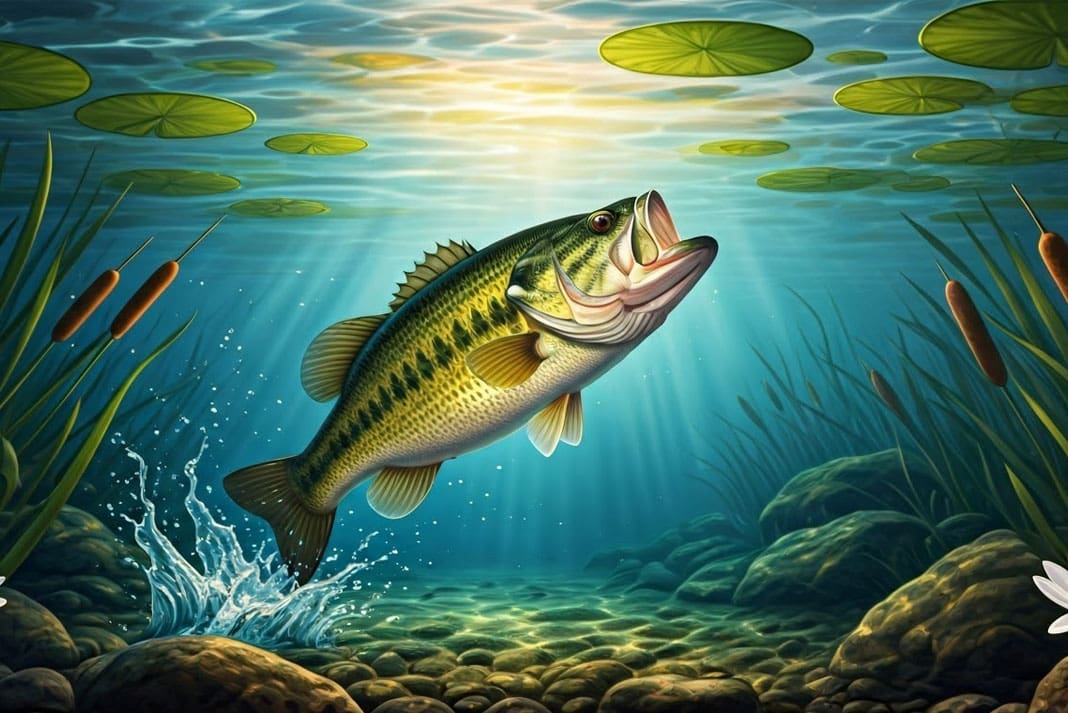

Bass fishing is a popular pastime for anglers looking to enjoy the thrill of the catch.
Whether you’re fishing in lakes, rivers, or ponds, bass are abundant and offer a rewarding challenge for beginners and seasoned pros alike. This guide will equip you with the essential knowledge needed to get started on your bass fishing journey.
Understanding Bass Species
There are two primary species of bass that anglers target: Largemouth Bass and Smallmouth Bass.
Largemouth Bass
-
- Appearance: Greenish body with a darker upper jaw extending past the eye.
-
- Habitat: Prefer warm, shallow waters with abundant vegetation.
-
- Behavior: Often found hiding near structures like logs, rocks, and weed beds.
Smallmouth Bass
-
- Appearance: Brownish or bronze body with vertical stripes and a smaller mouth.
-
- Habitat: Typically found in clearer, cooler waters, often in rivers and lakes.
-
- Behavior: More active in open water and often associated with rocky substrates.
Essential Gear for Bass Fishing
Fishing Rod and Reel
-
- Rod: A medium to medium-heavy rod, typically 6.5 to 7.5 feet long, offers versatility.
-
- Reel: A baitcasting reel is common for experienced anglers, while spinning reels are often easier for beginners.
Fishing Line
-
- Monofilament: Good for beginners due to its ease of use and knot strength.
-
- Fluorocarbon: Less visible underwater and ideal for clearer waters.
-
- Braided: Known for its strength and sensitivity, great for heavy cover.
Lures and Bait
-
- Artificial Lures: Spinnerbaits, crankbaits, and soft plastics imitate the bass’s natural prey.
-
- Live Bait: Worms, minnows, or shad are effective, especially for beginners.
Accessories
-
- Tackle Box: Organize your lures and tools.
-
- Fish Finder: Useful for locating bass but not necessary for beginners.
-
- Pliers and Scissors: For handling lures and cutting line.
Basic Techniques
Casting
-
- Practice your casting technique for accuracy and distance.
-
- Target structures like submerged rocks or vegetation, as these are bass hotspots.
Retrieving
-
- Vary your retrieval speed to mimic natural prey movement.
-
- Experiment with different techniques, such as jerking, slow rolling, or twitching.
Patience and Observation
-
- Watch the water for signs of activity, such as jumping fish or ripples.
-
- Be patient: sometimes the best catches come after periods of quiet waiting.
Best Times to Fish
-
- Morning and Evening: Bass are more active during these times, especially on warm days.
-
- Seasonal Considerations: During spawning season in spring, bass are easier to catch as they move into shallow waters.
Regulations and Conservation
Always check local regulations regarding fishing licenses, size limits, and seasonal restrictions. Practicing catch and release helps maintain healthy bass populations and ensures sustainability for future anglers.
Conclusion
With the right gear, techniques, and a bit of practice, you’ll be well on your way to enjoying the thrilling experience of bass fishing. Remember to respect the environment and your fellow anglers, and you’ll find that bass fishing can be a fulfilling and exciting outdoor activity. Get your gear ready, and good luck with your fishing adventures!