


**
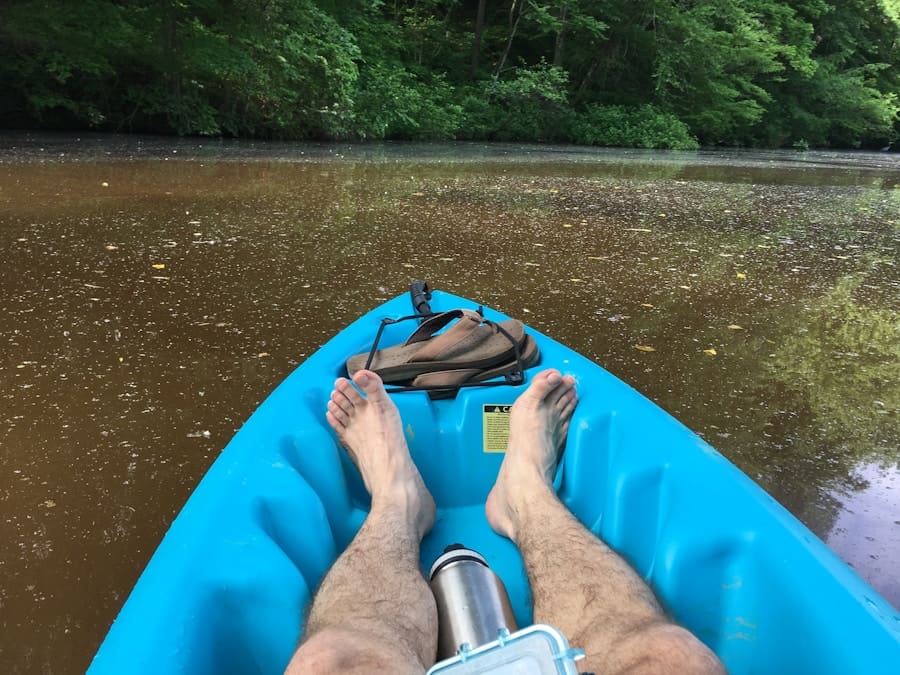
Establishing a proper stance is crucial for both kayaking and canoeing, as it directly influences balance, control, and overall efficiency on the water. For kayakers, the ideal position involves sitting upright with feet firmly planted on the footrests, ensuring that the knees are slightly bent. This posture not only enhances stability but also allows for better power transfer during paddling.
Canoeists, on the other hand, typically adopt a kneeling or sitting position, depending on the type of canoe and personal preference. Kneeling provides a lower center of gravity, which can be beneficial in rough waters. In both cases, maintaining a relaxed yet engaged posture is essential.
A rigid stance can lead to fatigue and decreased maneuverability. Instead, paddlers should focus on keeping their core engaged while allowing their arms and shoulders to move fluidly. This balance between tension and relaxation enables paddlers to respond quickly to changing conditions on the water.
Additionally, proper foot placement can help in stabilizing the craft, allowing for more effective paddling strokes. **
Essential Kayaking Techniques for Efficient Paddling**
To paddle efficiently, kayakers must master several fundamental techniques that enhance speed and reduce fatigue. One of the most critical aspects is the forward stroke, which involves a smooth entry of the paddle into the water, followed by a powerful pull through the stroke. The key is to keep the paddle blade vertical during the pull phase to maximize propulsion.
A common mistake among beginners is to lift the paddle too high out of the water, which can waste energy and slow down progress. Another essential technique is the use of body rotation. Instead of relying solely on arm strength, kayakers should engage their torso to generate power.
This rotational movement not only increases stroke efficiency but also helps in maintaining balance. According to expert paddler and coach Sarah Johnson, “Using your core to drive your strokes can significantly enhance your speed and endurance.” By incorporating these techniques into their practice, paddlers can enjoy longer outings with less fatigue. ** I always make sure to have proper safety equipment, including life jackets, when going out on the water.
Key Takeaways
- Maintain a proper posture and stance while kayaking or canoeing to ensure stability and prevent fatigue
- Learn essential paddling techniques to maximize efficiency and minimize strain on your body
- Master different canoeing strokes to improve maneuverability and efficiency on the water
- Engage your core muscles to generate power and maintain stability while paddling
- Use proper paddle grip and blade angle to optimize efficiency and minimize resistance in the water
Mastering Canoeing Strokes for Improved Efficiency**

Canoeing requires a different set of strokes compared to kayaking, each designed for specific maneuvers and conditions. The forward stroke is fundamental, similar to kayaking, but it often involves a more pronounced torso twist to maximize power. Canoeists should aim for a long reach with each stroke, allowing the paddle blade to enter the water near the bow and exit near the stern.
This technique not only propels the canoe forward but also helps maintain a straight course. In addition to the forward stroke, mastering the J-stroke is essential for steering without losing momentum. This technique involves a slight twist of the paddle at the end of the stroke to create a corrective motion that keeps the canoe on track.
For those looking to improve their efficiency further, practicing the draw stroke can be beneficial for maneuvering in tight spaces or making quick turns. By integrating these strokes into their routine, canoeists can enhance their overall paddling experience. **
Understanding the Power of Core Engagement in Paddling**
Core engagement plays a pivotal role in both kayaking and canoeing, serving as the foundation for effective paddling techniques. A strong core stabilizes the body and allows for better energy transfer from the torso to the arms during strokes. This connection is vital for maintaining balance and control, especially in challenging water conditions.
Paddlers who neglect core strength may find themselves fatigued more quickly and less capable of executing powerful strokes. Incorporating core-strengthening exercises into a paddler’s training regimen can yield significant benefits on the water. Activities such as planks, Russian twists, and Pilates can enhance core stability and endurance.
According to fitness expert Mark Thompson, “A strong core not only improves paddling efficiency but also reduces the risk of injury.” By prioritizing core engagement, paddlers can enjoy longer sessions with improved performance. **
Utilizing Proper Paddle Grip and Blade Angle for Efficiency**
The way a paddler grips their paddle and positions the blade can greatly influence efficiency and comfort during kayaking or canoeing. A proper grip involves holding the paddle with both hands shoulder-width apart while ensuring that the knuckles are aligned with the shaft. This grip allows for better control and reduces strain on the wrists during extended paddling sessions.
Blade angle is another critical factor that affects performance. For optimal efficiency, paddlers should maintain a slight angle between the blade and the water surface during strokes. This positioning allows for smoother entry and exit from the water while maximizing propulsion.
Beginners often overlook these details, but as they gain experience, they will find that small adjustments in grip and blade angle can lead to significant improvements in speed and comfort. **
Maneuvering and Turning Techniques for Kayaking and Canoeing**
Techniques for Kayakers
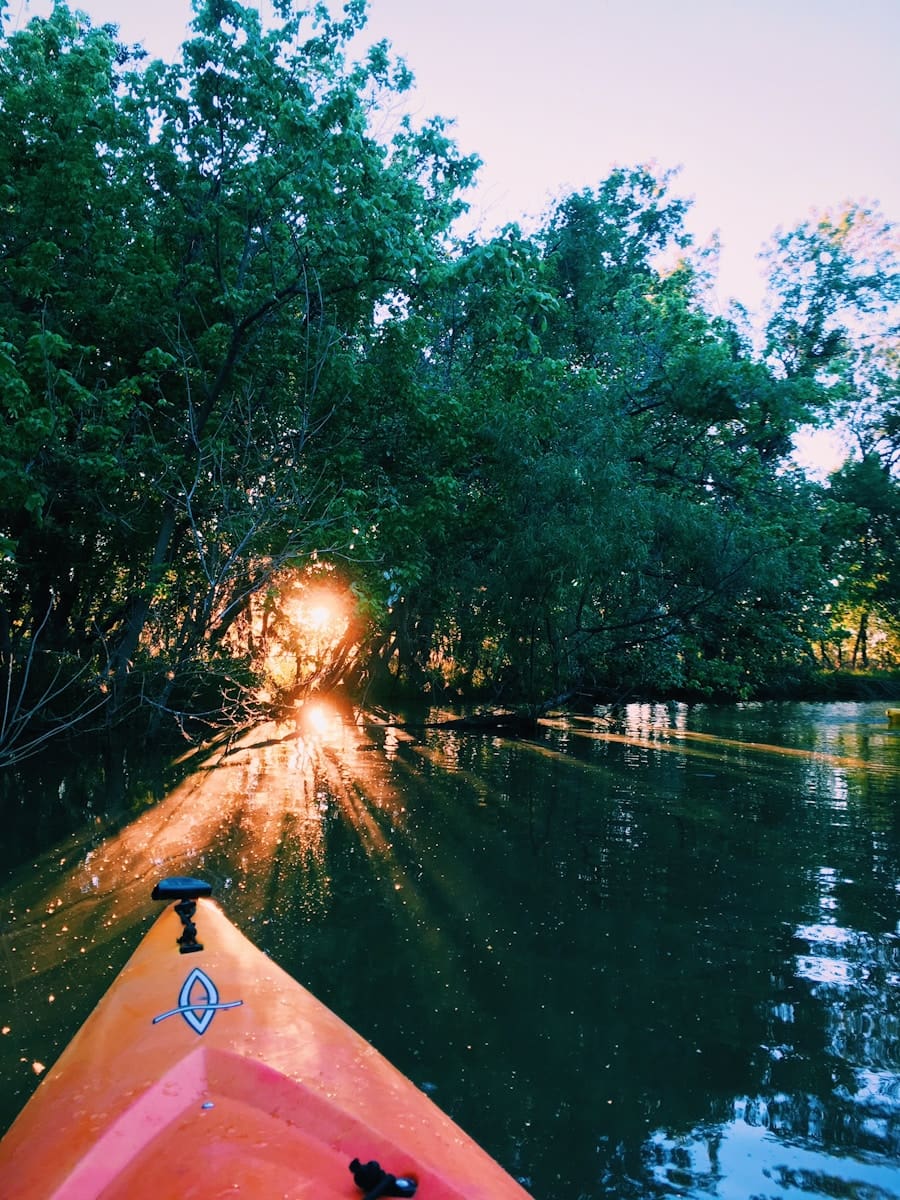
For kayakers, techniques such as edging—where one side of the kayak is tilted—can help facilitate sharp turns. By shifting weight to one side while applying pressure with the opposite knee, kayakers can effectively steer their craft without losing speed.
Techniques for Canoeists
Canoeists have their own set of turning techniques that include using a combination of forward strokes and draw strokes. The draw stroke allows for lateral movement towards one side while maintaining forward momentum. Additionally, practicing reverse strokes can help in slowing down or repositioning without needing to turn around completely.
Mastering Maneuverability
Mastering these techniques not only enhances control but also builds confidence in various water conditions.
Advanced Techniques for Efficient Paddling in Different Water Conditions**
As paddlers gain experience, they may encounter diverse water conditions that require advanced techniques for efficient paddling. In choppy waters or strong currents, understanding how to read water patterns becomes crucial. Paddlers should learn to identify eddies and waves that can either assist or hinder their progress.
In rough conditions, utilizing a technique known as “bracing” can prevent capsizing. This involves using the paddle as a stabilizing tool by placing it in the water at an angle to counterbalance any tilt of the kayak or canoe. Additionally, advanced paddlers may experiment with different stroke rates and power levels based on environmental factors.
Adapting techniques to suit specific conditions not only enhances safety but also improves overall performance. **
Tips for Improving Endurance and Efficiency in Kayaking and Canoeing**
Improving endurance is essential for paddlers looking to extend their time on the water without succumbing to fatigue. One effective strategy is to incorporate interval training into regular workouts. Alternating between high-intensity paddling bursts and periods of slower-paced strokes can build stamina over time.
Additionally, focusing on proper hydration and nutrition before and during outings can significantly impact performance. Consuming energy-rich snacks like nuts or energy bars can provide necessary fuel during long paddling sessions. According to sports nutritionist Lisa Greenfield, “Staying hydrated and well-nourished is key to maintaining energy levels while paddling.” By implementing these tips into their routines, paddlers can enhance both endurance and efficiency.
In conclusion, mastering kayaking and canoeing requires attention to various techniques that enhance performance on the water. From establishing a proper stance to understanding advanced techniques for different conditions, every aspect contributes to a paddler’s overall experience. By focusing on core engagement, paddle grip, maneuvering skills, and endurance strategies, both beginners and advanced paddlers can enjoy more efficient outings.
Engaging with fellow paddlers or seeking expert guidance can further enrich one’s skills and knowledge in this rewarding sport. **Image Placement Suggestions:**
1. Image of a kayaker demonstrating proper stance (Alt text: “Kayaker demonstrating proper stance for balance and control”).
2.
Image showing various canoe strokes being executed (Alt text: “Canoeist performing essential strokes for efficient paddling”).
3. Image illustrating core exercises beneficial for paddlers (Alt text: “Core exercises designed to improve paddling efficiency”).
4. Image depicting advanced paddling techniques in rough waters (Alt text: “Paddler using advanced techniques in challenging water conditions”).
If you’re looking to improve your kayaking and canoeing skills, you may also be interested in reading about the latest outdoor news and updates on Outdoor Newspaper. Stay informed about the latest trends and techniques in outdoor sports to enhance your paddling experience. You can also register on their website here to access exclusive content and resources. Don’t miss out on valuable tips and insights that can help you paddle like a pro!
FAQs
What are some techniques to improve kayaking and canoeing efficiency?
Some techniques to improve kayaking and canoeing efficiency include proper paddling technique, using the power of your core muscles, maintaining a steady rhythm, and using the right equipment.
How can I improve my paddling technique?
To improve your paddling technique, focus on using your torso and core muscles to generate power, keep your arms straight and use them as levers, and maintain a smooth and efficient stroke.
What are some tips for maintaining a steady rhythm while paddling?
To maintain a steady rhythm while paddling, focus on breathing in sync with your strokes, keeping your movements fluid and consistent, and practicing regular and controlled breathing.
What type of equipment is essential for efficient kayaking and canoeing?
Essential equipment for efficient kayaking and canoeing includes a properly fitted paddle, a well-fitted life jacket, a kayak or canoe that suits your skill level, and appropriate clothing for the conditions.
How can I use the power of my core muscles while paddling?
To use the power of your core muscles while paddling, focus on rotating your torso with each stroke, engaging your abdominal and back muscles, and using your legs for stability and support.