
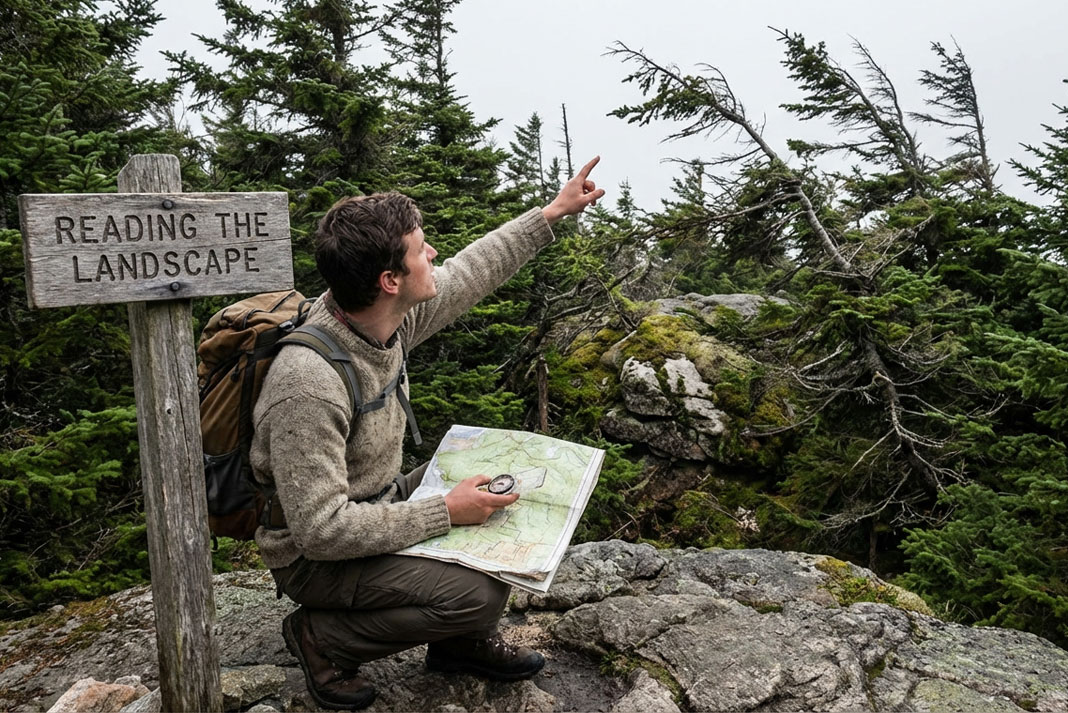

Every outdoor enthusiast knows that while maps and compasses are essential tools for navigation, the true art lies in understanding and reading the landscape itself. “Reading the Landscape: Utilizing Natural Signs for Navigation” isn’t just a skill—it’s a way to deepen your connection with the environment. Whether you’re hiking, backpacking, or just exploring the great outdoors, knowing how to interpret the signs nature gives can be a game-changer for your safety and navigation.
Introduction
Imagine standing atop a rocky outcrop, the wind whipping through your hair as you gaze at the valleys below. You pull out your map and compass but realize that both are a little less helpful than you hoped. Now picture instead that you could read the intricate signs that the landscape offers—a fallen tree pointing to a water source, the growth patterns of moss indicating north, or the shape of the mountains guiding your way. This ability not only enhances your navigation skills but also fosters a deeper respect for the natural world.
Today, we’ll explore the vital skill of reading the landscape, blending education with personal stories drawn from my own adventures. This immersive guide will arm you with actionable insights to navigate efficiently and safely, ensuring you’re well-prepared for whatever the wild throws your way.
Understanding Natural Landmarks
The Importance of Natural Landmarks
Natural landmarks play a critical role in navigation. They come in various forms—mountain ranges, rivers, unique rock formations, and even tree lines. Recognizing these landmarks allows you to orient yourself more effectively.
My Experience: Finding My Way with Landmarks
On one of my early hiking trips in the Tetons, I found myself lost not long after setting off. As the dense fog rolled in, visibility diminished. Instead of panicking, I remembered a prominent ridge from my map. By trusting my instincts and observing the geographical features surrounding me, I found my way back on track. That experience solidified my understanding of how critical natural landmarks can be—they’re your most reliable guide when technology fails.
Utilizing Natural Signs for Navigation
Natural Indicators
Learning to read natural signs provides important clues about your surroundings. Here are some signs you can utilize:
1. Sun Position
The sun rises in the east and sets in the west. By observing the time of day and the sun’s trajectory, you can deduce roughly where north lies.
2. Moss Growth
Moss and lichen tend to thrive on the northern sides of trees and rocks, as this side generally receives less sunlight. Use this information as a rough compass.
3. Animal Movement
Wildlife often moves in predictable patterns. Bird flight paths or animal tracks can provide insight into local water sources or safer routes.
Anecdote: Navigating Using Sun and Moss
There was an unforgettable day when I decided to stray off the beaten path on a solo wilderness trek. As the sun started setting, I realized my map wasn’t aligning with my surroundings. Remembering my lessons, I instinctively positioned myself to the west, letting the sun guide me. Shortly thereafter, I noticed the ground was muddy—signs that a water source was nearby. An hour later, a bubbling brook came into view, and I was filled with gratitude for trusting the signs that nature offered.
Techniques for Effective Landscape Reading
Maximizing Your Experience with Tools and Preparation
While natural signs are invaluable, complementing them with the right tools enhances navigation accuracy. Here’s what to consider bringing:
1. Compass
Even the best landscape readers can err; a compass can confirm suspicions.
2. Topographic Map
Understanding elevation can help you get a clearer idea of what to expect in your surroundings.
3. Journal
Keeping a journal allows you to document observations, which can be helpful for future trips.
Common Mistakes to Avoid
Reading the landscape isn’t foolproof—you can make mistakes. Remember these pitfalls to enhance your navigation skills:
-
- Assuming All Moss Points North: Analyze your environment; sometimes, conditions differ.
-
- Ignoring the Mile Marker Downhill: Trudging downhill for what seems like a shortcut can lead you astray.
-
- Relying Solely on Technology: Technology can fail. Always have backup navigation methods.
Anecdote: Lessons from Mistakes
I can recall a hike in the Appalachian Mountains where I relied too heavily on my digital navigation app. I ignored my compass and successfully reached a beautiful lookout—only to discover that “beautiful” was actually several miles away from my intended campsite. Feeling the weight of my error turned my late-night trek into a memorable, albeit stressful, adventure that reinforced the importance of blending both natural signs and technology.
Wrap-Up / Key Takeaways
Understanding “Reading the Landscape: Utilizing Natural Signs for Navigation” is an invaluable skill for anyone venturing outdoors. By employing natural signs, recognizing landmarks, and preparing adequately, you can navigate more confidently. Practice observing your surroundings, incorporate storytelling into your trips, and use your missteps as learning opportunities. Nature is not just your backdrop; it’s your greatest ally in navigation.
Reader Questions Answered
How can I improve my skills in reading the landscape?
Regular practice is key. Spend time outdoors observing natural signs. Take notes, journal your experiences, and hike with more experienced individuals.
What are the best types of maps for navigating landscapes?
Topographical maps offer detailed insights into geographical features, while trail maps can provide specific routes and landmarks.
What should I do if I feel lost in the wilderness?
Stay calm; retrace your steps if possible. Identify natural landmarks or the position of the sun and orient yourself accordingly before moving forward.
FAQs
What is the primary benefit of reading the landscape?
Reading the landscape enhances your navigation skills without relying solely on technology, promoting safety and deeper environmental awareness.
Can I rely solely on natural signs for navigation?
While natural signs are helpful, it’s wise to carry a compass and a map as backup support.
How do I start learning to read the landscape?
Begin by frequenting local parks and natural areas. Observe the signs around you, practice with a compass, and document your experiences.
Incorporating these practices into your outdoor adventures will empower you to navigate with confidence and connect with the environment in a more profound way. Embrace the challenge of reading the landscape; your next adventure awaits!