

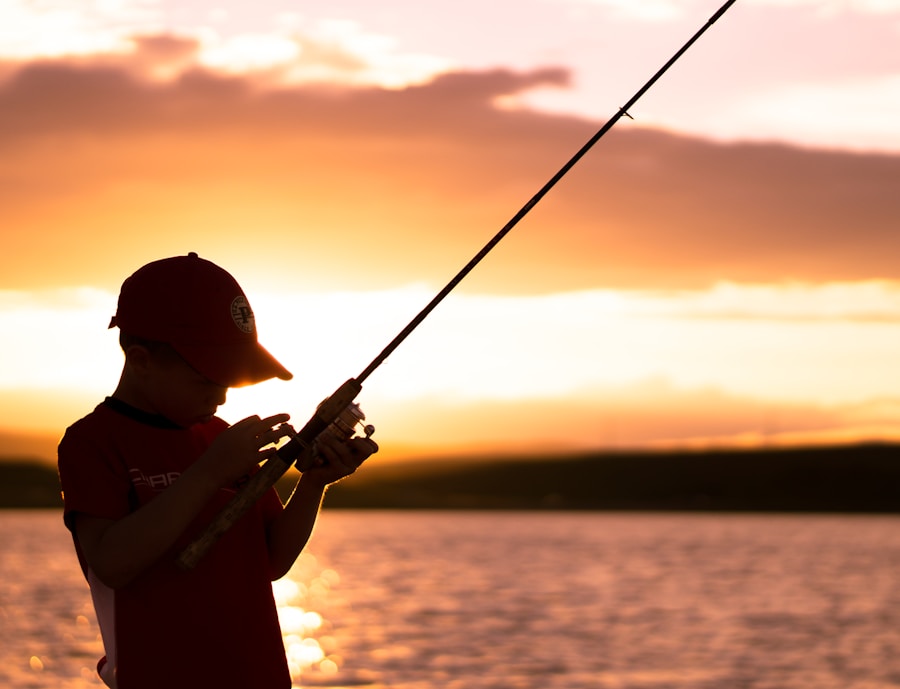

As temperatures rise during the summer months, the behavior of bass undergoes significant changes that anglers must understand to improve their chances of success. Bass are ectothermic creatures, meaning their body temperature is regulated by the surrounding environment. As water temperatures increase, typically ranging from 70°F to 85°F, bass become more active and aggressive, seeking food to sustain their energy levels.
This heightened activity is often accompanied by a shift in their feeding patterns, as they tend to move into shallower waters where they can find abundant prey. During the summer, bass are often found near structures such as submerged rocks, fallen trees, and vegetation. These areas provide shade and cooler water, making them ideal spots for bass to ambush prey.
Additionally, the presence of baitfish, which also seek refuge from the heat, draws bass closer to these structures. Understanding this behavior is crucial for anglers; knowing where to find bass can significantly increase the likelihood of a successful catch. Moreover, as the day progresses and temperatures peak, bass may retreat to deeper waters or seek out cooler pockets, making it essential for anglers to adapt their strategies throughout the day. Check out this amazing bass lure at https://amzn.to/42i6HnE.
Selecting the Right Equipment for Summer Bass Fishing
Choosing the appropriate equipment for summer bass fishing is vital for maximizing your effectiveness on the water. The first consideration should be the fishing rod and reel. A medium to medium-heavy spinning or baitcasting rod is often ideal for summer bass fishing, as it provides the necessary sensitivity and backbone to handle larger fish while still allowing for finesse presentations when needed.
Pairing this rod with a quality reel that has a smooth drag system will ensure that you can effectively fight and land bass without risking line breakage. Line selection is equally important during the summer months. Many anglers prefer using braided line due to its strength and sensitivity, which allows for better detection of bites in warmer waters.
A fluorocarbon leader can be added for stealth, especially in clear water conditions where bass may be more cautious. The combination of braided line with a fluorocarbon leader provides both durability and invisibility, making it easier to present baits without spooking fish. Additionally, having a variety of tackle on hand—such as different weights, hooks, and terminal tackle—will allow you to adapt to changing conditions and bass behavior throughout your fishing trip.
Targeting Bass in Different Water Conditions
Water conditions can vary greatly during the summer months, influenced by factors such as rainfall, temperature fluctuations, and local weather patterns. Understanding how these conditions affect bass behavior is crucial for successful fishing. For instance, in clear water conditions, bass may become more skittish and less likely to strike at larger or brightly colored lures.
In such scenarios, using natural-colored baits or smaller presentations can be more effective. Conversely, in murky or stained water, bass tend to rely more on their lateral line to detect vibrations and movement, making louder or more vibrant lures a better choice. Temperature stratification is another critical factor to consider when targeting bass in summer.
As surface temperatures rise, the water column can develop distinct layers with varying temperatures. Bass often seek cooler water at different depths during the hottest parts of the day. Anglers should be prepared to adjust their techniques accordingly; for example, if surface temperatures are too high, fishing deeper with jigs or Carolina rigs can yield better results.
Additionally, understanding how wind affects water conditions can also play a role in where bass are located; wind can create current and oxygenation that attract baitfish and subsequently draw in predatory bass.
Mastering Topwater Techniques for Summer Bass Fishing
Topwater fishing is one of the most exhilarating methods for catching bass during the summer months. The visual aspect of watching a bass explode on a surface lure adds an element of excitement that many anglers cherish. To master topwater techniques, it’s essential to understand the types of lures available and how to effectively use them.
Popular topwater options include poppers, walking baits, and buzzbaits, each offering unique action that can entice bass in different scenarios. When using poppers, a technique known as “pop-and-pause” can be particularly effective. This involves casting the lure out and allowing it to sit momentarily before giving it a sharp tug to create a popping sound that mimics distressed prey.
Walking baits require a different approach; anglers should practice a rhythmic twitching motion that causes the lure to “walk” side-to-side on the surface. Buzzbaits are best used in low-light conditions or when there is surface vegetation; their noise and commotion can attract bass from a distance. Timing is crucial when employing topwater techniques; early mornings and late evenings are often prime times for topwater action as bass are more actively feeding near the surface.
Tips for Fishing in Vegetation and Structure
Fishing around vegetation and structure is a hallmark of summer bass fishing, as these areas provide essential cover and ambush points for predatory fish. When targeting these habitats, it’s important to choose lures that can effectively navigate through thick cover without getting snagged. Texas-rigged soft plastics or jigs are excellent choices for fishing in heavy vegetation; their weedless designs allow them to slip through grass and lily pads with ease.
Patience is key when fishing around structure; often, it takes time for bass to react to a lure presented in their territory. Anglers should focus on making multiple casts to the same area, varying their retrieve speed and technique until they find what triggers a bite. Additionally, understanding the time of day can influence success; during midday heat, bass may be more likely to hold tight to cover rather than roam freely in open water.
Therefore, targeting shaded areas or pockets within vegetation can yield better results during these times.
Utilizing Different Baits and Lures for Summer Bass Fishing
The selection of baits and lures plays a pivotal role in summer bass fishing success. While live bait such as minnows or worms can be effective, artificial lures offer versatility and allow anglers to cover more water efficiently. Crankbaits are particularly useful during summer months; they can mimic baitfish and cover various depths depending on their design.
Shallow-diving crankbaits work well in warmer waters where bass are feeding near the surface, while deeper-diving models can target fish holding at lower depths. Soft plastics are another staple in an angler’s arsenal during summer fishing trips. Worms, creature baits, and swimbaits can be rigged in various ways—Texas-rigged for heavy cover or wacky-rigged for a more subtle presentation—allowing anglers to adapt based on conditions and fish behavior.
Additionally, spinnerbaits are effective for covering large areas quickly while creating vibrations that attract bass even in murky waters. The key is to experiment with different colors and sizes until you find what resonates with the local fish population on any given day. In conclusion, understanding bass behavior during summer months is essential for successful fishing outings.
By selecting the right equipment tailored for warm weather conditions and adapting techniques based on varying water conditions, anglers can significantly enhance their chances of landing trophy-sized bass. Mastering topwater techniques adds an exciting dimension to summer fishing while effectively targeting vegetation and structure ensures that anglers are fishing where the fish are most likely to be found. Finally, utilizing a diverse array of baits and lures allows for adaptability in changing conditions, making every trip an opportunity for success on the water.