

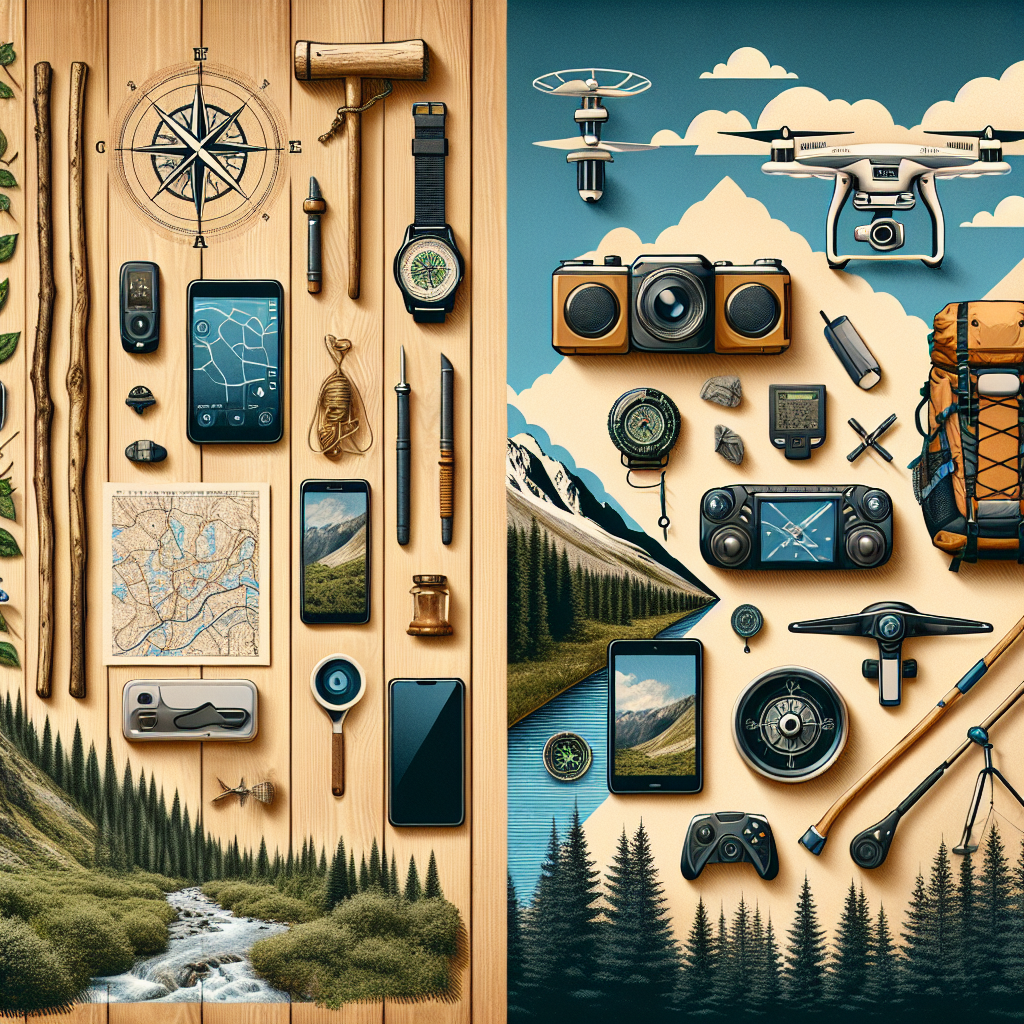

The great outdoors beckons adventurers with promises of unrivaled beauty, peace, and the thrill of exploration. However, the path to such magical experiences can be fraught with challenges, particularly when it comes to navigation. As an outdoor enthusiast, you may find yourself torn between traditional navigation methods and modern technology. This post delves into the ever-relevant debate of tech vs. tradition in navigating the great outdoors, offering insights, personal experiences, and practical tips to ensure you are prepared for every adventure.
The Evolution of Navigation: A Brief Overview
For centuries, adventurers have relied on maps and compasses to find their way through forests, mountains, and other natural landscapes. Traditionally, a good understanding of the stars, a physical map, and a reliable compass were essentials for any outdoor excursion. However, as technology has advanced, new tools like GPS devices and smartphone apps have emerged, transforming the way we explore.
Personal anecdote: Reflecting on my first solo hiking trip years ago, I struggled to read a topographic map while standing on an unmarked trail. My feet were firmly planted in the mud of uncertainty as rain poured down around me. Armed with only my compass, I felt the weight of centuries of navigators behind me encouraging me to trust my traditional skills. Thankfully, I navigated to safety, ready to embrace new technologies for future trips without neglecting the essentials.
Why Navigation Skills Matter: The Importance of Being Prepared
Regardless of the tools you choose, the ability to navigate competently is a matter of safety and self-reliance. Relying solely on technology can lead to a false sense of security; battery failures or loss of signal can occur unexpectedly. It’s crucial to merge both tech and tradition in your navigation strategy.
Benefits of Learning Traditional Navigation Skills
- Self-Reliance: Knowing how to use a map and compass allows for confidence in challenging situations when technology may fail.
- Disconnection: Embracing traditional methods can deepen your connection to nature, free from the distractions of screens.
- Problem Solving: Skills like triangulation can foster critical thinking and adaptability in unfamiliar environments.
Embracing Modern Navigation Tools
Modern tools such as GPS devices and mobile apps can complement your skills. They are beneficial in enhancing navigation accuracy and simplifying route planning.
- Real-Time Updates: Apps like AllTrails and Gaia GPS provide real-time information on trail conditions and user experiences.
- User-Friendly Interfaces: Most platforms are designed with ease of use, making them accessible for all skill levels.
- Environmental Awareness: Many tools now offer features that highlight environmental issues, helping users make better-utilized choices.
Key Actions for Balancing Tech and Tradition
To successfully navigate in the great outdoors, one should meld the wisdom of traditional skills with the advantages of modern technology.
Equip Yourself with Essential Gear
- Traditional Tools: A reliable compass and a topographic map of the area.
- Modern Devices: A fully charged GPS device or smartphone with pre-downloaded maps.
- Backup Plans: Always have a power bank, a second map, and a fallback strategy in place.
How to Incorporate Both Strategies on Your Trip
-
Pre-trip Planning: Before heading out, familiarize yourself with the area using both the map and GPS services. Plot major points of interest and landmarks.
-
In-the-Field Strategy: Start your hike by navigating with your map and compass. Periodically check your GPS app to ensure you’re on the right track.
-
Practice Regularly: Take time to practice traditional navigation skills in various environments to ensure they become second nature.
Personal anecdote: On a recent weekend camping trip in the Sierra Nevada, we spent the first day using an old-school compass and map. As evening approached, we learned that our identified campsite didn’t match our reality. Panic began to set in, but we realized we’d strayed slightly from the marked trails. Checking our GPS device confirmed our position—thankfully, we were only 30 minutes away from the right location.
Avoiding Common Mistakes
- Neglecting Battery Power: Always have extra batteries or a portable charger for devices.
- Over-Reliance on One Tool: Balance both old and new.
- Ignoring Local Advice: Each environment has unique factors; connect with local experts when possible.
Wrap-Up / Key Takeaways
Navigating the great outdoors is a skill best cultivated through a blend of tech and tradition. The familiarity and confidence that come from traditional navigation combined with the ease and efficiency of modern tools enhance your overall experience. Remember to prepare adequately, practice regularly, and remain adaptable to ensure your adventures are as safe as they are exhilarating.
Reader Questions Answered
What are the best traditional navigation practices to learn?
Familiarize yourself with reading a map, using a compass, and understanding environmental cues like sun position and natural landmarks. Practicing triangulation techniques can provide reliable location verification.
How do I choose between using tech or traditional methods?
Assess the terrain and length of your trip. For new or complex areas, utilize tech for accuracy, but always back it up with traditional skills. If you’re in familiar territory, rely more on your traditional skills.
Can I rely solely on my smartphone for navigation?
While smartphones can be excellent tools, they are vulnerable to battery depletion and signal loss. Always carry a physical map and compass as a backup.
FAQs
Is GPS better than a map and compass?
Both have advantages; GPS offers ease of use and real-time data, while a map and compass provide reliable guidance without relying on battery power.
What should I pack for traditional navigation?
A topographic map of the area, a compass, a notebook for observations, and a writing utensil can be invaluable tools.
Are there apps that help me learn traditional navigation?
Yes! Apps like “MapMyRun” offer guidance on map reading, and “Compass” provides compass training.
By integrating modern tools with traditional skills, you’ll be well-equipped to navigate the great outdoors, whether through thick woods or along top-lined mountains. Embrace the adventure!