

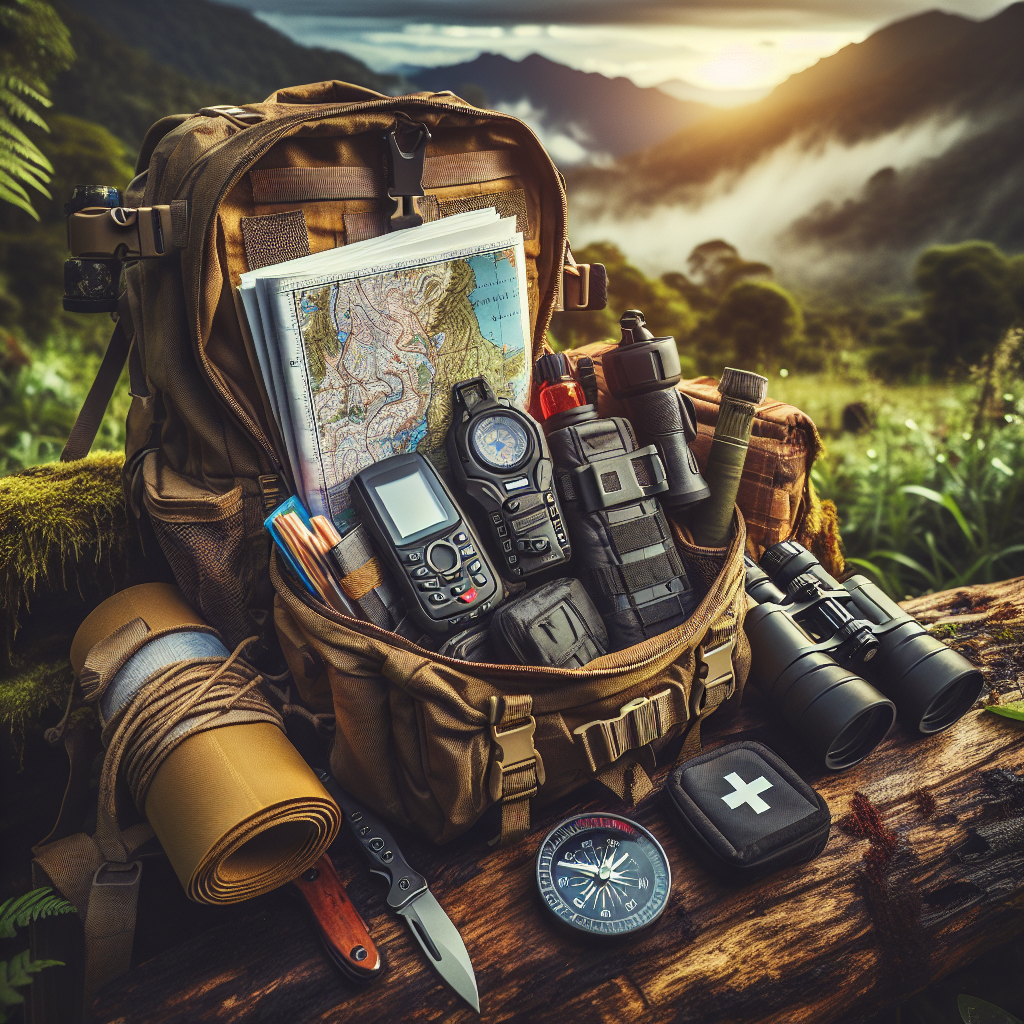

In the grand adventure of life, there’s an undeniable draw to the wilderness—a whisper of trails untraveled, peaks waiting to be conquered, and horizons that stretch infinitely. Yet, even the most intrepid explorers can suddenly feel lost amidst majestic landscapes. Navigating through the great outdoors isn’t just a skill; it’s an essential gear set that combines knowledge, practical tools, and a dash of intuition. Understanding The Essential Gear for Outdoor Navigation can not only enhance your exploration but also keep you safe and grounded—literally!
Why Navigation Gear is Crucial for Every Adventurer
Imagine standing atop a breath-catching vista, enveloped in the intoxicating aroma of pine and the refreshing coolness of alpine air. For me, this vision became a stark reality during a solo backpacking trip in the Sierras. I had prepared meticulously—the maps, the compass, the enthusiasm—but somewhere between the towering trees and the winding paths, I lost my bearings. The thrill turned to panic in seconds. That day taught me a valuable lesson: no matter how thrilling the adventure, it’s crucial to comprehend and equip yourself with the right navigation gear.
Here, we’ll explore not just the gear, but also the stories, lessons, and best practices that turn navigational mishaps into merely an entertaining tale to recount by the campfire.
Essential Tools for Navigation
Navigating the wilderness effectively hinges upon a combination of physical gear and informed strategies. Let’s examine the array of tools every adventurer should carry for safe and confident exploration.
Maps: The Heart of Navigation
A physical map remains an essential piece of gear. While technology offers GPS and mobile apps, understanding how to read a traditional map is invaluable. It provides a broader perspective on the terrain, landmarks, and sometimes the critical detours.
Anecdote: On my first multi-day hike, my trusty paper map became my lifeline after my phone’s battery died mid-trail. Relying on that detailed map, I discovered hidden waterfalls I would’ve otherwise missed, all while staying on the right path.
Compass: A Guiding Star
Coupled with your map, a compass is a timeless tool of navigation. It’s simple yet powerful, teaching you to determine directions relative to the magnetic north. Knowing how to use a compass can mean the difference between safe passage and an unwanted adventure in the wrong direction.
Tip: Always remember to take into account local magnetic declination (the difference between magnetic north and true north) when orienting your compass.
GPS Devices: The Modern Navigator
In today’s tech-driven age, a GPS device can enhance your navigation experience remarkably. Look for devices that offer offline maps because cellular signals are often unreliable in remote terrains. It can track your location and even lead you back to your starting point, creating a loop of safety and discovery.
Anecdote: I remember a particular hike that transformed into a minor expedition when my group decided to chase a Google-identified peak. When our map didn’t align with reality, our GPS recalibrated our route, saving us hours of backtracking—a triumphant moment in our journey.
Advanced Navigation Techniques
Beyond gear, mastering techniques can elevate your navigation skills from basic to expert.
Waypoint Navigation
Learning to set and retrieve waypoints is essential. This practice involves marking significant points of interest on your GPS, allowing you to create a route that avoids hazards or highlights beautiful stops along the way.
Common Mistake: Many beginners fail to take the time to add waypoints. Instead, they rely solely on the path itself, often leading to uninspired pathways.
Orienteering Skills
Orienteering combines physical navigation with problem-solving skills. It requires you to find specific points using compass and map skills, something commonly practiced in competitive settings. This not only sharpens your skills but also builds a deep familiarity with reading both the map and the landscape.
Experience: During a past orienteering event, I lost my team during a challenging trek through thick woods. Rather than panic, I recalled my training—visualize the contours of the map. I retraced our steps using the compass and found them at the very edge, all while feeling a rush of adrenaline and empowerment.
Checklist: Must-Have Navigation Gear
Compile a robust checklist to ensure you’re fully equipped when venturing into the wild.
- Topographic Map: Understand contour lines for elevation.
- Compass: A reliable, durable model is key.
- GPS Device: Choose one that suits your needs—handheld vs. wrist-mounted.
- Smartphone Navigation App: Download maps for offline use.
- Portable Battery Charger: Keep your gadgets running.
- Lithium Backup Batteries: Extended battery life when exploring.
- Navigation Notebook: Jot down observations and distinctive landmarks.
By carrying this gear, you can confidently tackle various terrains and enhance your exploratory experiences.
Wrap-Up: Key Takeaways
The great outdoors invite adventure, but successful exploration requires preparation, not just spirit. Equip yourself with The Essential Gear for Outdoor Navigation and practice those skills before setting forth into uncharted territory. Adjust your approach based on lessons learned from past experiences, whether that’s the unexpected joy of discovering hidden gems with a map or the clarity a compass can bring.
Reader Questions Answered
What is the best type of map for hiking?
Topographical maps provide detailed elevation changes, water bodies, and landmarks, making them ideal for hiking as they offer a clear representation of the terrain.
How often should I check my navigation tools?
Check your GPS and compass before setting out and then regularly during your trek to ensure you stay on track and to maintain awareness of your surroundings.
What if I get lost without a working device?
Stay calm, retrace your steps, and return to the last point you recognized. Use your map and compass to reorient yourself; if necessary, find a safe place to set up camp until daylight.
FAQs
Do I need advanced navigation skills for short trails?
While basic navigation skills can suffice for short trails, knowing how to navigate effectively prepares you for any situation, enhancing safety.
How can I practice my navigation skills?
Join a navigation-based club or participate in local orienteering events to practice in a supportive environment while honing your skills.
Are GPS devices reliable in all outdoor conditions?
Most GPS devices function well in open spaces but may struggle in densely wooded or mountainous areas; that’s why backup tools like maps and compasses are essential.
Embrace the wilderness with knowledge, preparation, and an adventurous spirit. With The Essential Gear for Outdoor Navigation, empower yourself to explore the wilds without fear, transforming potential misadventures into memorable journeys that resonate long after the last trail is crossed.