

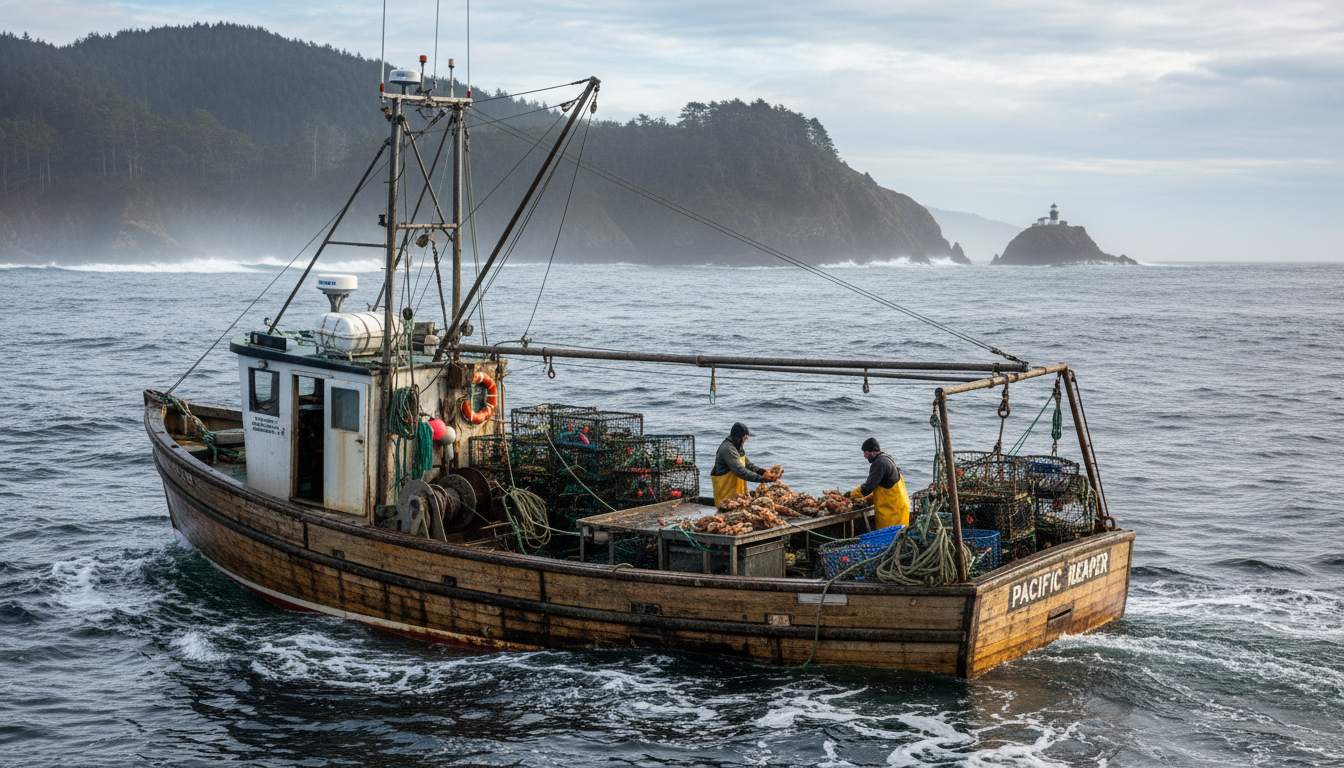

Delays Lifted: Northern California Dungeness Crab Fishery Set to Reopen with Unique Challenges
As the dawn breaks on January 15, a vital chapter in California’s marine economy will re-open as portions of the commercial Dungeness crab fishery in northern California embark upon a cautious reopening. Following significant delays driven by entanglement risks, fluctuating crab meat quality, and worrisome levels of domoic acid—a neurotoxin that poses risks to public health—fishermen are preparing for a new operational landscape under a mandatory 15% gear reduction.
Opening Zones and Timeline
The much-anticipated commercial Dungeness crab fishery will officially open at 12:01 a.m. on January 15, after a 64-hour gear-setting period commencing at 8:01 a.m. on January 12. The designated fishing areas encompass:
- California/Oregon Border: From 42° 0.0’ N. latitude to the southern boundary of the Reading Rock State Marine Protected Areas (41° 17.6′ N. latitude), and
- Cape Mendocino: From 40° 10.0’ N. latitude to the Sonoma/Mendocino County line (38° 46.125’ N. latitude).
This reopening follows the January 5 initiation of the commercial Dungeness crab fisheries within the Central Management Area, located south of the Sonoma/Mendocino County line.
Health Concerns Prompt Delay
While fishermen gear up to make the most of the reopening, caution remains paramount. In specific northern California waters, state health officials flagged concerning levels of domoic acid in Dungeness crab, leading to a recommendation to postpone the fishery’s opening. In response, the Acting Director of the California Department of Fish and Wildlife (CDFW) implemented a delay for the area from the southern boundary of the Reading Rock State Marine Protected Areas to Cape Mendocino.
For further details, stakeholders are advised to consult the CDFW Director’s Declaration regarding regulations around transiting, possession, and landing Dungeness crab within the designated closed zones.
Understanding the Fair Start Provision
The reopening also triggers the Fair Start Provision, a crucial regulation designed to balance fishing opportunities along the West Coast. This stipulation prohibits vessels that operated in other areas before the delay from fishing in newly opened zones for a period of 30 days—meaning vessels will not be able to fish in the newly available regions until February 14.
For more in-depth guidance, fishermen are encouraged to review the Frequently Asked Questions related to the ongoing 2025-26 commercial Dungeness crab season.
Why It Matters
This controlled reopening is not just a boon for fishermen; it also represents a vital economic pulse for local coastal communities reliant on the Dungeness crab industry. As the fishery resumes, stakeholders must remain vigilant to ongoing ecological fluctuations and public health advisories surrounding domoic acid, a potent neurotoxin produced by the marine alga Pseudo-nitzschia.
Long-term implications for conservationists, local economies, and oceanic biodiversity are significant. Sustainable seafood practices are necessary to maintain the delicate balance within this unique ecosystem. Continued monitoring of crab populations and toxin levels will be crucial in ensuring both public health and the viability of future fishing seasons.
Field Insights: How to Stay Safe and Informed
-
Knowledge is Key: Fishermen and seafood consumers alike should stay updated on current conditions by monitoring the CDFW’s fishery closure information and health advisories.
-
Test Results: Regular updates on domoic acid levels can be accessed through the California Department of Public Health (CDPH). Be sure to check their Domoic Acid website for the latest analytical data.
-
Health Alerts: For current consumption warnings, consult the CDPH shellfish advisories page or utilize the Biotoxin Information Line to ensure safe seafood consumption.
Given the dynamic and sometimes precarious nature of marine ecosystems, understanding these guidelines is imperative for both commercial viability and public safety.
For further inquiries, please contact:
- Christy Juhasz, CDFW Marine Region, (707) 292-2480
- Steve Gonzalez, CDFW Communications, (916) 804-1714
In navigating both economic and environmental waters, stakeholders must blend cautious optimism with diligent awareness to ensure that the reopened fishery thrives while prioritizing community health and ecological integrity.