


Historic Grant Paves the Way for Washoe Tribe’s Ancestral Lands at Loyalton Ranch
A Landmark Investment in California’s Environmental and Cultural Legacy
In a groundbreaking move for conservation and Indigenous rights, the Wildlife Conservation Board (WCB) has allocated $87,125,538 in funding for 16 strategic projects spanning 14 counties. This vital investment aims to safeguard critical wildlife habitat, rejuvenate rivers and streams, and protect lands that hold immense cultural and ecological significance. Among the key initiatives, seven projects are directed by California’s Salmon Strategy for a Hotter, Drier Future, which focuses on bolstering fish passage, reconnecting rivers to their floodplains, and enhancing spawning habitats for endangered salmon and steelhead.
This historic board meeting took place at MiraCosta College’s San Elijo Campus in Cardiff, marking a significant departure from its traditional Sacramento base.
Conservation Meets Cultural Restoration: Returning Ancestral Lands to the Washoe Tribe
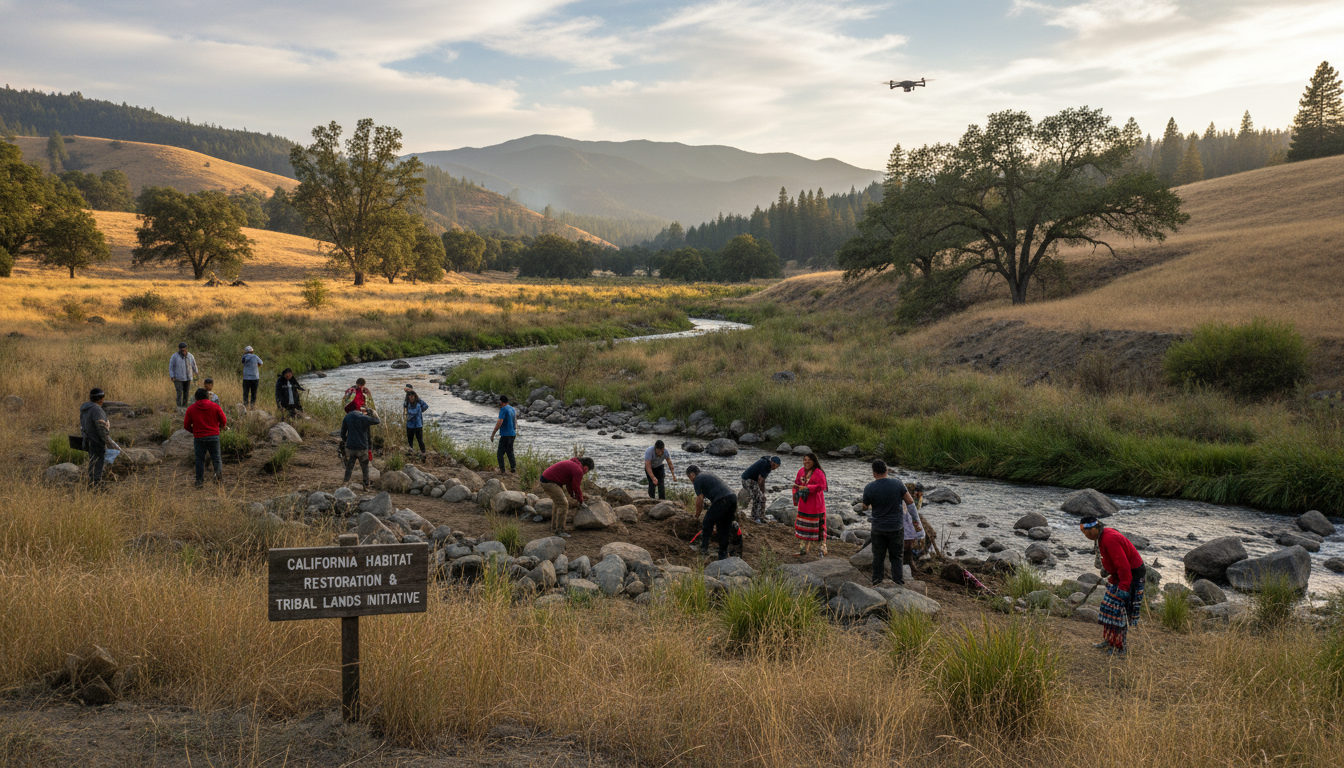
The highlight of the recent funding approvals is a $5.5 million grant dedicated to the Wášiw-šiw Land Trust, intended to facilitate the acquisition of 10,274 acres at Loyalton Ranch. This initiative represents a profound step toward the historic return of ancestral lands to the Washoe Tribe of Nevada and California—a community deeply rooted in the northern Sierra Nevada region.
Situated northeast of Lake Tahoe and approximately 20 miles north of Reno, the Loyalton Ranch encompasses diverse landscapes, from sagebrush lowlands to conifer forests, mountain meadows, springs, and perennial creeks. This ecologically rich area is home to various wildlife, including pronghorns, mule deer, and mountain lions, as well as culturally important flora like pinyon pine.
Significance of Land Reclamation
Tribal Chairman Serrell Smokey articulated the significance of this reclamation: “The reclamation of these Washoe homelands is of great importance. The Wá·šiw people were once forcefully removed from these lands. Now the land calls the Washoe people home, and we are answering that call. We are deeply grateful to WCB for providing essential funding for this historic purchase.”
Jennifer Norris, executive director of WCB, emphasized the collaborative nature of this project: “This initiative exemplifies what can be achieved when state, tribal, and conservation partners join forces to protect lands of cultural and ecological significance. We are honored to support the Wášiw-šiw Land Trust in reclaiming this landscape and continuing the cultural practices that have shaped it for millennia.”
The acquisition, the fruit of a four-year collaboration between the Tribe, the Northern Sierra Partnership, and the Feather River Land Trust, aligns with the Tribe’s broader mission to reclaim and manage lands across the northern Washoe homelands. It is projected to close by early 2026.
Featured Projects for Salmon and Steelhead Recovery in the Central Valley
-
Battle Creek Restoration: A $15 million grant to River Partners will secure 1,715 acres along Battle Creek in Tehama County, ensuring instream flows essential for endangered salmon and steelhead reproduction. “The acquisition represents a transformative step in restoring the health of Battle Creek and reconnecting essential habitats,” stated Julie Rentner, president of River Partners.
-
Meridian Farms Fish Screen Project: A $15 million investment in Sutter County will enhance fish passage on the Sacramento River by replacing two outdated diversions with a single modern, screened diversion. Andy Duffey, general manager of Meridian Farms Water Company, noted, “This project closes a two-decade effort to protect fish in the Sacramento River.”
-
Restoration of Robinson’s Riffle: The WCB has committed $31.9 million to the Sutter Butte Flood Control Agency for the restoration of 1 mile of the Feather River, positively impacting salmon and steelhead habitats. With a vision for long-term partnerships, CDFW’s Michelle Forsha expressed enthusiasm for the collaborative potential: “We hope this project is the beginning of a significant restoration effort in the Central Valley.”
Why It Matters
The implications of these substantial investments extend beyond the immediate ecological benefits. For hunters, hikers, and outdoor enthusiasts, the preservation of these landscapes ensures that California’s natural resources remain vibrant and accessible. The restoration of fish populations will bolster local economies reliant on fishing and tourism, creating jobs and fostering sustainability in communities deeply intertwined with the land.
Field Insights: Getting the Most Out of California’s Natural Resources
-
Pro Tip: As you explore the newly protected lands, keep an eye out for signs of wildlife recovery—look for tracks of mule deer and pronghorn grazing in their natural habitats.
-
What to Watch For: The restoration projects are expected to attract diverse bird species, enhancing the birdwatching experience. Bring binoculars and a field guide!
About the Wildlife Conservation Board
Established in 1947, the Wildlife Conservation Board is committed to the protection, restoration, and enhancement of California’s unique natural resources for both wildlife and public enjoyment. The board collaborates with tribes, conservation groups, and government agencies to safeguard biodiversity and improve access to nature for all Californians.
For more information on the WCB and details on the newly funded projects, visit wcb.ca.gov and explore their StoryMaps pages.
Media Contact:
Mark Topping
WCB Communications
(916) 539-4673