

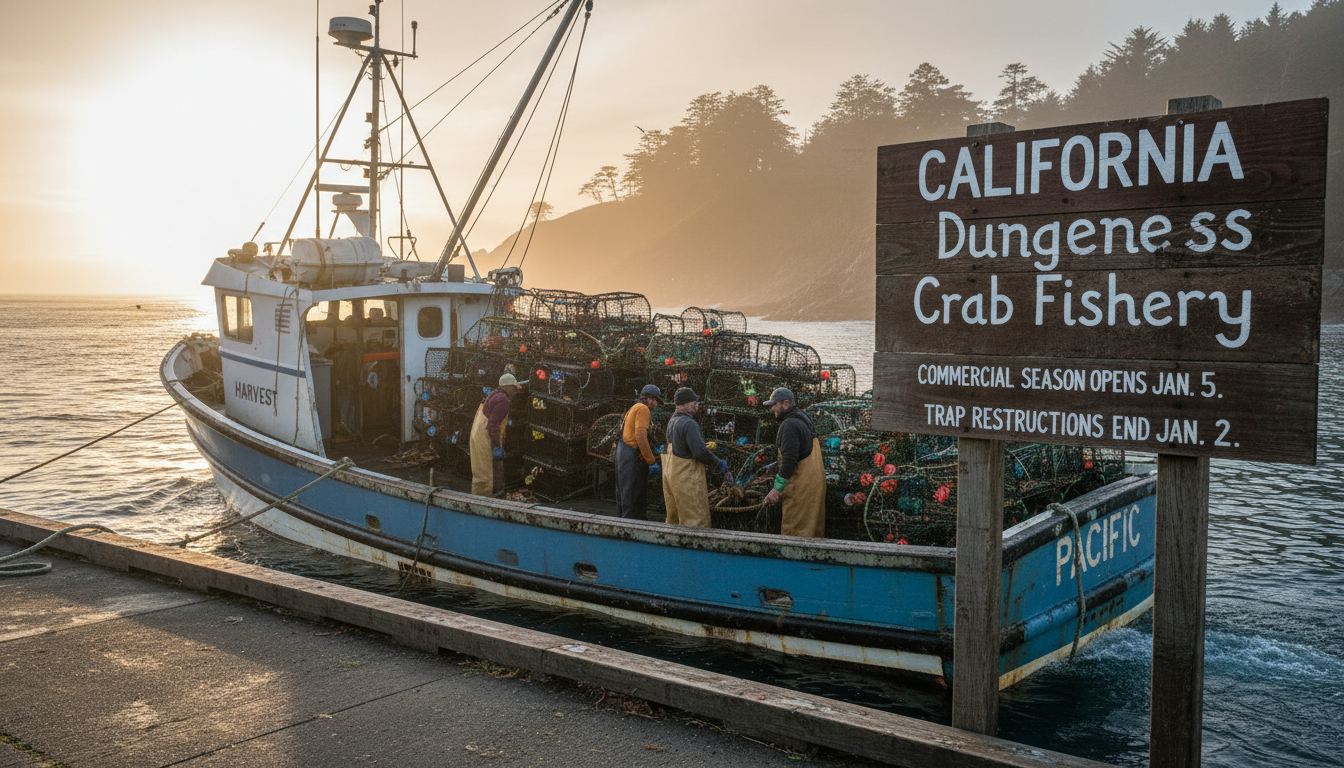

Northern California Dungeness Crab Fishery Set for Jan. 15 Opening Amid Quality Concerns and Domoic Acid Testing
As winter settles in along California’s rugged coastline, commercial Dungeness crab fishermen face another season marked by challenges and complexities. The California Department of Fish and Wildlife (CDFW) has announced that the Northern Management Area of the Dungeness crab fishery will remain closed until at least January 15, 2026. This delay stems from elevated levels of domoic acid, a harmful marine toxin affecting crab meat quality.
The Current Fishing Landscape
The CDFW has confirmed that the Central Management Area, stretching from the Sonoma/Mendocino County line (38°46.125’ N. latitude) to Point Conception (34°27’ N. latitude), will open early at 12:01 a.m. on January 5, 2026. Fishermen will be allowed to pre-soak traps starting January 2, 2026. However, this year’s season includes a critical 40% trap reduction designed to mitigate the entanglement risks faced by humpback whales in overlapping habitats.
Conversely, the Northern Management Area—encompassing Fishing Zones 1 and 2 from the California/Oregon border (42° N. latitude) to the Sonoma/Mendocino line—will open later, with a pre-soak period commencing on January 12, 2026, followed by the official opening at midnight on January 15. This region will see a moderate 15% trap reduction, resulting from ongoing concerns related to marine health assessments.
Why This Matters
The implications of these closures extend beyond economics and livelihood; they underscore a commitment to sustainable fishing practices while prioritizing marine conservation. The reduction in traps aims to decrease the number of vertical lines in the water, thereby minimizing whale interactions during a time when their populations are rebounding. Balancing commercial interests with environmental stewardship is vital for the longevity of both the fishing industry and marine ecosystems.
State fishery director Charlton H. Bonham emphasized the intricate nature of managing such fisheries. “Setting the opening date of the Dungeness crab fishery is never easy. We have a responsibility not only to support California’s fishing communities but also to protect our coastal wildlife,” he stated.
Lisa Damrosch, Executive Director of the Pacific Coast Federation of Fishermen’s Associations, echoed this sentiment, noting the fishing fleet’s dual role as both a provider of sustainable seafood and a guardian of ocean health. “This opening reflects a careful balance between economic opportunity and environmental responsibility,” Damrosch explained.
Field Insights: Best Practices and Recommendations
Fishermen and recreational crabbers alike should adhere to the following guidelines to ensure responsible harvesting:
-
Trap Reduction Compliance: Be aware of the 15% and 40% trap reductions based on your fishing zone. Vessels must comply with the CDFW’s Director’s Declaration to avoid penalties.
-
Avoid Entanglement: Refrain from setting traps in known whale habitats. Familiarize yourself with local marine traffic and wildlife patterns, especially during peak migrations.
-
Monitor Health Advisories: Stay updated on domoic acid levels and heed any health advisories that may arise. CDFW anticipates a follow-up risk assessment in mid-January 2026.
-
Remove Derelict Gear: Vessels are allowed to retrieve up to six derelict traps per fishing trip. Report lost or abandoned gear through the California Turn In Poachers (CalTIP) program.
In addition, recreational crab trap restrictions will be lifted as of January 2, 2026, reopening select fishing zones between the California/Oregon border and Cape Mendocino.
Conclusion: Navigating Future Waters
As California’s crab season draws near, the interplay between fisheries management and environmental health continues to shape the narrative of coastal livelihoods. Navigating these complexities requires cooperation among fishermen, scientists, and conservationists, emphasizing the necessity of sustainable practices for future generations.
For the latest updates on domoic acid levels and season closures, visit the following resources:
As the new season dawns, stay informed and proactive to ensure the health of our oceans and the sustainability of California’s commercial fishing legacy.
For media inquiries, contact:
- Ryan Bartling, CDFW Marine Region: (415) 238-2638
- Peter Tira, CDFW Communications: (916) 215-3858