

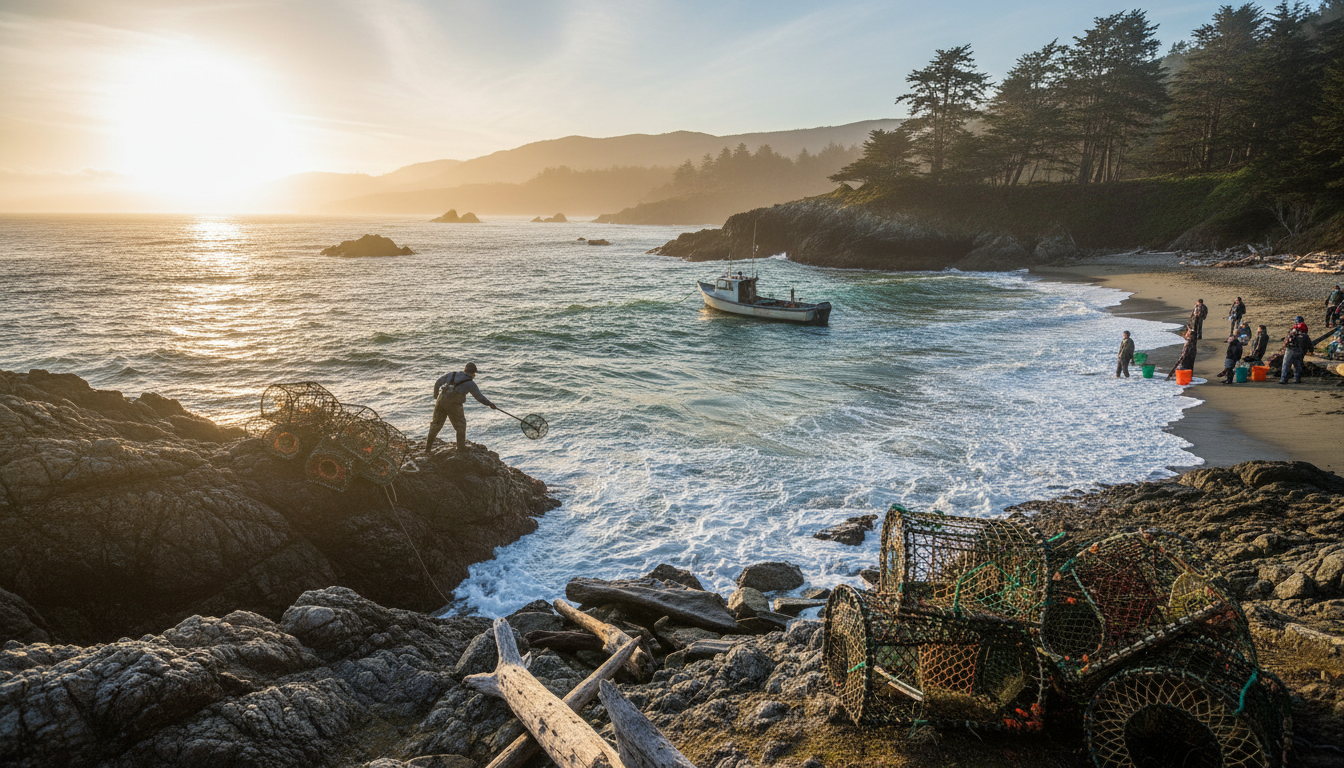

Last Recreational Dungeness Crab Fishery Area in Humboldt Opens Amid Health Advisory
The long-awaited opening of Humboldt County’s final recreational Dungeness crab fishery area brings relief to local anglers, but caution remains paramount due to lingering health concerns.
In an eagerly anticipated development, the last portion of the recreational Dungeness crab fishery in Humboldt County has reopened after a prolonged delay linked to elevated levels of domoic acid, a neurotoxin that poses serious health risks. The reopening spans the waters from the southern boundary of the Reading Rock Marine Protected Areas (41° 17.6’ N. latitude) down to Cape Mendocino (40° 10.0’ N. latitude).
While the California Department of Fish and Wildlife (CDFW) Acting Director Valerie Termini has lifted restrictions on fishing, state health agencies, including the California Department of Public Health (CDPH), have issued a cautionary health advisory. Fishermen are advised to avoid consuming crab viscera—commonly referred to as the “guts”—and to thoroughly clean crabs before cooking. Such measures are vital not only for personal safety but also for the communities reliant on these local fisheries.
Navigating the Fishery’s New Normal
Compliance is critical, particularly given the ecological sensitivity of the area, which is home to migrating humpback whales. To mitigate the risk of entanglement, current regulations restrict the methods by which Dungeness crab may be harvested. Anglers may utilize hoop nets, crab snares, or gather crabs by hand, but the use of traditional crab traps is currently prohibited in RAMP Fishing Zone 1. This precaution aims to protect both the marine environment and its inhabitants.
Looking ahead, regulations will ease starting January 2, 2026, when crab trap restrictions will be lifted, allowing all recreational gear types to be used state-wide. This transition reflects a gradual move towards balancing the needs of fishers with the imperative to protect vulnerable marine species.
Commercial Fishery Update
Meanwhile, the commercial Dungeness crab fishery in the Central Management Area—including the expanse from the Sonoma/Mendocino County line (38°46.125’ N. latitude) to Point Conception (34°27’ N. latitude)—is set to resume on January 5, 2026, at 12:01 a.m. Importantly, this reopening comes with a 40% reduction in trap limits, aimed at decreasing the risk of entanglements for humpback whales.
The situation is more precarious for the Northern Management Area—stretching from the California/Oregon border (42° N. latitude) to the Sonoma/Mendocino County line—where the season remains on hold due to ongoing concerns over domoic acid levels. Pending results from testing, this area anticipates a prospective opening on January 15, 2026, with a stricter 15% trap reduction to further safeguard marine life.
Why It Matters
The reopening of these fisheries carries significant implications for local economies reliant on crab fishing and tourism. For decades, Dungeness crab has been a linchpin for coastal communities, providing jobs and sustaining traditional practices. However, the health advisories remind us of the interconnectedness of marine ecosystems and human activity. As our understanding of ecological health deepens, responsible fishing practices must evolve alongside community needs.
Field Insights: Pro Tips for Anglers
As crabbing resumes, here are a few essential tips for anglers to ensure a successful and sustainable outing:
-
Stay Informed: Keep up to date with local health advisories regarding domoic acid levels. Regularly consult the CDFW’s health advisories and fishery closure information.
-
Harvest Responsibly: Focus on catch-and-release when possible and adhere to daily limits and size restrictions to help maintain crab populations.
-
Protect Marine Life: Be mindful of whales and other marine creatures while fishing. Avoid using traps until the regulations allow to minimize risks.
-
Clean and Cook Wisely: Follow the CDPH advisory to properly clean crabs and avoid consuming crab viscera to ensure your safety and well-being.
For more information on the ongoing domoic acid assessment, visit CDFW’s Whale Safe Fisheries page. For queries regarding the Dungeness crab fishery, refer to CDFW’s Invertebrates of Interest: Crab webpage.
For the latest updates on food safety and fishery closures, contact:
- CDFW: Health advisories and fishery closure information. Domoic Acid Fishery Closure Information Line: (831) 649-2883.
By fostering an informed fishing culture, we can both enjoy the bounties of our waters and preserve their health for generations to come.