

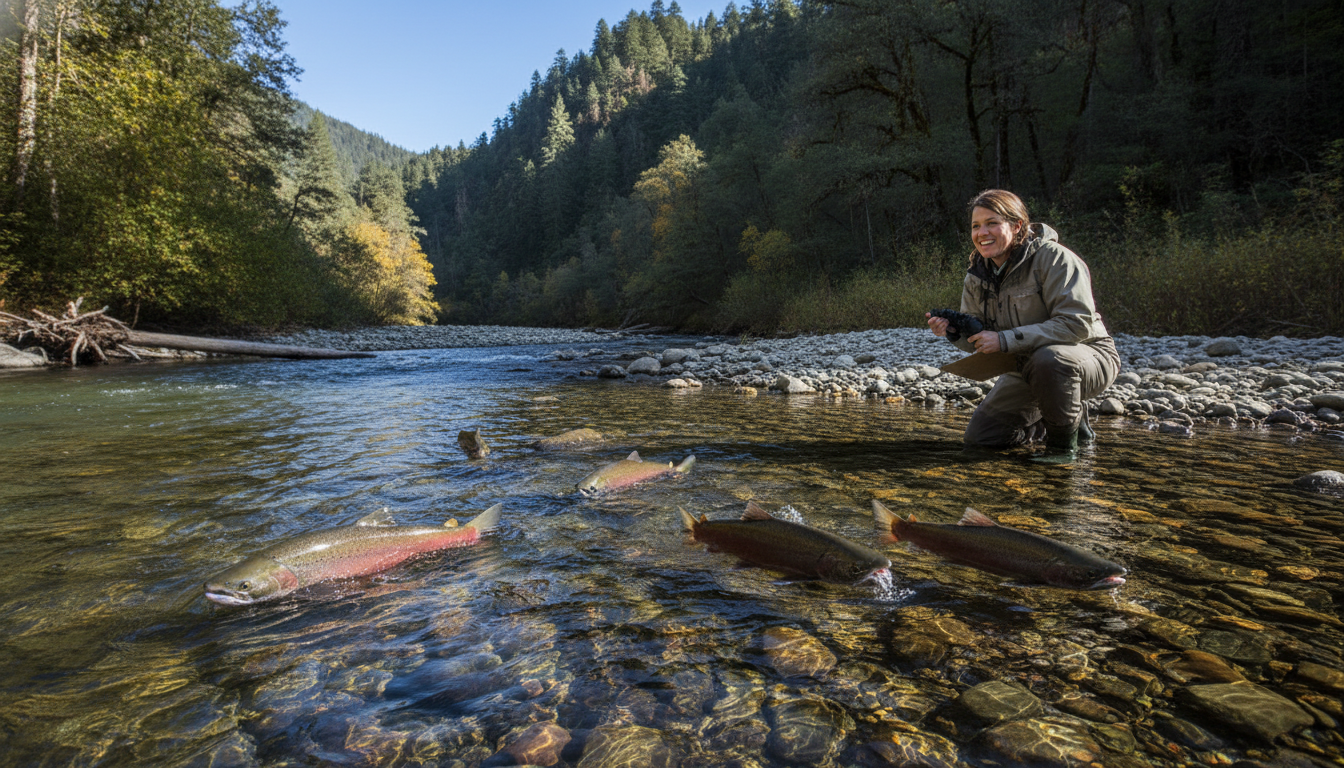

Significant Salmon Recovery: A Collaborative Effort by Pinoleville Pomo Nation and CDFW
A Glimpse of Hope in a Historic Habitat
SACRAMENTO—In a major milestone for California’s conservation efforts, juvenile Coho salmon have been spotted in the upper basin of the Russian River for the first time in over 30 years. This remarkable development marks a significant advance in the state’s ongoing initiatives to rejuvenate endangered salmon populations amid challenging environmental conditions.
“California’s salmon strategy extends beyond merely reviving a species; it represents the restoration of interconnected lifestyles, ecosystems, and cultural identities,” stated Governor Gavin Newsom. His comments resonate as the state pivots toward rekindling the rich tapestry of life supported by its rivers, especially vital as federal protections for endangered species face cuts.
This summer, a water specialist from the Pinoleville Pomo Nation made a groundbreaking observation: the first instance of natural reproduction of Coho salmon in the upper Russian River since 1991. Accompanied by beneficial wet weather and a framework of support from Governor Newsom’s Salmon Strategy for a Hotter, Drier Future, these findings underscore both triumph and urgency—the need for immediate action to ensure their survival.
The Call to Action: Confronting Stranded Juveniles
During a snorkeling expedition in June at an isolated pool on Ackerman Creek near Ukiah, Dakota Perez Gonzalez, a water resources specialist, discovered a cluster of young Coho salmon, alongside juvenile steelhead trout and Chinook salmon. Disturbingly, these fish were isolated from the flowing waters of their habitat, facing imminent peril as the small pool threatened to dry out.
The Pinoleville Pomo Nation and the California Department of Fish and Wildlife (CDFW) swiftly coordinated a rescue operation to secure the vulnerable fish populations from impending doom.
Angela James, Vice Chairperson of the Pinoleville Pomo Nation, emphasized the vital connection between traditional ecological knowledge and contemporary conservation practices. “By honoring Mother Earth, we actively engage in habitat restoration, water quality monitoring, and native species preservation,” she stated, reflecting their commitment to protecting the ecological health of Ackerman Creek for future generations.
Strong Regional Partnerships Make the Difference
On this collaborative mission, teams from both organizations employed nets to rescue two Coho, three Chinook, 146 steelhead, and several hundred other fish species, with invaluable assistance from tribal interns T.J. Feliz, Marisol Tlelo, and Riley Dizon.
The adults that spawned these young Coho likely journeyed over 90 miles from the Pacific Ocean to Ackerman Creek, an incredible feat. Prior to this resurgence, the last confirmed sighting of juvenile Coho in this area was in the early 90s, making the 2025 spotting a watershed moment for local biodiversity.
A Long History of Rescue Efforts
The salmon rescue at Ackerman Creek is far from an isolated incident. Between 2021 and 2023, CDFW conducted 51 rescue operations across 25 waterways, saving nearly 14,000 Coho from drying pools—juvenile fish that are crucial for sustaining healthy adult populations statewide.
The rescued Coho were transported to the Warm Springs Fish Hatchery, where a captive breeding program has been in place since 2001, aimed at fostering recovery of the endangered Russian River Coho. Steelhead and other native species from the rescue were released back into Ackerman Creek.
Bay Delta Region Inland Fisheries Program Manager Corinne Gray noted that the Coho captive breeding program has been essential; without it, “we likely would have seen the disappearance of Coho from the Russian River basin by 2004.”
Accessing the Unknown: Improved Fish Passage and Habitat Restoration
As investment flows into enhancing fish passage and habitat restoration efforts, the resurgence of Coho salmon in historical watersheds is gathering momentum. This summer, Coho were spotted for the first time in roughly 60 years within the Jenner Headlands Reserve, a testament to the lasting impact of habitat preservation efforts supported by the California State Coastal Conservancy and the Wildlife Conservation Board.
In a notable achievement, Chinook salmon were also documented moving into Alameda Creek in the San Francisco Bay Area for the first time since the 1950s, facilitated by the Sunol Valley Fish Passage Project. Improving access through viable fish passages is a keystone of the state’s Salmon Strategy, fostering healthy fish populations in the process.
In collaboration with NOAA Fisheries, CDFW is championing the Salmon Habitat Restoration Priorities (SHaRP). This initiative aims to boost salmon resilience, with reported increases in adult Coho returns that can support the repopulation of habitats like Ackerman Creek.
Why It Matters
The revival of Coho salmon in California’s waterways carries profound ramifications for not only wildlife enthusiasts—including hunters and hikers—but also for local economies dependent on robust, healthy ecosystems. Reestablishing salmon populations is crucial for wetland ambiances that provide habitats for diverse species, support local fisheries, and contribute to healthy water quality.
What to Watch For: Field Insights
- Look for Signs of Salmon Migration: Observing adult salmon in rivers often indicates successful ecosystems. Monitoring seasonal movements can offer insights into fish health.
- Engage with Local Conservation Groups: Participate in fieldwork opportunities and conservation efforts to contribute directly to habitat restoration initiatives.
- Stay Informed About Hatchery Programs: Understanding local hatchery programs can help you appreciate the dynamics of fish populations and conservation strategies in your area.
California’s salmon recovery efforts represent a vital intersection of cultural respect, ecological integrity, and sustainable resource management, paving the way for thriving environments for generations to come.
Media Contacts:
Krysten Kellum, CDFW Communications, (916) 825-7120
Angela James, Pinoleville Pomo Nation Tribal Council