

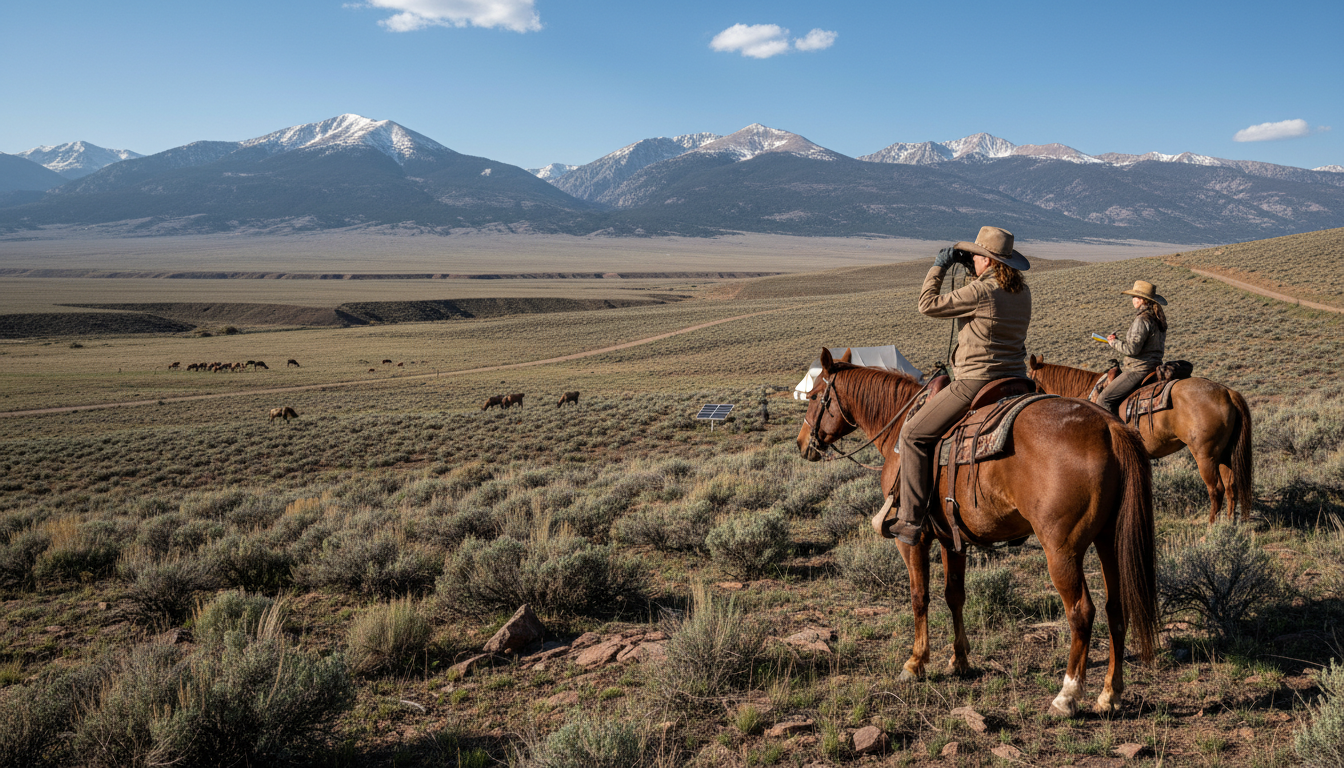

Colorado Parks and Wildlife Expands Innovative Range Riding Program to Mitigate Wolf-Livestock Conflict
Addressing the Growing Need for Wildlife Management
January 9, 2026—Denver: In a pivotal move to bolster wildlife management practices across the state, Colorado Parks and Wildlife (CPW) is expanding its groundbreaking Colorado Range Riding program. This initiative aims to harmonize livestock grazing with the re-emergence of wolf populations, underscoring a proactive approach to conservation and agricultural collaboration. Official Requests for Proposals (RFP) for the 2026 season are now open via the Colorado Vendor Self Service platform, allowing applications until February 6, 2026.
Last year, the Colorado Range Riding program successfully engaged 11 riders, primarily in the northwest region. With wolf populations steadily dispersing southward, CPW is now eager to expand both the geographic scope of the program and the number of range riders to effectively monitor and manage these critical ecosystems.
Training and Responsibilities of Range Riders
Starting in April, newly contracted riders will undergo specialized training conducted by CPW in partnership with the Colorado Department of Agriculture (CDA). This training, developed collaboratively with seasoned riders and livestock producers throughout the West, focuses on equipping participants with essential skills in:
- Identifying wildlife track and sign
- Implementing best practices in range riding
- Utilizing advanced tools and technology
- Employing livestock monitoring techniques
While riders will primarily focus on their designated counties, flexibility will be essential, as ecological dynamics may warrant adjustments to their assigned areas.
On January 16 at 10 a.m., a hybrid information session will be held for prospective applicants, allowing participation either in-person at the CPW Grand Junction Office or online. Interested candidates must register on the Vendor Self Service site to download RFP documents necessary for their applications. Comprehensive applications and resources can be found at cpw.info/3LxTIIG.
Understanding the Colorado Range Riding Program
Established in 2025, the Colorado Range Riding program is a pioneering collaborative effort between CPW and CDA designed specifically to address the challenges posed by evolving wildlife dynamics. This initiative stands out as Colorado’s first of its kind, drawing on experiences from other states that have successfully navigated wolf-livestock conflicts.
The program integrates range riders alongside two employed Non-Lethal Mitigation Specialists from CDA, forming an essential component of CPW and CDA’s strategy to minimize conflicts between livestock and wildlife. By maintaining vigilant oversight and providing timely communication, range riders empower both agencies to act decisively to protect livestock herds from predation risk.
“Range riders deliver vital monitoring of both wildlife and livestock behaviors, facilitating informed decisions regarding potential conflicts,” explains Rae Nickerson, the wolf damage and conflict minimization manager. “Their work fosters improved dialogue among producers, agency staff, and various CPW sectors.”
The Importance of Range Riders
Range riders serve as crucial eyes and ears across the landscape, collecting vital data that informs wildlife managers and biologists. Their presence not only serves as a deterrent to conflict but also enables CPW and CDA to develop adaptive, coherent plans that address emerging issues head-on.
“While range riders are often seen primarily as non-lethal mitigation tools, their role is much broader,” says Nickerson. “They are experts in behavioral patterns and information collection, helping us craft reasonable and efficient responses to the challenges posed by wolf-livestock interactions.”
Why It Matters
This expansion of the Colorado Range Riding program has significant implications for various stakeholders, including:
- Hunters and Hikers: Improved wildlife management leads to healthier ecosystems, enhancing recreational opportunities.
- Local Economies: Supporting livestock operations helps sustain rural economies while allowing for balanced wildlife populations.
- Conservationists: Paving the way for collaborative approaches to complex wildlife management issues can strengthen ongoing conservation efforts.
Field Insights: Pro Tips for Applicants and Stakeholders
- Understand the Terrain: Familiarize yourself with local ecology and wildlife behavior patterns; knowledge of riparian corridors and grazing areas is invaluable.
- Build Relationships: Foster connections with local producers and wildlife managers to facilitate better communication and collaboration.
- Stay Adaptive: Be prepared for dynamic work environments; ecological conditions can shift rapidly, requiring flexibility in approach.
As applications for the Colorado Range Riding positions remain open until February 6, 2026, all interested parties are encouraged to seize this opportunity to contribute to an innovative and essential program aimed at creating synergy between wildlife conservation and agricultural viability.
For more details and application procedures, visit the Vendor Self Service platform.
This article serves to not just inform but also engage and inspire action within Colorado’s outdoor community as it navigates the intricate landscape of wildlife management and conservation.