

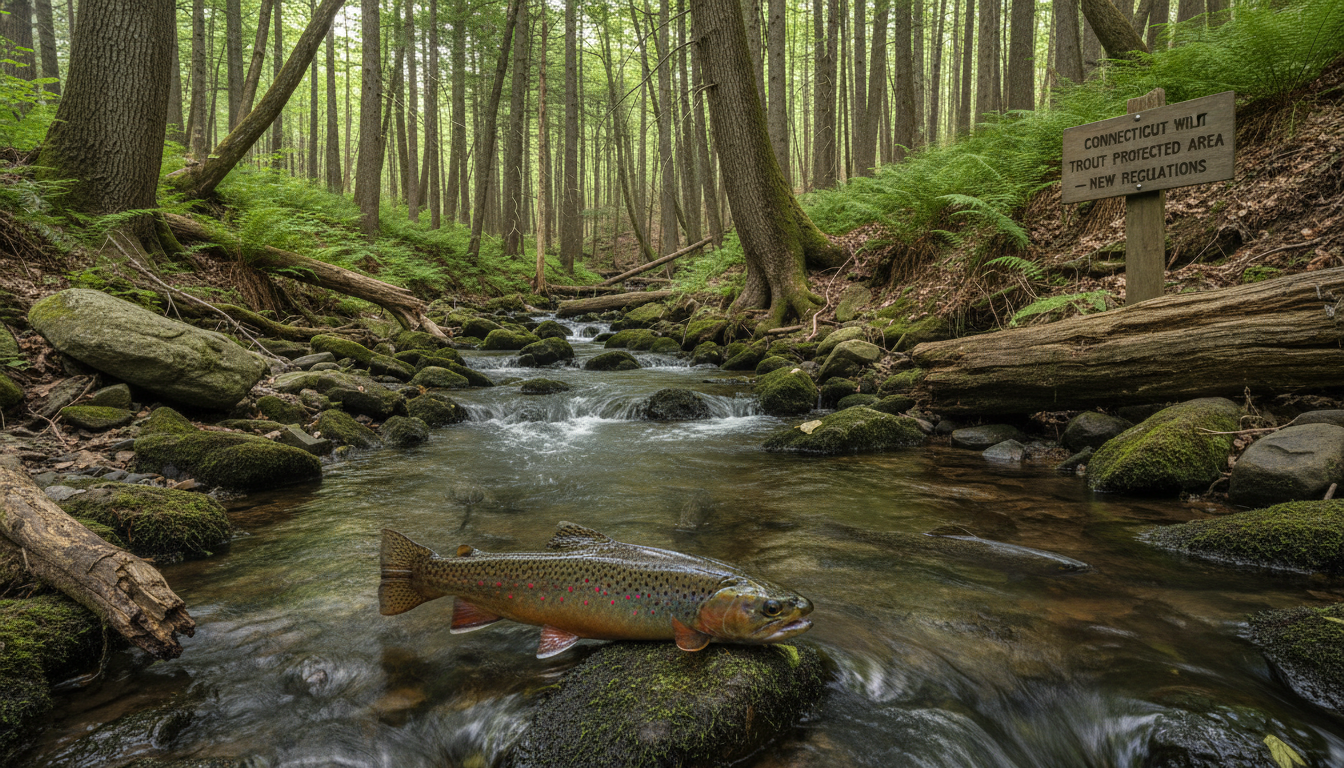

New Regulations Aim to Protect Connecticut’s Endangered Brook Trout
DEEP’s Strategic Response to Climate Change Threats
(HARTFORD) — In a significant move for the conservation of Connecticut’s natural heritage, the Department of Energy and Environmental Protection (DEEP) has announced an overhaul of inland sportfishing regulations, set to take effect on January 1, 2026. This regulatory update is primarily designed to address the alarming decline of brook trout (Salvelinus fontinalis), Connecticut’s sole native trout species, which is increasingly threatened by a warming climate and associated human impacts.
With decades of scientific monitoring revealing a troubling trend in brook trout populations and their habitats, DEEP’s initiative has garnered robust support from the local angler community. “The brook trout is an iconic New England fish that is losing ground here in Connecticut,” emphasized DEEP Commissioner Katie Dykes. “We all play a role in ensuring future generations can experience our state’s vibrant waterways and rich fish populations.”
Core Regulatory Changes
The revised regulations introduce new protective measures tailored to enhance the resilience of brook trout throughout their natural habitats:
-
Minimum Length Limit: Effective January 1, 2026, only brook trout measuring nine inches or longer will be eligible for harvest in waters designated for trout fishing. This marks the first statewide default minimum length since 1953, when it was set at six inches. This new regulation is particularly beneficial as majority of the wild brook trout found in Connecticut are generally under nine inches.
-
Class 1 Wild Trout Management Areas: Twenty-two water bodies are newly classified under stringent catch-and-release guidelines aimed at sustaining their brook trout populations. Anglers in these areas will now be required to utilize artificial lures or flies with single barbless hooks, optimizing conditions for trout recovery.
-
Simplified Regulations: In an effort to streamline trout fishing practices statewide, DEEP has removed specific regulations from multiple water bodies, which will now adhere to the universal trout regulations.
Why It Matters
Long-Term Implications for Conservation and Recreation
These updated regulations carry profound implications not just for brook trout conservation, but also for the ecosystem at large and the outdoor recreation industry. As brook trout are highly sensitive to environmental changes, their preservation signifies a healthier aquatic ecosystem, which provides critical habitat for numerous species and contributes to worthwhile fishing experiences.
Local economies that rely on outdoor recreation, particularly fishing tourism, will benefit from sustainable practices that ensure healthy fish populations. Additionally, outdoor enthusiasts from hunters to hikers will find enhanced opportunities to engage with a more vibrant and ecologically balanced landscape.
Field Insights
Pro Tips for Anglers
-
Practice Catch-and-Release: If you’re fishing in newly designated Class 1 Wild Trout Management Areas, be mindful and embrace catch-and-release practices to ensure brook trout populations remain robust.
-
Choose Artificial Lures: When fishing for brook trout, use artificial lures or flies to comply with new regulations and enhance your chances of a successful catch.
-
Be Informed: Stay up to date with regulations by accessing the 2026 Online Freshwater Fishing Guide or through the free FishBrain APP, ensuring you’re legally compliant and fishing ethically.
-
Look for Habitats: Focus your efforts on cooler, oxygen-rich waters, especially those that have been monitored for brook trout presence, as these are crucial for their survival.
The brook trout’s continued existence in Connecticut is a collective responsibility. By embracing new regulations and fostering a culture of conservation, outdoor enthusiasts can help ensure that future generations will continue to fish in the pristine waters of our state.
For more comprehensive details about the new regulations, visit the DEEP website or contact the Fisheries Division at deep.inland.fisheries@ct.gov for inquiries.
For the latest updates, follow DEEP on Twitter and Facebook.
Contact
DEEP Communications
deep.communications@ct.gov
860-424-3110