

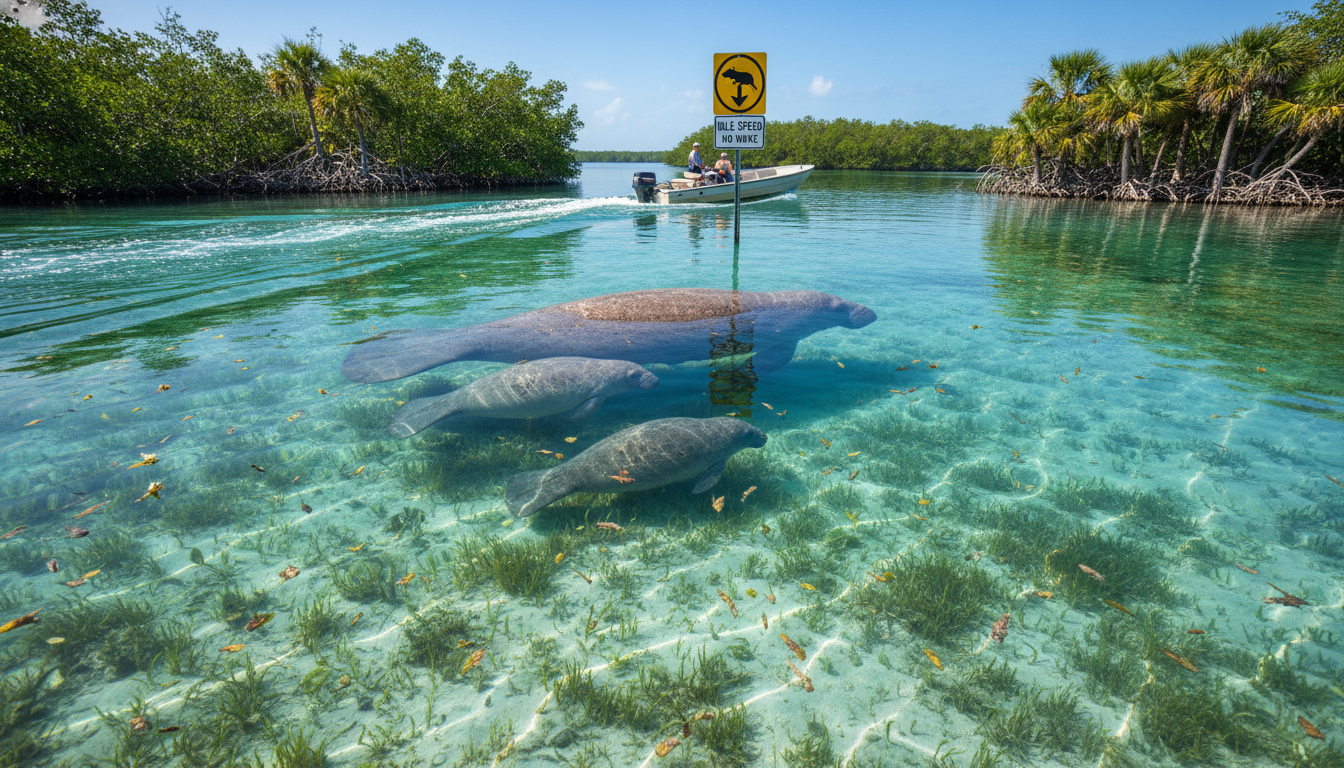

Navigating Manatee Season: Essential Insights for Floridians and Visitors
November marks the onset of Manatee Awareness Month, a critical time when Florida’s gentle giants begin their seasonal migrations in search of warmer waters. As temperatures begin to dip, the Florida Fish and Wildlife Conservation Commission (FWC) urges the public to remain vigilant while navigating state waterways.
Understanding Manatees’ Winter Migration
“Manatees are highly dependent on safe and reliable warm-water sites to survive the winter,” explains Michelle Pasawicz, FWC Manatee Management Program Coordinator. As the water cools below 68 degrees Fahrenheit, these iconic marine mammals seek refuge in springs, power plant discharge areas, and other designated warm-water habitats. They will remain there until the temperatures rise again in the spring, underscoring the importance of these safe havens for their survival.
Despite their sizable presence, adult manatees can be deceptively difficult to spot in the water. Thus, employing strategies while boating—such as wearing polarized sunglasses and adhering to designated manatee protection zones—is imperative. During colder months, these seasonal zones require boaters to reduce speed and sometimes alter their routes altogether to prevent collisions that can lead to injury or death for these vulnerable creatures.
The Threat of Boat Strikes
Boat strikes remain one of the most pressing threats to Florida’s manatees. FWC law enforcement officials actively monitor state waters, ensuring compliance with seasonal speed zones and educating boaters on their responsibilities. Regulatory signs on waterways serve as vital reminders, and maps detailing manatee protection zones can be located at MyFWC.com/MPZ.
Give Manatees Space
When encountering manatees at warm-water gathering sites, it’s crucial to respect their space. Disturbances can prompt them to flee from these protective areas and enter life-threatening cold waters. Remember, manatees are a protected species; harassment, feeding, or harm to them is strictly illegal.
If you spot an injured, distressed, or deceased manatee, report it immediately to the FWC’s Wildlife Alert Hotline at 888-404-FWCC (3922). Attempting to handle a sick or injured manatee can exacerbate the situation for both the animal and yourself.
Why It Matters
The Broader Impact of Manatee Conservation
The fate of Florida’s manatees extends beyond their species; it significantly intersects with local economies, tourism, and ecological health.
-
Economic Implications: Healthy manatee populations enhance eco-tourism, driving revenue for businesses that rely on wildlife watchers and recreational boaters.
-
Ecological Balance: As key players in their habitats, thriving manatee populations indicate robust aquatic ecosystems, which support a diverse range of wildlife.
In this way, the conservation of manatees contributes not just to their survival but also to the integrity of Florida’s natural resources and recreational opportunities for residents and visitors alike.
Field Insights: Pro-Tips for Waterway Users
When navigating Florida’s waterways this season, keep these tips in mind:
-
Stay Alert: Always be on the lookout for manatees, particularly in warmer, shallow waters.
-
Adjust Your Speed: Heed all posted signs and reduce speed in designated manatee protection zones.
-
Use Technology: Equip your vessel with a GPS that highlights manatee zones—knowledge is your best defense against collisions.
-
Practice Respectful Observation: When observing manatees, maintain a safe distance. Too much proximity may harm both you and the animals.
Educational resources for waterway users can be found at MyFWC.com/Manatee. This site offers viewing guidelines, operator tips, and information on supporting manatee conservation efforts.
For those interested in contributing to the FWC’s dedication to manatee research, rescue, and management, consider purchasing a Florida manatee license plate or donating $5 for a collectible FWC manatee decal, available at local Tax Collector’s offices.
By fostering awareness and education about manatees, we can ensure these majestic creatures continue to thrive in Florida’s pristine waters.