

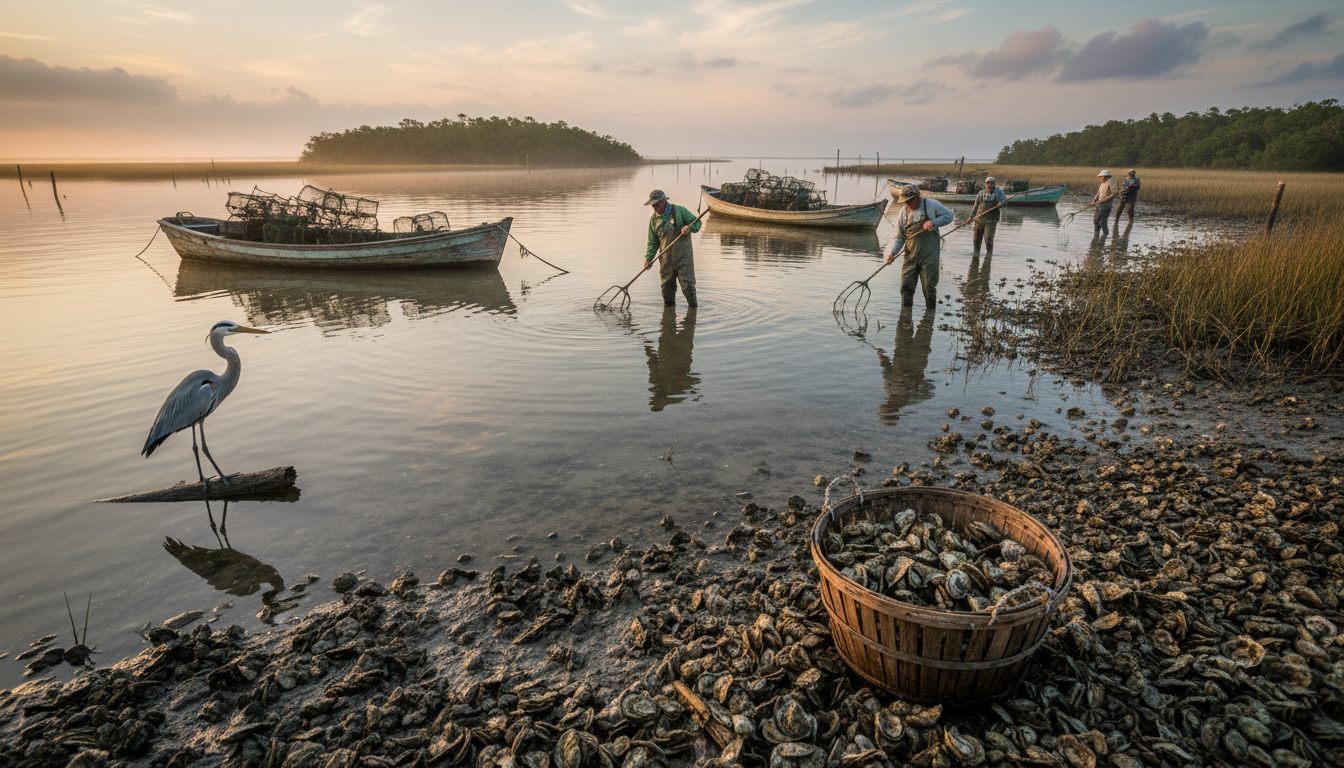

Apalachicola Bay Reopens: A Vital Ecosystem’s Long-Awaited Revival
As the sun rises on January 1, Apalachicola Bay is set to reopen its waters, allowing commercial and recreational harvesters to engage once more in the age-old practice of oyster fishing. For the first time since 2020, those holding an Apalachicola Bay Endorsement and Recreational Opportunity Permit can dip their hands into the bay’s rich estuarine embrace. This reopening signifies not just the return of an industry, but the restoration of a critical ecological habitat that has historically defined Franklin County and the Central Panhandle of Florida.
Rejuvenation After Collapse: A Response to Crisis
The journey back from the brink has been arduous. Over the last two decades, Apalachicola Bay’s oyster reefs witnessed alarming declines, prompting the Florida Fish and Wildlife Conservation Commission (FWC) to enforce a harvest closure in 2020—an action spurred by a dramatic collapse of the oyster fishery in 2013. Since then, state and federal stakeholders have committed over $38 million to restore this vital resource, igniting a glimmer of hope through ongoing restoration initiatives.
At the November 2025 FWC Commission Meeting, a revised oyster management plan took center stage. It established new harvest seasons based on the health and abundance of oysters, a direct testament to the long-term rehabilitation efforts that are beginning to yield results. This new plan allows the harvest season from January 1 to February 28, 2026, with approximately 4,700 bags available for commercial harvesters—a crucial step towards sustainability for an industry long synonymous with Florida’s cultural identity.
Leadership Voices
“Tomorrow marks the beginning of a new year, and a new beginning with the reopening of the Apalachicola Bay, which has served as a vital estuary for decades,” stated FWC Executive Director Roger Young. His words encapsulate the collective efforts of numerous stakeholders, from Governor DeSantis and the Florida Legislature to local harvesters and community members battling to restore this essential resource.
In its heyday, Apalachicola Bay accounted for nearly 90% of Florida’s commercial oyster landings and approximately 10% of all wild oysters harvested nationally. The oysters taken from these waters are an iconic representation of Florida’s coastal heritage.
Why It Matters
The Impact on Communities and Conservation
The reopening of Apalachicola Bay holds far-reaching ramifications:
- Economic Revitalization: The local economy, long tied to the oyster industry, stands at the cusp of renewal. The bay’s harvest provides livelihoods for countless families and contributes significantly to community stability.
- Ecological Recovery: As the oyster population begins to bounce back, it plays a critical role in restoring the bay’s ecosystem. Oysters filter water, create habitats, and contribute to the overall health of marine life.
- Cultural Heritage: Beyond economics, the oyster harvest is intertwined with the cultural fabric of Franklin County, helping to preserve traditions that define the region.
Field Insights: Pro Tips for Harvesters
If you’re planning to dip into the reopening waters of Apalachicola Bay, consider the following insights:
- Know Your Limits: Commercial Endorsement holders can harvest up to 4,700 bags; recreational permit holders are allowed one bag for the season. Familiarize yourself with regulations to avoid penalties.
- Monitor Conditions: Be mindful of weather conditions and water quality as these factors can significantly affect oyster health and availability.
- Support Sustainable Practices: Engage with local conservation efforts and stay updated on best practices to ensure the continued recovery of the bay’s oyster population.
As the calendar turns, Apalachicola Bay emerges not simply as a harvest site, but as a beacon of resilience and renewal. This reopening marks the genesis of a new chapter—one where ecological restoration and community heritage intertwine to create a sustainable future.
For further information on commercial oyster harvest regulations, visit MyFWC.com/fishing/saltwater/commercial/oysters/. For recreational regulations, visit MyFWC.com/fishing/saltwater/recreational/shellfish/.