

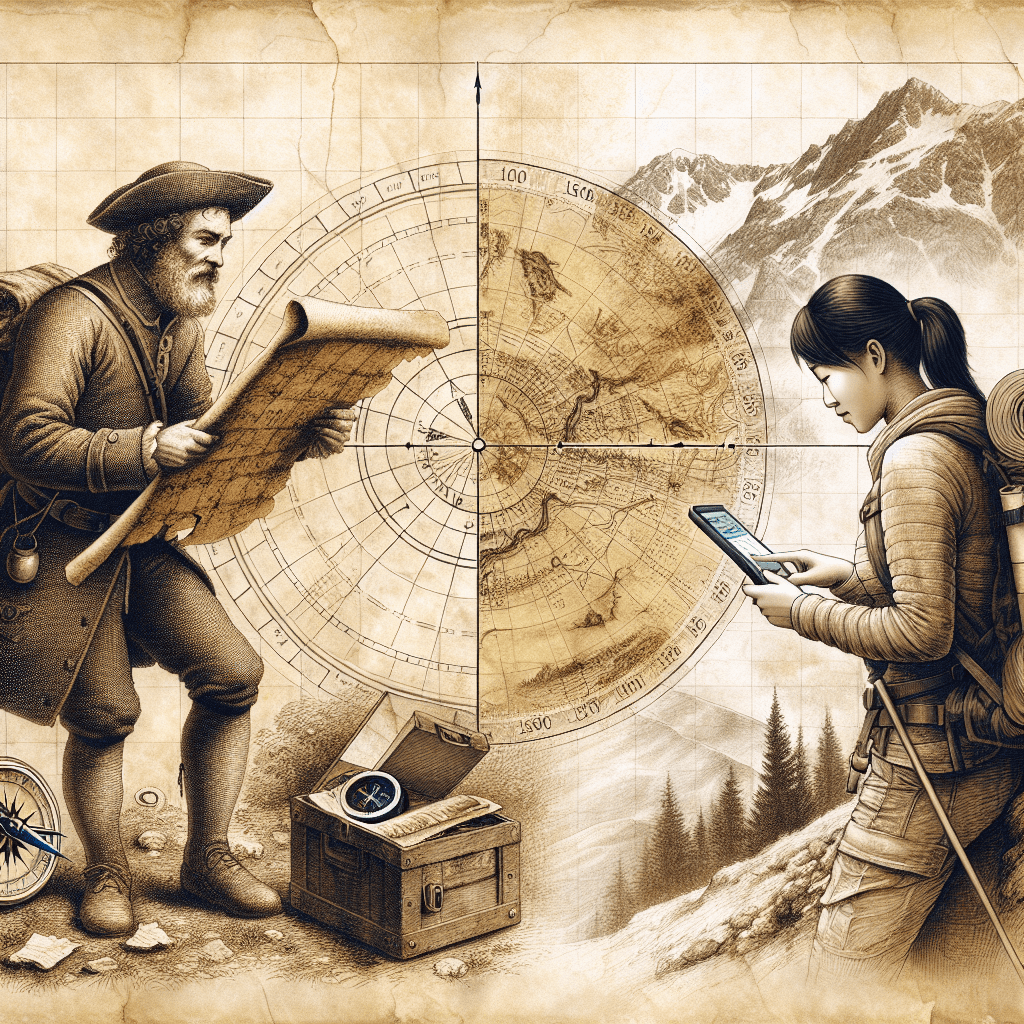

When I first set out on my solo hiking adventure in the expansive wilderness of the Pacific Northwest, all I had was a well-worn paper map and a compass tucked in my backpack. I remember feeling a mix of excitement and anxiety as I unfolded that map, tracing my finger along the emerald green trails like an explorer of yore. Little did I know, this journey would unveil not only nature’s breathtaking beauty but also the remarkable evolution of outdoor navigation. From traditional maps to modern GPS devices, understanding this evolution is crucial for any outdoor enthusiast. Join me as we explore the journey of navigation, share riveting stories, and equip you with the skills for your own adventures.
The Birth of Navigation: Maps and Their Significance
For centuries, explorers relied on handmade maps that detailed uncharted territories. These maps were more than just pieces of paper; they held the dreams of adventurers and served as vital guides through rugged terrains.
The Art of Map Reading
Learning how to read a map is an invaluable skill that remains relevant today. Here’s a brief guide to ensure you can navigate confidently using maps:
- Understanding Map Symbols: Familiarize yourself with common symbols such as trails, rivers, and elevation contours.
- Topographic Awareness: Learn how to interpret elevation changes—a skill I put into practice during a challenging ascent in the Cascade Mountains. The map showed a steep incline, and my preparation paid off as I managed my pace to conquer the trail successfully.
- Scaling the Map: Always take note of the scale represented on your map. It will help you gauge distances accurately, which is essential for planning your trip.
Anecdote: A Lesson in Map Navigation
During one of my early trips, I encountered dense fog that rendered my visual navigation almost impossible. Relying solely on my map and compass, I pinpointed my location by identifying prominent landmarks. This experience taught me the critical importance of developing a solid relationship with traditional navigation tools, reinforcing that familiarity with maps is still essential even in the GPS age.
The Rise of Compass Navigation
The compass, a game-changer in the world of navigation, paired seamlessly with maps to guide explorers through the wilderness. It provided a sense of direction that changed the way we approached the outdoors.
How to Use a Compass Effectively
Mastering the compass involves several steps:
- Getting a Bearing: Learn how to take a bearing and translate it to your map. This skill was essential for my friend during a challenging winter hike, where visibility dropped to near zero.
- Adjust for Declination: Make sure to account for magnetic declination, which varies depending on your location.
- Follow the Trail: Use your compass in tandem with your map to stay oriented, especially in unfamiliar landscapes.
Anecdote: Navigating the Unknown
Once, while venturing into the Rockies during winter, I found myself lost after taking a wrong turn. The snow-covered terrain looked identical in every direction. However, with my trusty compass leading the way, I recalibrated my path and returned to safety. This out-of-the-blue adventure tested my skills and solidified my respect for compass navigation.
The Technological Leap: GPS Devices
The evolution of navigation truly exploded with the advent of GPS technology. Today, GPS devices offer unprecedented access to mapping software and real-time positioning.
Benefits of GPS for Outdoor Enthusiasts
- Real-Time Tracking: Many GPS devices allow you to track your route live. During a multi-day excursion, this became critical, especially when we lost daylight.
- Offline Maps: Some GPS apps offer offline capabilities, ensuring you can navigate without service—a lifesaver when I explored remote areas in Canada with no cellular signal.
- Waypoint Management: You can save waypoints for campsites, water sources, or scenic views, making it easier to revisit these gems in the future.
Anecdote: Embracing New Technology
While hiking in the rugged terrain of the Adirondacks, my GPS guided me directly to a hidden waterfall I’d heard about but never seen. With its precise directions, I stumbled upon an uncharted beauty that enriched my adventure.
Learning Curve: The Balance Between Old and New
Even though GPS and other digital navigation tools are becoming the norm, retaining traditional skills like map reading and compass navigation is vital. Here’s why:
- Technology Failures: In the wilderness, tech doesn’t always guarantee reliability. On one trip, my smartphone’s battery died, leaving me relying solely on my paper map and compass.
- Skill Development: Developing navigation proficiencies prepares you for unforeseen circumstances.
- Enhanced Experience: Each method offers a different perspective of the outdoors, deepening your connection to nature.
Key Takeaways: Trust Your Skills
As outdoor enthusiasts, the evolution of navigation—from maps to GPS—teaches us that a blend of old and new techniques leads to safer and more enriching experiences in the wild. Whether you choose to interpret a map, trust your compass, or rely on GPS technology, being equipped with diverse skills enhances your adventure.
Reader Questions Answered
1. Why should I learn to read a map when I have a GPS?
Understanding maps enhances your skills for when technology fails, fostering greater confidence in navigating the outdoors.
2. What should I pack for a hiking trip focused on navigation?
Pack a physical map, a reliable compass, a GPS device or a smartphone app, batteries or a power bank, and a first aid kit.
3. How can I practice navigation skills?
Join local outdoor groups or clubs that focus on navigation, or take a course on map and compass reading.
Frequently Asked Questions (FAQs)
1. Can GPS work in remote areas without cellular service?
Yes, many GPS apps provide offline maps that can function without cellular service.
2. What is magnetic declination?
Magnetic declination is the angle between true north and magnetic north and varies based on your geographic location.
3. Are older navigation skills still useful today?
Absolutely! Map and compass navigation skills are essential in case technology fails and provide a deeper connection to your environment.
Equipped with these insights and experiences, you are now empowered to embrace both traditional and modern navigation methods on your outdoor adventures. Adventure awaits—get out there and explore!