

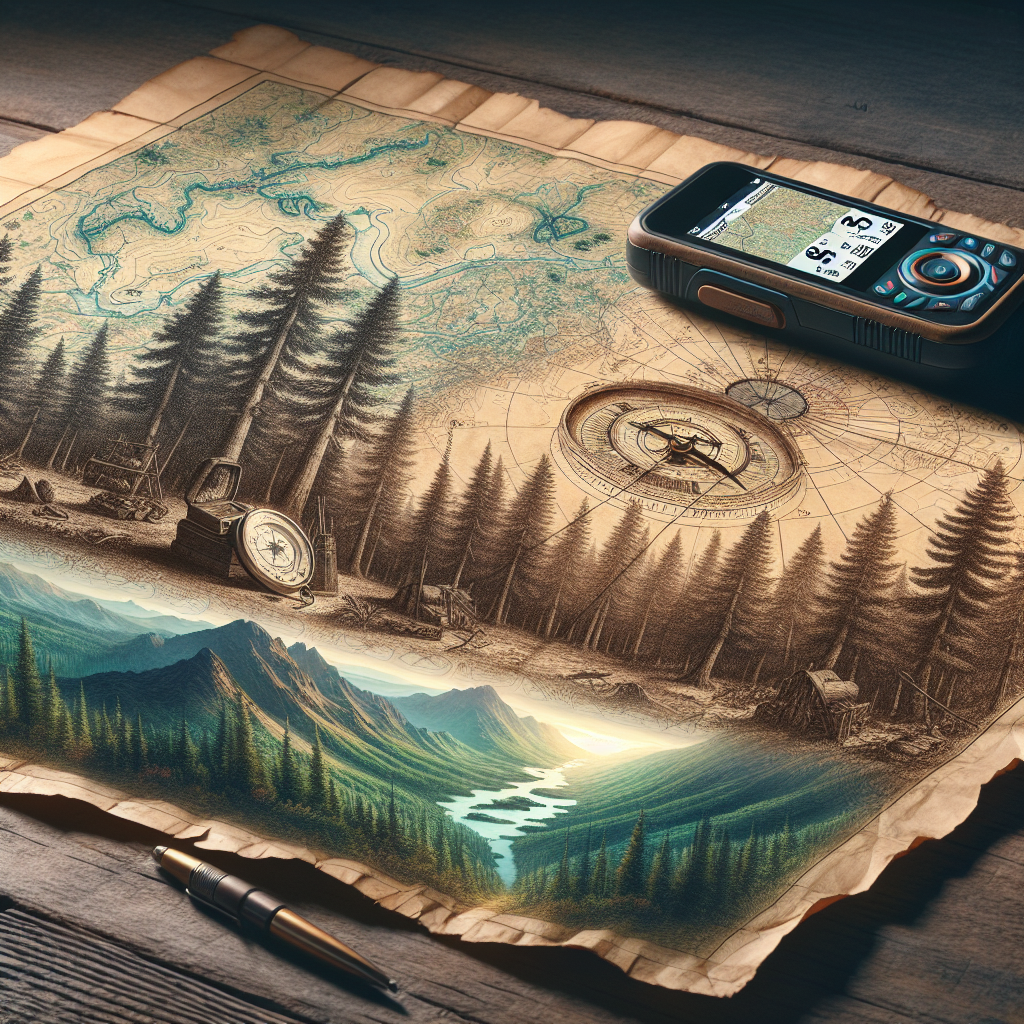

Navigating the wilderness, whether it’s a hike in the local woods or a week-long trek through the rugged mountains, is a skill that has evolved dramatically over the decades. As outdoor enthusiasts, the journey from traditional maps to modern GPS technology has not only transformed the way we find our way but has also emphasized the need for foundational navigation skills. This blog post will delve into the evolution of wilderness navigation, offering educational insights, personal anecdotes, and practical tips for adventurers of all skill levels.
The Importance of Wilderness Navigation
Effective navigation is crucial for any outdoor trekker. While technological advancements like GPS devices and smartphone apps provide convenience and accuracy, understanding the fundamentals of wilderness navigation ensures safety and boosts confidence on the trail. Relying solely on gadgets can lead to dangerous situations, particularly in remote areas where batteries can die or signals can vanish.
I remember my first solo hike—a short one compared to today’s standards. Armed with a map, compass, and my unwavering spirit of adventure, I discovered the beauty of nature and the satisfaction that comes with navigating it. During that hike, I made a wrong turn and ended up at a picturesque overlook, which was a fortuitous mistake. However, it highlighted the importance of knowing where you’re going, and I learned crucial lessons about preparation, double-checking my route, and the value of both technology and traditional methods.
The Historical Context of Wilderness Navigation
Early Navigation Tools
Before GPS and even before compasses, early explorers relied on natural markers—stars, shadows, and landscapes—to find their way. The use of maps can be traced back to ancient civilizations, with the first maps being crudely drawn depictions of the Earth’s features. These maps provided essential information but weren’t always reliable.
One memorable camping trip shaped my understanding of these early navigational hurdles. I stumbled upon an old treasure map while exploring a historical site, torn and faded. My friends and I attempted to follow it, imagining ourselves as adventurers. Though we never found treasure, we learned how difficult it was to navigate using such imprecise information—and how vital it is to interpret visual cues from the environment.
The Rise of the Compass
As technology evolved, the compass provided a more reliable method of navigation. Invented in China, the compass allowed explorers to orient themselves even in unfamiliar territory. This simple yet powerful tool became essential for long-distance voyages, ensuring sailors could cross vast oceans and explore distant lands.
On a memorable sailing trip in the Caribbean, I relied heavily on my compass when weather conditions turned unpredictable. The crew looked to me as we lost sight of land. With my compass in hand, I navigated us back to safety, underscoring the indispensable value of the compass in uncertain situations.
The Era of Detailed Maps
Topographic Maps and Navigation
By the 19th century, key developments in cartography led to the creation of topographic maps—detailed representations of the Earth’s surface. These maps showcased elevation, terrain features, and other significant landmarks, aiding hikers and explorers in finding their way through dense forests and rugged mountains.
During a challenging hike through the Appalachian Trail, my trekking buddy and I relied on a topographic map for our ascent. The steepness of the terrain and the surrounding landmarks helped us gauge the distance we traveled and what lay ahead—an essential skill that ensured not just our survival, but our enjoyment of the breathtaking views.
Using Maps and Navigational Techniques
Understanding how to read and utilize these maps, paired with compass skills—such as triangulation and orienting maps—were critical skills for any outdoor adventurer. Many still consider these foundational skills indispensable, even amid modern technology.
Years ago, I led a group of novice hikers, all equipped with the latest smartphones and fancy GPS apps, anxious to venture into the wilderness without understanding the basics. I emphasized the importance of map reading at the beginning of our trek. When we hit a dead end due to a technical failure and our phones lost signal, we successfully navigated back to camp—proof that having a physical map and the knowledge to use it is invaluable.
GPS: The Game Changer
How GPS Works
The introduction of Global Positioning System (GPS) devices transformed wilderness navigation. Operating through satellites, GPS units provide essential location information down to mere meters, regardless of not only one’s location on Earth but also the challenges of the topography. Mobile applications leveraging GPS technology have made navigation more accessible than ever.
While GPS made navigation easier, I vividly recall a trip where I fully appreciated its limitations. My group decided to forgo using a traditional map on a road trip route to several national parks, relying entirely on GPS. Halfway through, our GPS directed us off an unpaved road that quickly dissolved into an impassable dirt track. We learned the importance of judiciously weighing technology against visual cues from our surroundings—an important lesson in modern navigation.
Essential Skills to Supplement GPS
While GPS is a powerful tool, having fundamental navigation skills ensures preparedness for situations where technology might fail. A great understanding of maps, compasses, and environmental markers is essential to becoming a well-rounded navigational expert. Here are some skills to develop:
- Understanding Land Features: Be familiar with identifying natural landmarks and terrain features which can aid in navigation.
- Map Reading Techniques: Familiarize yourself with map legends and how to estimate distance using the map scale.
- Compass Usage: Practice using a compass to orient yourself. Simple techniques like sighting a landmark through the compass can help you stay on course.
- Relying on Nature: Use the sun, stars, and even vegetation changes as clues to your direction.
Packing Essentials for Navigation
What to Include
Whether you’re relying on maps, compasses, or GPS, having the right gear is vital:
- Topographic Maps: Ensure you have updated copies of relevant maps for your area of exploration.
- Compass: A reliable compass is an indispensable tool, even if you plan to use GPS.
- GPS Device or Smartphone Apps: Always have a secondary device to back up your route.
- Power Banks: Keep your devices charged; a power bank can save the day.
- First Aid Kit: Navigation isn’t just about getting from Point A to Point B; safety is paramount.
Reflecting on a thrilling backcountry skiing trip, a minor incident involving a crevasse highlighted the need for a well-stocked first aid kit and navigational gear. When my friend fell, while we were able to use GPS for a rescue, knowing we had the first aid kit allowed us to provide immediate assistance before help arrived.
Common Mistakes to Avoid
- Over-Reliance on Technology: Lack of understanding of traditional skills can lead to dangerous situations.
- Not Double-Checking Coordinates: Relying solely on pre-set GPS points can lead you astray when trails change.
- Neglecting Weather Conditions: Weather can impact visibility; know when to rely on your skills over gadgets.
Reader Questions Answered
-
What should I do if my GPS stops working while hiking?
If your GPS fails, assess your location using your map and compass. Familiarize yourself with visual landmarks, and if you’re lost, avoid panicking—stay calm, retrace your steps, and consult the map. -
How do I read a topographic map if I’m new to hiking?
Start by understanding the map’s legend and how contour lines indicate elevation. Identify key landmarks, trails, and water sources to help you plan your route. -
Are smartphones reliable for navigation in the wild?
While smartphones are handy, their reliability depends on battery life and signal strength. Always carry a physical map and compass as a backup.
FAQs
-
Can I solely rely on GPS for navigation?
While GPS is helpful, it’s crucial to learn traditional navigation skills. Technology can fail, and having backup skills ensures safety. -
What is the best way to practice map and compass navigation?
Start in familiar terrain, working on basic skills like orienting a map and navigating to marked points. Join local outdoor clubs that offer training. -
Are there any apps you recommend for navigation?
Popular apps include Gaia GPS, AllTrails, and ViewRanger, which can assist in tracking and mapping your routes. Just remember to download maps ahead of time.
Key Takeaways
The evolution of wilderness navigation—from maps to GPS—has donated a significant shift in how adventurers explore the great outdoors. While modern technology streamlines the process, foundational navigation skills remain vital. Each method has its advantages, yet embracing both equips outdoor enthusiasts with comprehensive knowledge for any situation.
As you plan your next adventure, remember to balance the high-tech convenience of GPS with the timeless skills of map reading and compass navigation. Embrace the journey, stay curious, and let every trip be an exploration not just of trails but of the skills that empower you with confidence.
Embark on your journey of discovery—with skills in hand, you’re never truly lost!