

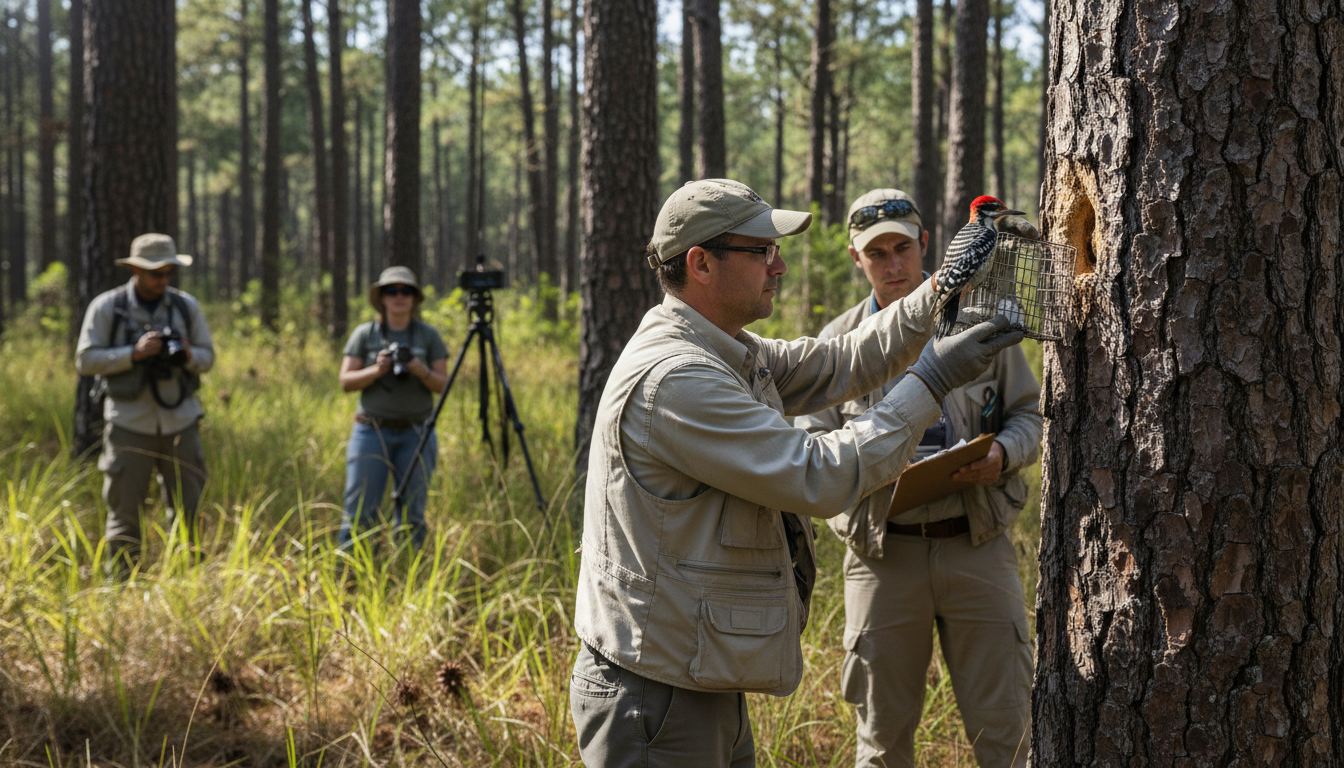

Seven Pairs of Red-Cockaded Woodpeckers Take Flight: A Conservation Triumph at Chickasawhatchee
On December 18, a significant milestone in avian conservation unfolded at Georgia’s Chickasawhatchee Wildlife Management Area (WMA) near Albany. Seven pairs of red-cockaded woodpeckers (RCWs), a federally threatened species, were successfully released into this natural bastion, marking a pivotal introduction for the species in Calhoun County. This translocation effort represents the culmination of a robust conservation partnership involving various stakeholders dedicated to bolstering wildlife populations.
A Unified Conservation Effort
The translocation of these woodpeckers from two donor sites—the U.S. Army’s Fort Stewart and The Jones Center at Ichauway—demonstrates a profound collaborative spirit among organizations such as the Georgia Department of Natural Resources (DNR), the Department of Defense, the U.S. Forest Service, Tall Timbers, The Longleaf Alliance, and others.
Historically, RCWs have faced a perilous decline due to habitat loss and degradation. Listed as endangered under the Endangered Species Act of 1973, there is now a glimmer of hope—this species was downlisted to threatened status in October 2024, primarily due to continued translocation initiatives supported by an alliance of federal and state agencies alongside private partnerships.
Unpacking the Translocation Success
Under the meticulous coordination of DNR senior wildlife biologist Joe Burnam, this operation began with the capture of five pairs from Fort Stewart, a key contributor to RCW recovery efforts since the late 1990s, supplemented by two pairs from The Jones Center. Fort Stewart houses one of the Southeast’s most significant populations of red-cockaded woodpeckers. The newly transferred woodpeckers are now under close monitoring to gauge acclimatization and reproductive success in this new environment.
Matt Elliott, Chief of the Wildlife Conservation Section at DNR, expressed pride in how far the project has come since his tenure began in 2004: “When I started at DNR, we had no populations here. The recovery we now witness is a testament to the commitment of our staff and our partners.”
A Historic Moment for The Jones Center
The contribution made by The Jones Center’s current and former biologists, who have diligently managed the RCW population since 1999, encapsulates a full-circle moment for the program. What began with a single male woodpecker has grown into an estimated population of 180 RCWs, comprised of 57 potential breeding groups as projected for 2025. Previous translocations between 1999 and 2015 have laid a solid foundation for this growth, drawing contributions from various sources, including Apalachicola National Forest in Florida and numerous private lands throughout Georgia and Florida.
Jones Center Conservation Coordinator, Brandon Rutledge, reflected on the significance of these efforts: “This is not just about the RCW; it’s about demonstrating effective natural resource management and inspiring collective stewardship.”
Why It Matters
The successful translocation of red-cockaded woodpeckers has far-reaching implications:
- Ecological Balance: This initiative supports not only the RCW but also contributes positively to the surrounding ecosystems, enhancing habitat for various wildlife, including northern bobwhites, gopher tortoises, and white-tailed deer.
- Recreational Opportunities: For hunters, hikers, and nature enthusiasts, improved wildlife diversity and healthy ecosystems lead to richer outdoor experiences.
- Conservation as a Model: This collaboration can serve as a model for wildlife recovery efforts across the nation, encouraging further partnerships and engagement in conservation work.
Field Insights: What to Watch For
As you explore the Chickasawhatchee WMA or other regions that host red-cockaded woodpeckers, keep in mind the following pro tips to enhance your outdoor experience:
- Look for Active Cavity Trees: These woodpeckers create distinctive cavities in live pine trees. Be observant, as signs of their presence can be thrilling for birdwatchers.
- Respect Habitat Zones: Wildlife management areas are critical for species recovery; help by minimizing disturbance in designated habitat zones.
- Engage with Local Programs: Learn about local conservation programs or volunteer opportunities to directly contribute to wildlife recovery efforts.
In conclusion, the introduction of these red-cockaded woodpeckers to Chickasawhatchee WMA is not just a step forward for the species; it’s a testament to the commitment of a broad coalition of conservationists working tirelessly to create a sustainable future for our wildlife and natural resources.

The success of the red-cockaded woodpecker initiative underscores the profound impact that dedicated conservation efforts can have on wildlife populations. As ongoing projects continue to evolve, each endeavor brings us closer to restoring and enriching the natural world we cherish.