

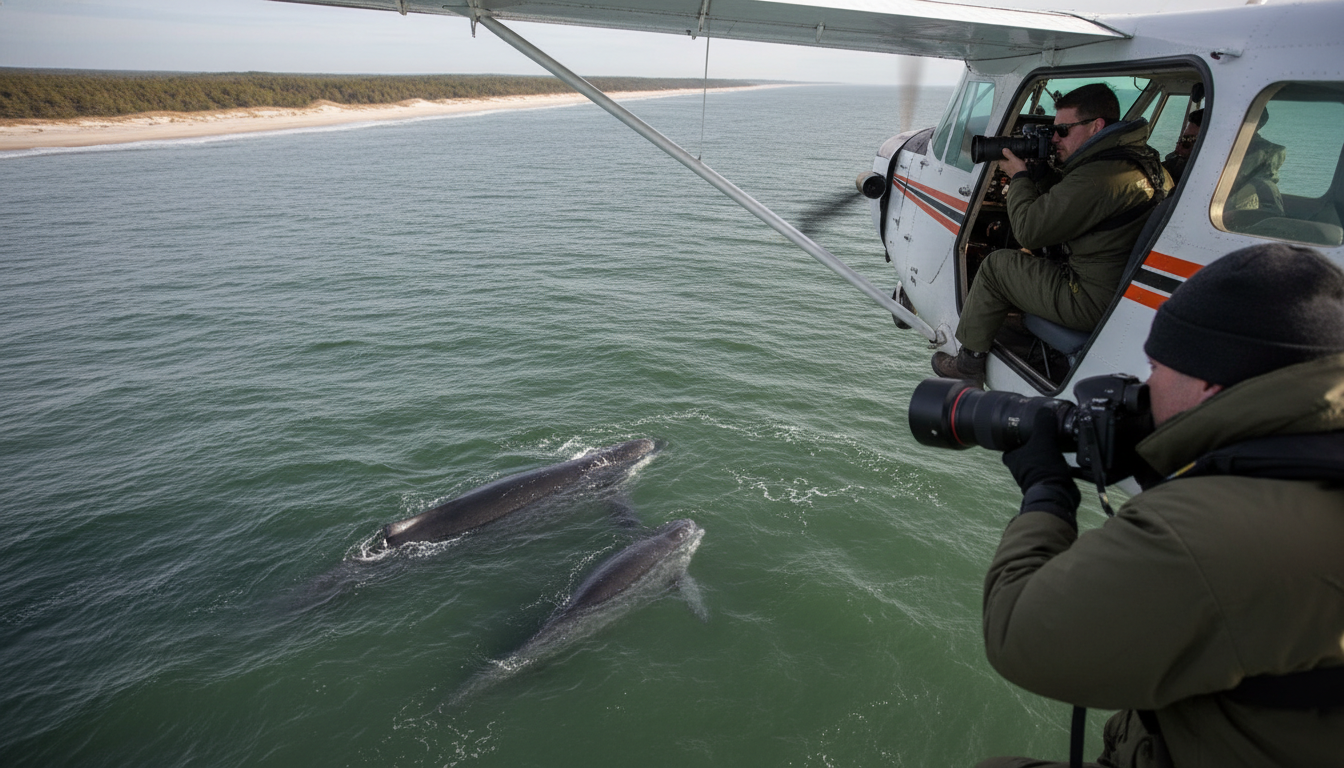

Aerial Monitoring: The Lifeline for North Atlantic Right Whales
A Critical Collaboration
For over two decades, the Clearwater Marine Aquarium Research Institute (CMARI) has partnered with Georgia’s Department of Natural Resources (DNR) to tackle the conservation challenge of the North Atlantic right whale (Eubalaena glacialis). This collaboration is vital as it focuses on the species’ sole calving grounds in the waters off Georgia, northern Florida, and the Carolinas—a habitat critical to the survival of these critically endangered mammals.
While many are aware of the significant findings these aerial surveys yield—frequent sightings of new mothers and their calves—what remains less known are the nuances and inner workings of this essential fieldwork.
Objectives of Aerial Surveys
CMARI’s aerial survey operations have defined objectives aimed at optimizing conservation efforts for these majestic whales:
- Photo-Identification Data Collection: This vital information aids in monitoring population demographics and health indicators.
- Vessel Collision Mitigation: By providing real-time sightings of whales to mariners, the risk of vessel collisions is significantly reduced, thus enhancing whale safety.
- Incident Documentation: The surveys also serve to document any dead, injured, or entangled right whales, catalyzing rapid responses when necessary.
- Disentanglement Efforts: They assist in initiatives to free whales caught in fishing gear and conduct carcass recoveries for further study.
- Support for Other Research: The surveys bolster boat-based research by providing critical aerial observations.
By January 10, CMARI’s team had executed 20 surveys for the ongoing winter calving season, averaging approximately 5.5 hours of flight time for each survey and covering an average of 465 nautical miles—distances measured along the Earth’s curvature. Altogether, they have logged over 109 hours in the air, equivalent to 4.5 continuous days of surveying, and traversed an astonishing 9,295 nautical miles—a journey long enough to cover over 40% of the globe.
Documenting the Whales’ Journey
During this winter season alone, CMARI has tallied 53 right whale sightings, which included 14 new calves and 36 mother-calf pairs. Just days ago, the team had the noteworthy experience of identifying the 19th calf of the season—an encouraging sign for the species’ precarious population numbers.
The dedicated team conducting these surveys comprises:
- Observers: Melanie White (Lead), Bridget Ausley, and Arianna Torello
- Pilots: Bill Bellatty and Layne Timidaiski
- Honorary Member: Murray, an indispensable labrador retriever
A Blend of Focus and Fun
Conducting aerial surveys presents its challenges, requiring high levels of concentration during long hours in the cockpit. Yet, camaraderie thrives through shared excitement, especially when new whales are identified. Each sighting prompts a spontaneous celebration—team members commemorate discoveries with songs based on the respective whale’s catalog number. For instance, whale No. 1243, known as “Magic,” brings to mind the classic tune “Magic” by the band Pilot. At season’s end, the team plans to compile a mixtape as a cherished keepsake.
Team Highlights:
- Favorite Snacks: String cheese (Ari), strawberries (Layne), Cheez-Its (Bridget), assorted fruits (Melanie and Bill).
- In-flight Conversations: From military anecdotes (Bill) to discussions about whales (Layne) and a good-natured ribbing of Ari (Bill again), the dialogue is anything but dull.
Why It Matters
Understanding the plight of North Atlantic right whales extends beyond mere statistics; it’s tied to the broader implications for marine ecosystems and coastal economies. Hunters and hikers may find altered dynamics in natural resource availability. The conservation of right whales boosts biodiversity, benefiting other marine life, while also assuring safer boating and fishing practices that local businesses depend on. Failure to act on these insights could ultimately disrupt intricate ecological balances, affecting both human activity and wildlife longevity.
Field Insights
If you’re curious about whale-watching or are interested in supporting conservation efforts, consider these pro-tips:
- When to Look: Winter months are prime for calving, notably January through March, when mothers and their young are often sighted.
- Essential Gear: Binoculars and a camera with zoom capability can enhance your whale-watching experience from shore or a vessel.
- Local Involvement: Consider supporting conservation organizations or participating in community efforts to protect coastal habitats.
Stay tuned as the CMARI aerial team, in collaboration with DNR and other conservation partners, continues its mission to safeguard North Atlantic right whales throughout this calving season.

By interweaving scientific data with human connections and a commitment to conservation, this story sheds light on the indispensable effort to protect one of the ocean’s most vulnerable species.