

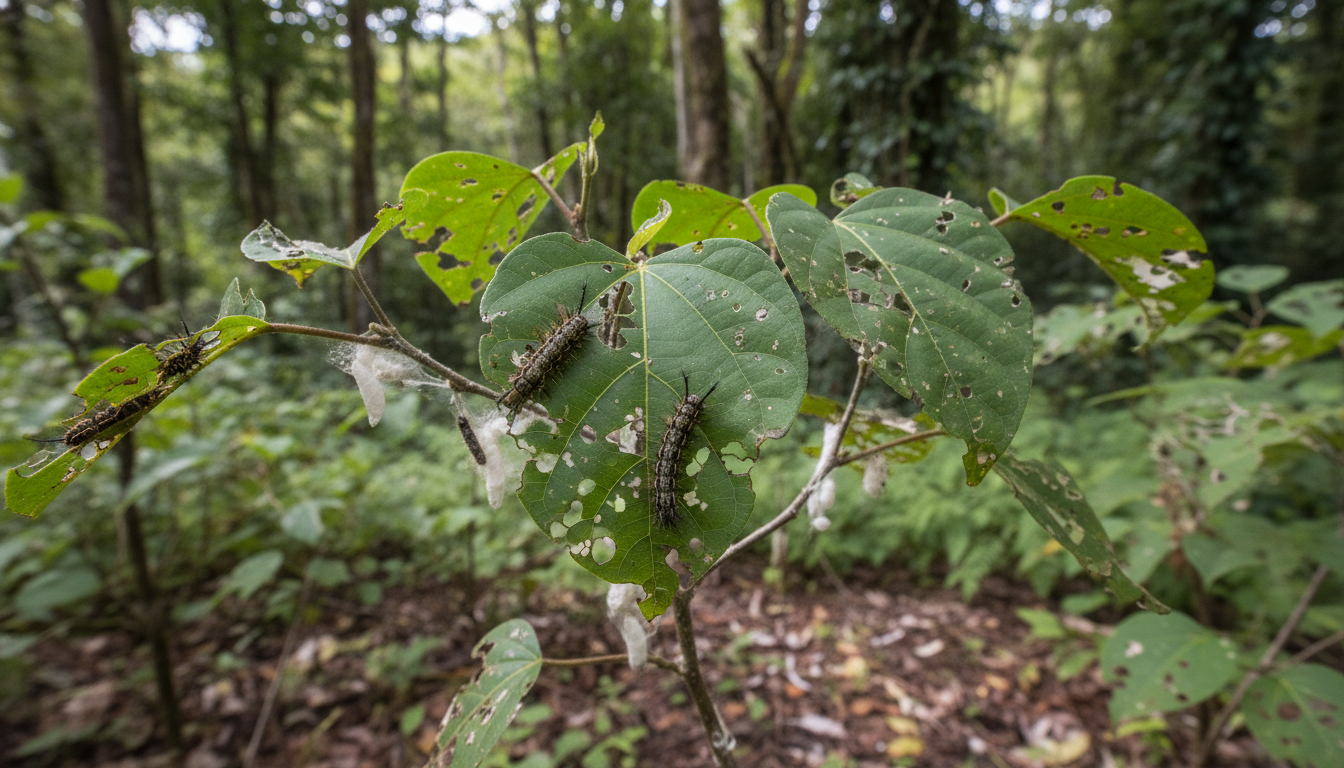

Invasive Ramie Moth Targets Māmaki on Kauaʻi: Community Vigilance Essential
Māmaki at Risk from Newly Identified Pests
LĪHUʻE, Kauaʻi – A single live caterpillar of the invasive ramie moth (Arcte coerula) was discovered last month, marking the first identification of this pest on Kauaʻi. The Kauaʻi Invasive Species Committee (KISC) received the community’s report that led to the significant find, underscoring the active role residents can play in conservation efforts.
Collaborative efforts are underway involving the Department of Land and Natural Resources’ (DLNR) Division of Forestry and Wildlife, KISC, the Hawaiʻi Department of Agriculture and Biosecurity, and the University of Hawaiʻi at Mānoa. Together, these entities are working to mitigate the potential fallout of this invasive species.
A Lethal Threat to Native Flora and Fauna
Ramie moth caterpillars are notorious for their insatiable appetite for māmaki leaves, the plants belonging to the genus Pipturus, which are integral to local ecosystems. They not only feed on māmaki but also target endemic nettles, including maʻoloa (Neraudia spp.) and ōpuhe (Touchardia sandwicensis). This ravenous feeding behavior threatens not just the flora, but also native invertebrates such as the iconic Kamehameha butterfly and various native snails, as these organisms compete for the same vital plant resources.
These caterpillars, which can grow from a mere 1/16 inch to an alarming 4 inches, sport a striking range of colors—from vibrant greens to yellows and blacks, adorned with orange-red spots and delicate white hairs. The adult moths display dark brown wings, embellished with black and silver markings, achieving a wingspan of up to 3.5 inches.
The ramie moth was first detected in Hawaiʻi in 2018 on Maui, followed by sightings on Hawaiʻi Island in 2020 and Oʻahu in 2025. Despite the recent find on Kauaʻi, they have yet to establish a widespread presence. Local officials urge residents to remain vigilant for additional sightings. While eggs and caterpillars can travel on host plants, adults have the capacity to disperse widely by flight.
Why It Matters
The ramifications of the ramie moth’s proliferation could be devastating. Native ecosystems are already pressured by invasive species, and the loss of māmaki could reverberate through the food web. Hunters and hikers, who depend on the ecological integrity of these landscapes, may notice declines in populations of native birds and insects linked to māmaki and other endemic plants. Conservationists warn that without early detection and a rapid response, Kauaʻi’s lush forests could face drastic changes, affecting the island’s biodiversity and its appeal for outdoor recreation.
- Economic Impact: Disruptions to native ecosystems may affect tourism and local economies that rely on outdoor activities and natural beauty.
Field Insights: Pro-Tips for Residents
To aid in combating this invasive threat, community participation is paramount. Here are ways you can contribute:
-
Stay Informed: Familiarize yourself with the appearance of ramie moth caterpillars to differentiate them from native species, such as the Kamehameha butterfly. Comparison photos can be found here.
-
On the Lookout: Keep your eyes peeled when hiking or exploring areas with māmaki. If you spot any suspicious caterpillars or adult moths, document your findings with photographs.
-
Report Immediately: Prompt reporting is crucial. Any sightings should be communicated to pest control services at 643pest.org to facilitate swift intervention.
Conclusion
The detection of the ramie moth on Kauaʻi serves as a call to action for residents and conservationists alike. Together, we can safeguard our native flora and fauna by actively participating in monitoring efforts. Early detection will play a pivotal role in curbing the spread of this invasive pest and protecting the delicate web of life that thrives in our backcountry ecosystems.
For more information and resources, please reach out to Ryan Aguilar, Communications Specialist at the Hawaiʻi Department of Land and Natural Resources, via email at [email protected].
Resources
- Photographs of Ramie Moths
- Additional reference materials and reporting guidelines are available through the provided links.
By amplifying this critical issue and emphasizing community involvement, we can work toward preserving the natural heritage of Kauaʻi for generations to come.