

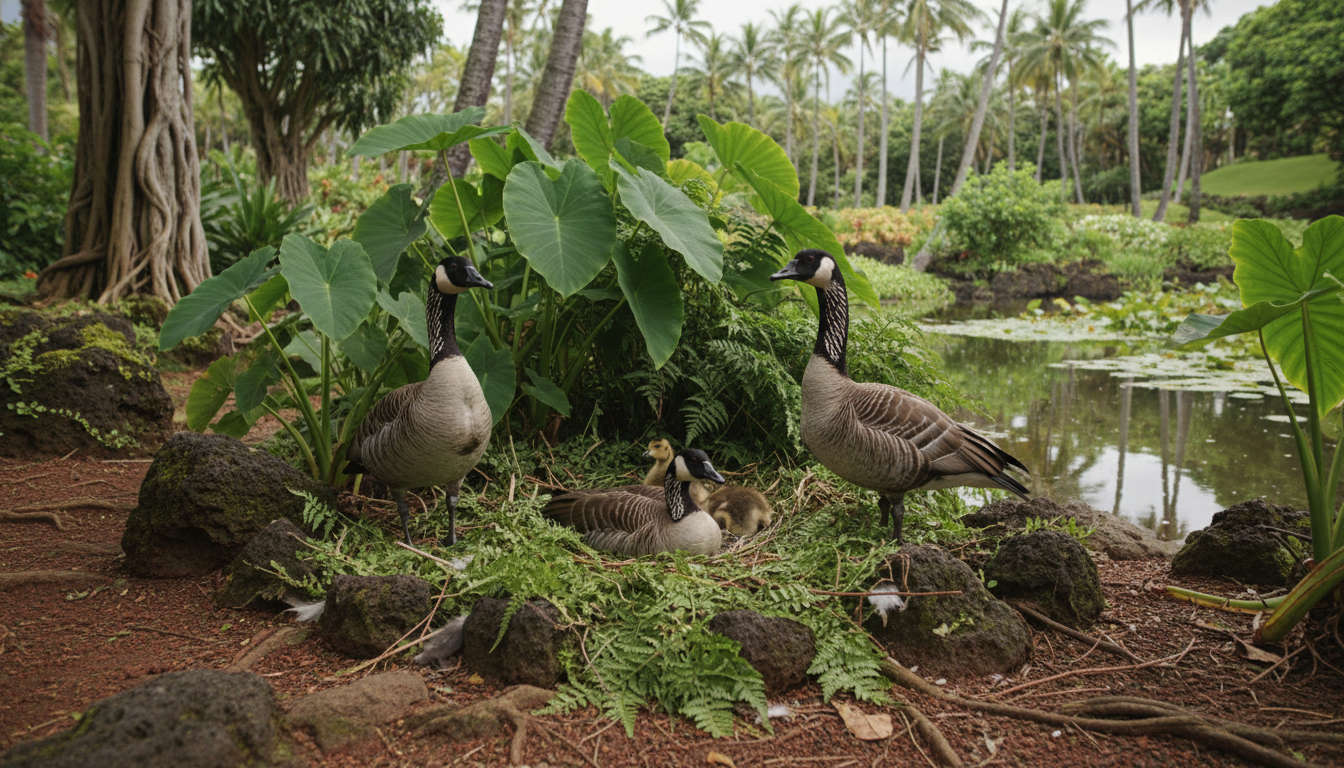

New Protections Offer Nēnē a Chance to Thrive at Lili‘uokalani Gardens
Hope on the Horizon for a Vulnerable Species Following Devastating Losses
HILO, Hawaiʻi – As the nēnē nesting season unfolds, a pair of these endangered Hawaiian geese has taken residence in the tranquil Lili‘uokalani Gardens. This year, with heightened protections in place, there is renewed hope for the survival of these iconic birds that have endured a series of tragic setbacks.
The nesting season, which traditionally spans from October to March, is being closely monitored by the Division of Forestry and Wildlife (DOFAW) in collaboration with the County of Hawaiʻi Department of Parks and Recreation. Every inch of the carefully marked nesting area is set for observance to ensure that history does not repeat itself.
A History of Loss
The female of this year’s pair, identified as NTC, carries the weight of a heart-wrenching past. In 2023, she lost a gosling to abduction at Wailoa State Park, followed by another gosling succumbing to toxoplasmosis the following year. Adding to the sorrow, NTC’s previous mate was struck by a vehicle in 2024 while crossing the street toward an illegal cat feeding station. This loss occurred while NTC was already incubating eggs, and none of the resulting goslings survived. Fortunately, she has now found a new companion and is nesting in a quieter section of the park, which should enhance their chances of success.
Enhanced Protections Ahead
Starting January 2026, a new ordinance will ban the feeding of feral animals on county lands. This critical measure aims to mitigate the threats posed by disease, predation, and the invasion of non-native species, all of which have devastated native wildlife.
“By safeguarding nēnē nests in Hilo, we not only facilitate the reestablishment of their habitat but also foster a community connection to this vulnerable Hawaiian species,” stated Raymond McGuire, a DOFAW biologist. “We are fortunate to have nēnē among us, yet this privilege comes with the responsibility to observe from a distance and refrain from interaction.”
The Role of Citizen Science
Community engagement has played a pivotal role in tracking the nēnē population. Jordan Lerma, director of Nēnē Research and Conservation, emphasizes the importance of local observations. “With the ongoing recovery of nēnē, it’s increasingly common to spot these birds in urban areas,” he explained. “Our collaborative efforts aim to protect native wildlife while ensuring that communal spaces are shared responsibly.”
Why It Matters
Protecting the nēnē is not merely a matter of conservation; it has profound implications for local ecosystems and communities. Sustainable outdoor recreation, including hunting and hiking, relies on balanced ecosystems. The removal of feral animal feeding not only protects nēnē but also strengthens the overall health of local wildlife populations. Engaging with and preserving native species enriches the outdoor experience for everyone involved—providing educational opportunities for visitors while fostering pride in Hawaii’s natural heritage.
Pro Tips for Park Visitors
To ensure a successful nesting season for the nēnē, park visitors can make a significant difference by:
- Keeping Dogs on Leash: Dogs can inadvertently pose a threat to nesting birds.
- Observing from a Distance: Use binoculars or cameras with zoom to admire these beautiful creatures without disturbing them.
- Following Park Rules: Abide by all posted guidelines, including never feeding feral animals.
- Reporting Sightings: Document and report any nēnē sightings to contribute to ongoing conservation efforts.
Final Thoughts
This nesting season presents not just a second chance for NTC and her new mate but also an opportunity for the community to demonstrate stewardship for one of Hawaii’s most beloved species. “The Parks Department is committed to supporting conservation initiatives that serve both the nēnē and all park-goers,” said Clayton Honma, director of Parks and Recreation. “Adhering to park regulations will bolster the health of our native birds, ensuring enjoyable public spaces for future generations.”
For further observations and resources:
- Report nēnē observations: nene.org
- Learn more about nēnē and how to help: DLNR Wildlife
Media Contact:
Patti Jette
Communications Specialist
Hawai‘i Department of Land and Natural Resources
Email: [email protected]
Images and Resources:
Photographs of nēnē
Signage and nēnē