

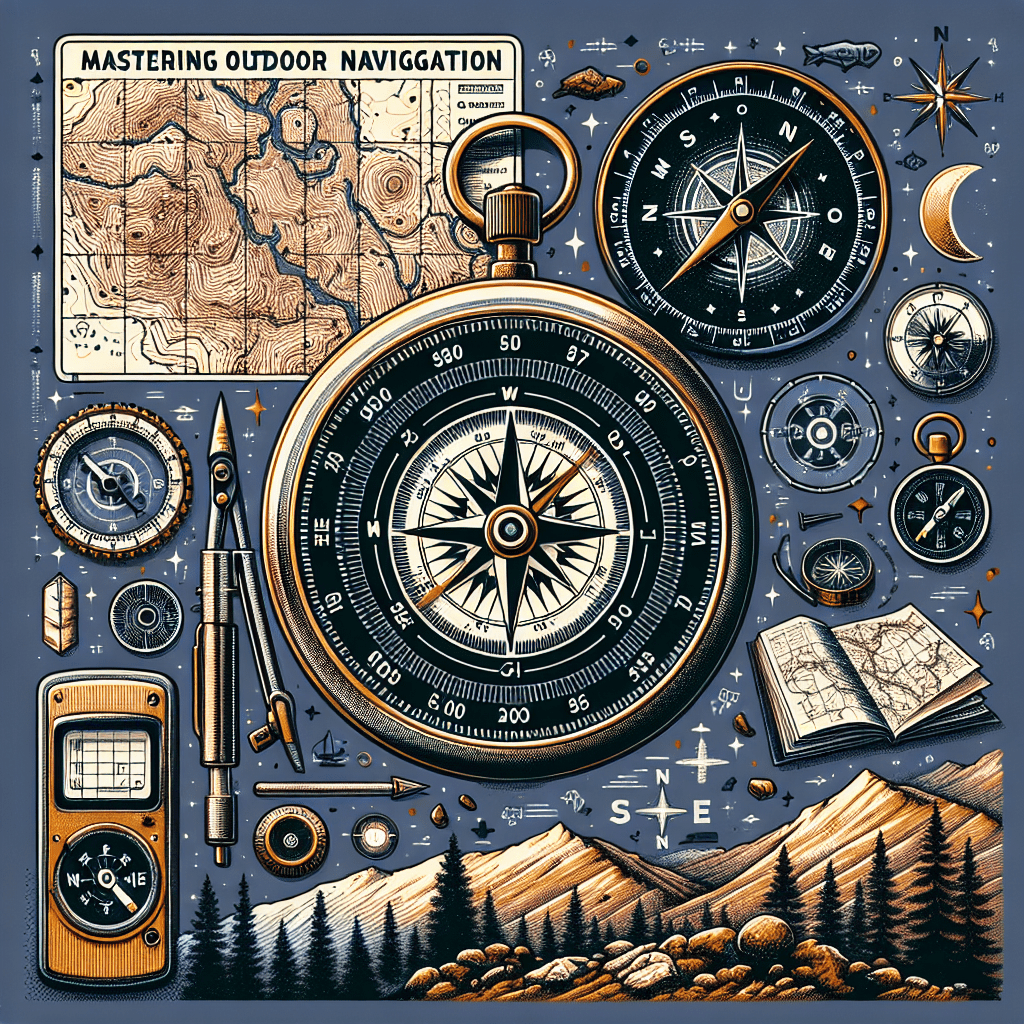

Introduction
Imagine standing at the edge of a breathtaking valley, the sun setting behind distant peaks, your heart racing as you realize you’ve lost your way. This scenario plays out for many outdoor enthusiasts, often leading to moments of sheer panic. Mastering wilderness navigation is not just about reading a map; it’s a vital skill that could mean the difference between a triumphant adventure and a harrowing experience. In this blog post, we’ll explore essential outdoor navigation skills that every outdoor enthusiast should possess. Through a blend of education and captivating anecdotes, you’ll discover how to confidently navigate the wild, ensuring that your adventures are both thrilling and safe.
Understanding the Basics of Navigation
The Importance of Navigation Skills
Every outdoor journey begins with a plan, but even the best-planned trips can take unexpected turns. The ability to navigate effectively ensures you can adapt to changing circumstances. When I embarked on my first backcountry solo hike, I packed my gear with excitement but neglected to review my route carefully. After a few hours of wandering, I realized I was miles off course. This humbling experience taught me that understanding your environment is paramount.
Key Navigation Tools
- Compass: A basic yet essential tool in outdoor navigation. Mastering how to use a compass can drastically improve your route-finding capabilities.
- Map Reading: Learning to read topographical maps helps you understand terrain and elevation.
- GPS Devices: Technological aids can offer precise locations, but relying solely on them can create complacency.
- Smartphone Apps: Applications designed for hiking can act as a back-up but always have traditional methods available.
These tools serve not just as implements of navigation but as vital components of the outdoor experience itself.
How to Use a Compass Effectively
Familiarizing Yourself with Essential Functions
Navigating with a compass may seem daunting, but it’s quite straightforward once you understand the basics. Hold your compass flat in front of you, and rotate it until the needle aligns with the orienting arrow. This method is called “taking a bearing.” From my early days, I remember standing beneath a towering pine tree, frustrated and disoriented. With a few failed attempts, I finally aligned my compass correctly and regained my sense of direction, which spurred a newfound respect for this simple instrument.
Practicing Compass Skills
Start by practicing in familiar surroundings, such as your backyard. Choose a landmark and using a compass, navigate towards it. This exercise builds confidence. After several successful outings, a friend and I decided to take this skill into the backwoods, where we successfully navigated through a dense fog using only our compasses. The experience was exhilarating!
Mastering Map Reading Techniques
Understanding Topographical Maps
Topographic maps are detailed representations of terrain features. They can seem complex at first glance, but understanding contour lines is key. Each line represents an elevation level, allowing you to visualize the terrain. An unforgettable hike with my father in the Rockies taught me this lesson after we misinterpreted a map and ended up scaling an unexpected ridge. The view from the top was breathtaking, but the realization of our oversight was an invaluable teaching moment.
Practicing with Real Maps
Start by picking a local hiking area and study the map. Identify landmarks, trails, and elevation changes. During one memorable trip, I tested my skills by plotting a course through an unmarked path, relying solely on old-fashioned map navigation. The thrill of successfully navigating to a secluded waterfall deepened my appreciation for old-school techniques.
Navigating with Technology: GPS and Smartphone Apps
Leveraging Modern Technology
In today’s digital age, GPS devices and apps are powerful tools for outdoor navigation. They offer real-time positioning, making it easier to track your whereabouts. However, I learned the hard way that technology can fail. During a sudden rainstorm, my phone’s battery died, leaving me without my primary navigation tool. This taught me the importance of balancing technology with traditional skills.
Recommended Navigation Apps
- AllTrails: Offers trails reviews and GPS tracking.
- Gaia GPS: Allows users to download maps for offline use.
- Komoot: Great for trip planning and discovering user-generated content.
Planning Your Route
Importance of Pre-Trip Planning
Effective navigation starts long before you set foot on the trail. Planning your route can prevent disorientation and ensure a smoother journey. During a challenging trek through the Appalachian Trail, I didn’t allocate time for sufficient breaks and misestimated the duration. I arrived at my campsite just as night fell, creating a race against time and the ticking clock.
Key Considerations for Route Planning
- Trail Conditions: Research the current state of trails and any advisories.
- Weather Changes: Always check weather forecasts prior to heading out, as conditions can change suddenly.
- Safety Precautions: Share your route with someone and establish check-in times.
Recognizing Natural Landmarks and Patterns
Utilizing Your Surroundings
Nature offers valuable navigational aids. Identifying mountains, rivers, or distinct tree formations can help orient you even in unfamiliar territory. When I was stuck in a dense forest, the sun’s position became my guide, helping me find my way back to the path.
Developing Observation Skills
Practice observing your surroundings and identifying natural landmarks. I often use a simple technique: keep the sun to your left for an hour as I hike; then, when it’s behind me, I know I’m heading in the right direction.
Embracing the Art of Wayfinding
Trusting Your Instincts
Wayfinding involves intuition and observation—skills that develop over time. During a solo trek, I was faced with a choice at a fork in the trail. Instead of relying solely on my tech, I paused, looked around, and noticed a faint trail marker on a tree. My instincts led me to choose wisely, leading to a hidden campsite far from the crowds.
Wrap-Up: Key Takeaways
Mastering the wilderness through essential outdoor navigation skills can enrich your experiences, turning potential pitfalls into rewarding discoveries. From compass navigation to embracing technology, each skill woven together creates a tapestry of safety and adventure. Remember to plan ahead, familiarize yourself with your tools, and most importantly, trust in your abilities.
Reader Questions Answered
Q1: What are the primary tools for outdoor navigation?
A1: Essential tools include a compass, map, GPS device, and smartphone applications. Each plays a unique role, with traditional methods often providing a reliable backup to modern technology.
Q2: How do I practice my map reading skills?
A2: Start with familiar terrain. Study local topographic maps and practice plotting routes to gain confidence before tackling more challenging hikes.
Q3: What should I do if my GPS device fails?
A3: Always carry a physical map and compass as backups. Practice using them to ensure you’re comfortable navigating without technology.
Q4: How can I ensure safety while navigating?
A4: Plan your route in advance, check weather conditions, share your plan with someone, and ensure you have required gear for emergencies.
Q5: What is wayfinding and how can I improve this skill?
A5: Wayfinding is the ability to navigate using your environment and instincts. To improve, practice paying close attention to landmarks and natural patterns in your surroundings.
FAQs
Q1: Do I need a special type of compass for navigation?
A1: Not necessarily. A basic orienteering compass suffices, but one with declination adjustment is beneficial.
Q2: Can I rely solely on my smartphone for navigation?
A2: While many apps are useful, always have a backup method like a map and compass to avoid reliance on technology.
Q3: What’s the best way to prepare for my first solo hike?
A3: Familiarize yourself with the route, check gear and map conditions, and ensure someone knows your plan and estimated return.
By mastering these essential navigation skills, you can truly embrace the great outdoors with confidence and insight. Whether you’re embarking on your first adventure or are a seasoned explorer, placing emphasis on these techniques will lead to safer and more fulfilling journeys. So, gear up, step outside, and let the wild world teach you its secrets. Happy navigating!