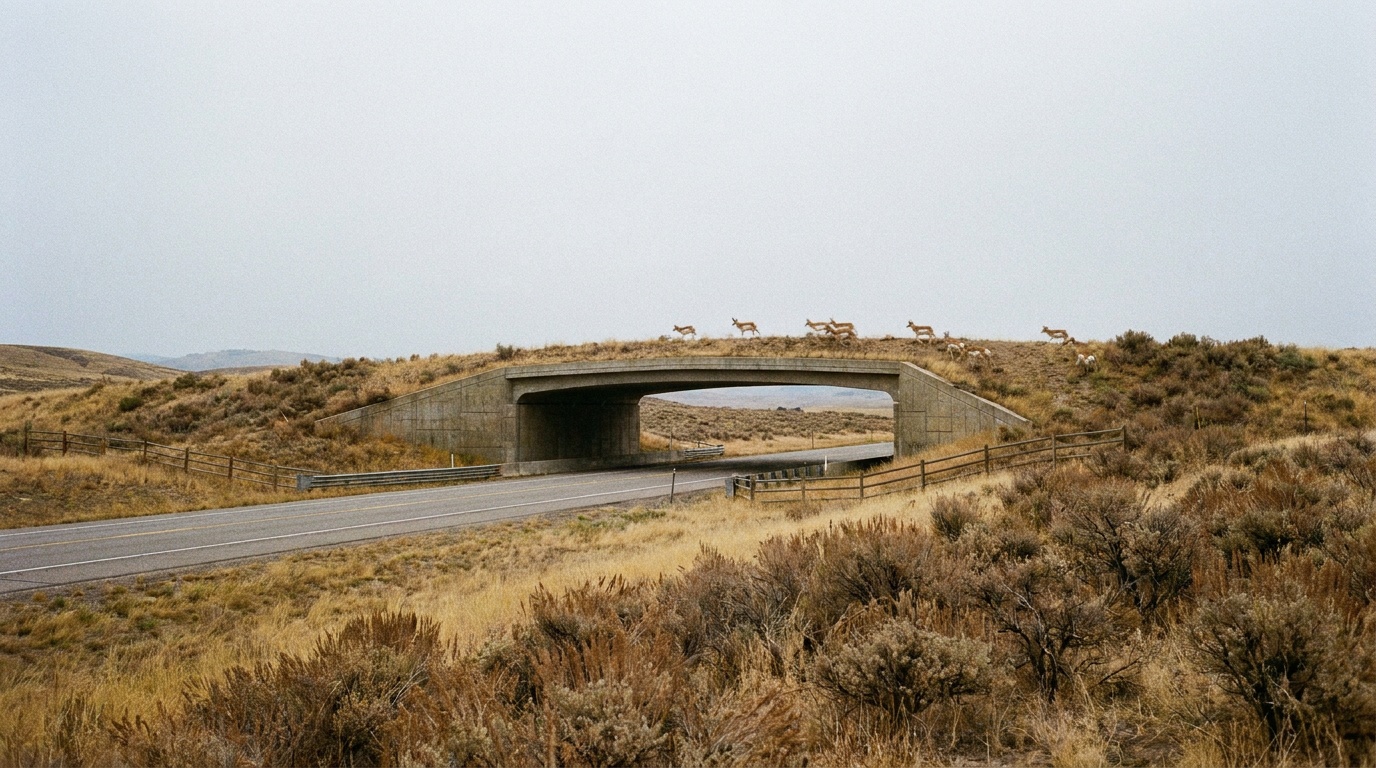
The U.S. Department of Transportation announced Sept. 30 that it is accepting applications for about $80 million in Wildlife Crossings Pilot Program grants, according to the Theodore Roosevelt Conservation Partnership. The program supports research and construction of overpasses, underpasses and fencing meant to reduce wildlife-vehicle collisions, and it also fixes undersized culverts that block fish. Proposals are due Nov. 16, 2026.
Wildlife crossing grants: amounts, deadline and rules
- Funding available: approximately $80 million in FY26 money.
- Grants are cost-reimbursable.
- There is no minimum or maximum award size.
- DOT may also award unspent funds from previous years.
- Both construction and non-construction projects are eligible. DOT may give priority to construction.
- Proposals are due Nov. 16, 2026.
- The pilot program started with $350 million in federal funding that became available in 2022.
- This is the final round of funding under the pilot program, according to the group.
- States with their own funding sources to pair with the federal money, per the group: Utah, Colorado, New Mexico, Montana, Oregon, Virginia and North Carolina.
What it means for you
The program pays for crossing structures and fencing along highways that cut through elk, mule deer and pronghorn migration routes. It also pays to fix culverts that are too small for trout and other fish to pass upstream. The group says crossings paired with fencing can sharply reduce collisions. It points to the Cervidae Peak overpass outside Boise, Idaho, which is expected to cut collisions by 80 percent.
The release does not say who is eligible to apply. Anyone with a county, tribal, state or other organization weighing a proposal should read the full notice of funding opportunity, linked below, well before the Nov. 16, 2026, deadline.
The group says it is working with partners to reauthorize the program, and eventually make it permanent, in the next surface transportation reauthorization bill.
Curt’s Take
What the release doesn’t say: who can actually use this money. The grants are cost-reimbursable. That means the applicant spends first and gets paid back later. A big state transportation department can carry that. A small county highway office or a rural tribe may not have the cash on hand to front a culvert replacement, let alone an overpass.
I like this program. Fewer deer through windshields and open trout streams are good for everyone who drives or paddles. But the group lists seven states with their own funding sources, and those states start with an advantage. With this billed as the last pilot round, I would want to know how many awards go to places that could not have done the work alone.
What readers are asking
When are wildlife crossing grant applications due?
Proposals for the Wildlife Crossings Pilot Program are due Nov. 16, 2026.
How much money is in the wildlife crossings grant round?
About $80 million in FY26 funding, with no minimum or maximum award size. DOT may also award unspent money from earlier years.
Who can apply for Wildlife Crossings Pilot Program grants?
The agency has not said.
Is this the last year of the wildlife crossings program?
According to the Theodore Roosevelt Conservation Partnership, this is the final round under the pilot program. The group is working to reauthorize it in the next surface transportation reauthorization bill.
Go deeper
- The Theodore Roosevelt Conservation Partnership’s original release
- Wildlife Crossings Pilot Program application listing on Grants.gov
- Full notice of funding opportunity (PDF)
- Federal Highway Administration program overview
Source: Theodore Roosevelt Conservation Partnership, “TRCP Welcomes Opening of Wildlife Crossings Grants”, Oct. 2, 2026.

