Last updated: October 28, 2026
Make your first camping trip one or two nights at a developed campground within a couple of hours of home. Read the managing agency’s page for the current booking, fee and fire rules. Pack the Ten Essentials along with a tent, sleeping bag and pad, and try all of it in the backyard first. Before you leave, tell someone where you’re going and when you’ll be back.
Key takeaways
- Start at a developed campground near home. The backcountry can wait until you’ve done a few trips.
- Booking, fees and fire restrictions are set by whoever manages the campground. Check its official page for 2026 right before you go.
- The National Park Service suggests a backyard night as a test run if you’ve never camped.
- Boil lake or stream water, or filter it and then disinfect it. Pack a backup method too.
- Put a campfire out with drown, stir, drown, feel. Don’t walk away until it’s cold.
Should your first trip be a campground or the backcountry?
Go with a developed campground. You can usually park right next to your site, so forgetting something costs you a trip to the store instead of a miserable night. Most also have toilets, a fire ring and a host or ranger you can ask for help.
The National Park Service Before the Trip page lists questions to work through. What’s the setting? What will the season bring? Can you drive up to the site, or will you be hiking in? If there’s a hike, can everyone in your group handle it? The same page says to make sure everyone is physically capable before you head out. A first trip is a good time to keep things easy.
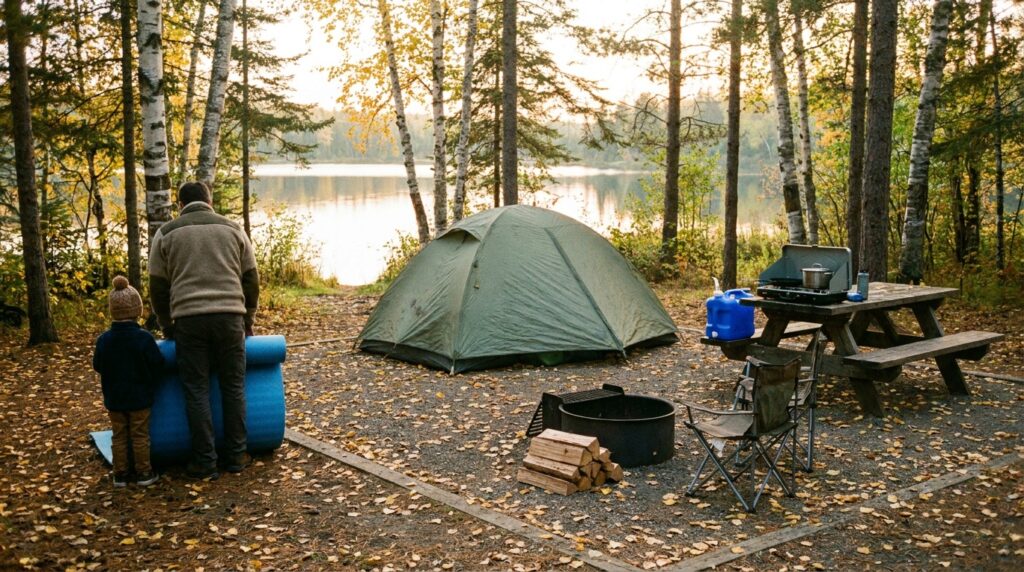
How do you plan your first camping trip, step by step?
- Choose somewhere close. A county, state or national forest campground an hour or two from home is enough for a first trip.
- Read the campground’s official page. Find out whether sites are reserved or first-come, first-served, when booking opens, the fee, whether there’s drinking water, how food has to be stored and whether fires are restricted. Every agency, and sometimes every campground, does this its own way, so use the 2026 information for your campground and nobody else’s.
- Book a site or pick a backup. If you can’t reserve, have a second campground chosen before you leave home.
- Write your gear list. Plan around the setting, the season and how long you’ll be out. The table below is a good place to start.
- Test everything. The NPS backcountry camping page says to make sure you know how to use each piece of gear, that it works, and that you have the right parts, such as the right stove fuel and headlamp batteries. For first-timers, the NPS backyard camping page recommends a night in the yard.
- Check the forecast and fire rules. The USDA Forest Service says to check with the forest, grassland or ranger district for fire restrictions or closures before you go. When fire danger is high, it recommends skipping the campfire even if no restriction is in place.
- Leave your plan with someone. See the checklist below.
- Arrive while it’s still light. A tent you’ve only pitched once goes up much faster when you can see the poles.
What should your trip plan include?
The NPS trip plan list covers:
- Names and contact information for everyone in your group
- Your vehicle’s make, model and license plate number
- Where and when you’re starting
- Your route and what you plan to do
- The equipment and supplies you’re bringing
- When and where you expect to finish
- The park’s emergency number, for your contact to call if you’re late getting back
If the campground is full:
- Try another night. Weeknights are usually easier to book than weekends.
- Call or check the page to see whether the campground holds back first-come, first-served sites, and how early people usually show up for them.
- Look at other public campgrounds nearby, whether county, state or federal. Each runs its own reservation system, so check each one directly.
What gear do you need for a first camping trip?
You need less than most shopping lists say. Borrow or rent first, then buy only what your test night showed you were missing.
| Item | Why it matters | Beginner tip |
|---|---|---|
| Tent with rainfly and stakes | Keeps rain and wind out | Set it up once in the yard before the trip |
| Sleeping bag | Keeps you warm at night | Check its temperature rating against the forecast low |
| Sleeping pad | Stops the cold ground from pulling heat out of you | Pack it even if the bag seems warm enough |
| Stove, fuel, pot, utensils | Lets you cook when fires aren’t allowed | Make sure the fuel fits your stove |
| Water containers and treatment | Safe water for drinking and cooking | Bring a backup treatment method |
| Headlamp and spare batteries | Light after dark, with your hands free | Your phone shouldn’t be your only light |
| Layers and rain gear | For sudden weather changes | Bring a warm hat, even in summer |
If you buy a tent: for car camping, a freestanding dome with a full rainfly is simple to put up, and one rated for one more person than you’re bringing leaves space for bags. The Coleman Sundome 4-Person is one common example.
If you buy a headlamp: look for one that dims, has a red-light mode for moving around camp at night, and takes standard batteries you can find anywhere. The Black Diamond Spot 400, which runs on AAA batteries, is one widely sold model.
What are the Ten Essentials?
The NPS describes the Ten Essentials as gear for dealing with minor injuries, sudden weather changes and emergencies. Its camping safety checklist groups them as:
- Navigation: map, compass, GPS
- Sun and insect protection: sunscreen, hat, insect repellent, sunglasses
- Insulation: extra clothing for cold, rain or wind
- Emergency shelter: space blanket, bivy or tarp
- Illumination: flashlight or headlamp
- First aid kit, including any medication your group needs
- Fire: waterproof matches or a lighter
- Extra food and water
- Repair kit and tools: knife, multi-tool, duct tape
That checklist also points out that you can lose cell signal or run your battery down, and it suggests a personal locator beacon or satellite phone for extra safety.
As an Amazon Associate, Outdoor Newspaper earns from qualifying purchases.
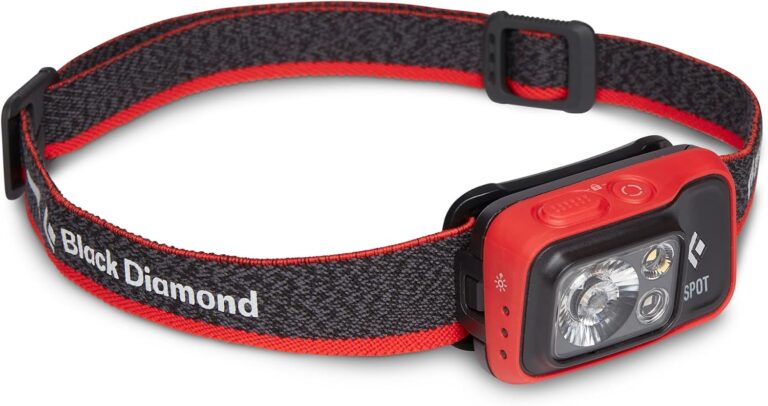
Black Diamond Spot 400 Headlamp
- Delivers up to 400 lumens of brightness for reliable visibility as a headlight/headlamp for hiking gear, camping gear, night running gear, and emergency use.
- Built to handle the elements, this adult torchlight features a rugged housing with waterproof construction.
- Offers multiple brightness settings and proximity modes so that you can adjust from full-power spotlight to softer ambient lighting.
How do you make lake or stream water safe to drink?
Water that looks clear can still carry viruses, parasites and bacteria, according to the Minnesota Department of Health. The CDC’s water safety guidance calls boiling the best way to kill germs: bring clear water to a rolling boil for 1 minute, or 3 minutes above 6,500 feet.
The Minnesota Department of Health says filtering and then disinfecting also works very well, and it recommends carrying at least one backup method in case your first one fails. It also warns about harmful algal blooms, which can look like pea soup or spilled green paint. Backcountry treatment devices can’t remove bloom toxins, and boiling can make toxin levels higher. If a bloom is posted or you suspect one, don’t drink that water.
How do you build and put out a campfire safely?
First check that fires are allowed at your campground that day. If they are, use the existing fire ring, keep the fire small and never leave it alone. Smokey Bear’s campfire safety guide, from the Forest Service prevention campaign, says to have water, a bucket or large container, and a shovel ready before you light anything. Its printable guide says to keep the fire at least 15 feet from your tent and gear.
When you’re finished, use drown, stir, drown, feel:
- Drown. Pour on plenty of water until the hissing stops. Dirt or sand alone isn’t enough.
- Stir. Mix the water into the embers with the shovel, and scrape sticks and logs until nothing is exposed or smoldering.
- Drown again. Keep adding water until everything is cool.
- Feel. Hold the back of your hand over the ashes and check for heat.
Smokey Bear’s guide puts it simply: “If your campfire is too hot to touch, it’s too hot to leave.”
How do you pick a good tent spot?
- At a developed campground, use the tent pad or ground that’s obviously been used for tents before.
- The Forest Service camping page recommends a level site with room for all your gear. Trees or shrubs on the side the wind usually comes from help block gusts.
- Avoid low spots where rainwater collects.
- Before you stake the tent, look up for dead branches overhead.
- Store food and anything scented the way your campground requires.
What are the Leave No Trace basics?
The seven principles come from the Leave No Trace Center for Outdoor Ethics, and the NPS shares them:
- Plan Ahead and Prepare
- Travel and Camp on Durable Surfaces
- Dispose of Waste Properly
- Leave What You Find
- Minimize Campfire Impacts
- Respect Wildlife
- Be Considerate of Others
At a campground, that mostly means using the toilets, packing out your trash and leftover food, never feeding wildlife and keeping noise down. Where there’s no toilet, the principles say to bury solid human waste in a cathole 6 to 8 inches deep and at least 200 feet from water, camp and trails.
Megan’s Take
The backyard night is the NPS tip I’d circle twice. It shows you what you’re missing (a pad, a warmer hat, the right stove fuel) while the house is still a few steps away. Borrow a tent for that night and buy only what the test shows you need. After that, a campground an hour from home with a grocery store nearby will teach you more than a bucket-list trip would.
Frequently asked questions
Do I need a reservation or permit to camp?
It depends on the campground and the agency that runs it. Many developed campgrounds take reservations or charge a fee, and some hold back first-come sites. Check the managing agency’s official page for 2026 before you go.
How do I find out when campsite reservations open?
Look at the campground’s official page or its listing on the agency’s reservation system. Booking windows vary, so don’t assume one park’s rules apply to another.
Is it safe to camp alone on a first trip?
A busy developed campground is a reasonable place to try it. Leave a trip plan with someone, check the forecast and carry the Ten Essentials.
How long should I boil water from a lake or stream?
The CDC says a rolling boil for 1 minute, or 3 minutes above 6,500 feet. Never drink from water with a suspected or posted algal bloom, because boiling doesn’t remove the toxins.
Can I put out a campfire with dirt?
Not with dirt alone. Smokey Bear’s guide says to drown the fire with water, stir, drown it again and check with the back of your hand until it’s cool.
Sources
- National Park Service: Ten Essentials
- National Park Service: Before the Trip (Camping)
- National Park Service: Camping Safely Step 1, Before the Trip
- National Park Service: Backyard Camping
- National Park Service: Wilderness and Backcountry Camping
- National Park Service: Leave No Trace Seven Principles
- USDA Forest Service: Know Before You Go, Fire
- USDA Forest Service: Know Before You Go, Camping
- Smokey Bear (USDA Forest Service): Campfire Safety
- Smokey Bear (USDA Forest Service): Smokey Bear’s Campfire Guide
- CDC: How to Make Water Safe in an Emergency
- Minnesota Department of Health: Preventing Illness while Camping, Hiking, and Traveling

