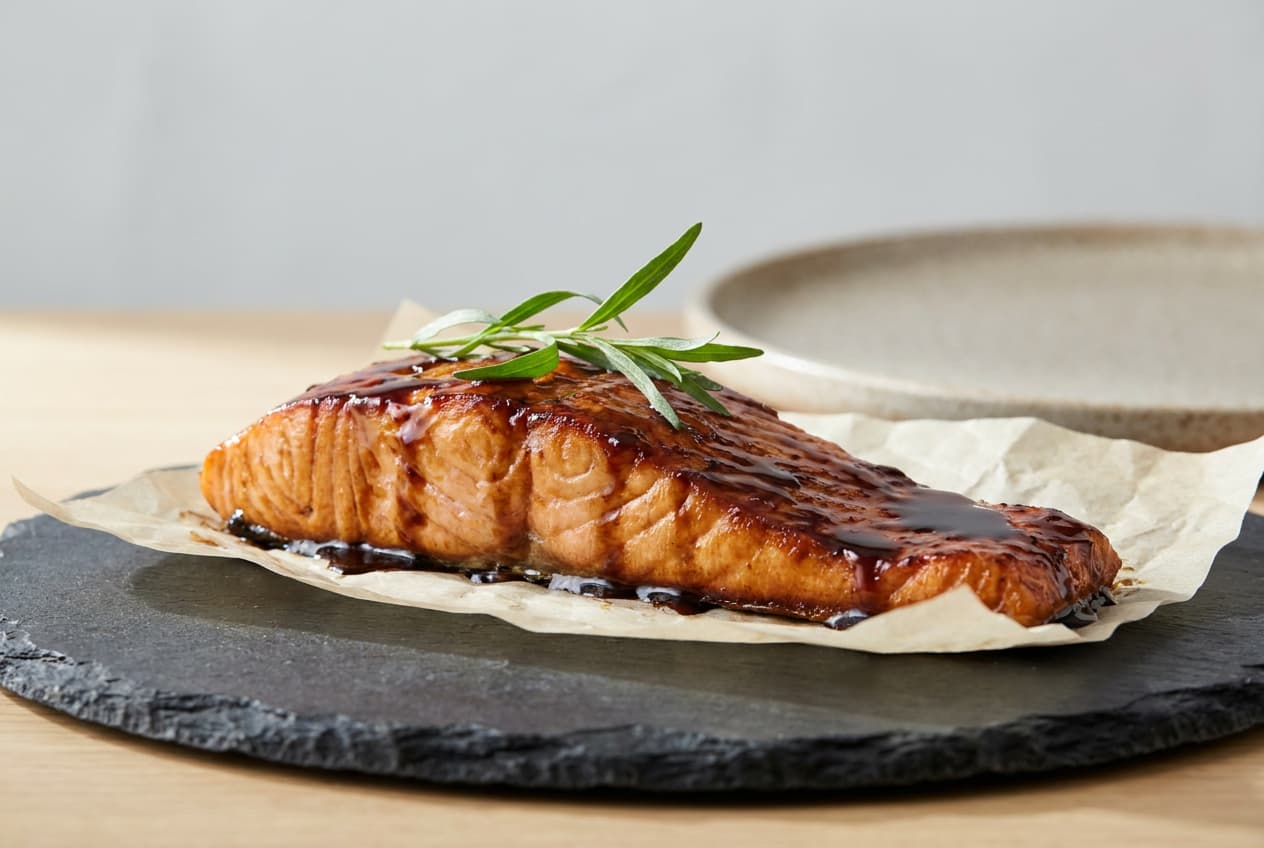
Honey-Balsamic Glazed Salmon
This Honey-Balsamic Glazed Salmon recipe is ready in about 40 minutes and puts salmon front and center — no fillers, no shortcuts on flavor.
Ingredients
- 1 lbs Salmon filet (about 2 pounds)
- 1/2 teaspoon salt
- 1/4 teaspoon pepper
- 3 tablespoons Filippo Berio Balsamic Vinegar
- 2 tablespoons honey
- 1 tablespoon Dijon mustard
- 1 clove garlic (minced)
- pinch of chili pepper flakes
- 1 tablespoon chopped fresh tarragon (optional)
Instructions
- Heat oven to 400° F. Season salmon with salt and pepper; place on parchment paper-lined baking sheet.
- Whisk together vinegar, honey, mustard, garlic and chili pepper flakes; brush over salmon.
- Bake 18-20 minutes, or until fish just starts to flake easily with fork.
- Sprinkle with chopped tarragon, if desired.
Recommended for this recipe
Cook’s Notes
The texture tells you everything: perfectly cooked fish flakes easily with a fork but still looks slightly glossy, not chalky. Pull it right when it starts to flake — it’ll keep cooking a little after it’s out of the oven.
Ingredient Swaps
You can swap in another firm white fish if salmon isn’t available, but avoid substituting a delicate, flaky species for a firmer one called for here — the cook time and handling are different.
Serving Suggestions
Keep the sides light — fish doesn’t need much competing for attention. A simple starch and something acidic (lemon, a light slaw) rounds it out without overshadowing it.
Storage & Reheating
Keeps well in the fridge for 3-4 days in a sealed container. Reheat covered in a low oven (around 300°F) to warm through without drying it out further.
Common Questions
Can I substitute the salmon in this recipe?
Yes, in most cases — see the Ingredient Swaps note above for specifics on what works best.
How should I store leftovers?
See the Storage & Reheating note above — it varies by cooking method, so check the specific guidance for this dish.
How do I know when it’s fully cooked?
Use a meat thermometer when possible rather than relying on time alone — wild game and fish cook faster than most people expect.

